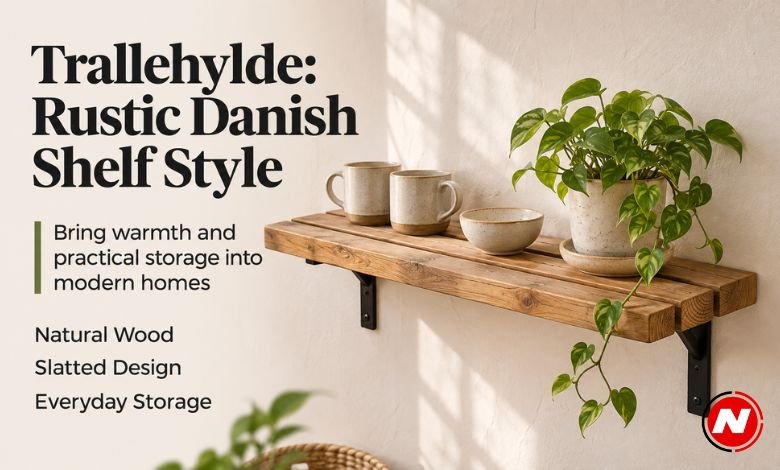
A beautifully decorated room can still feel as though something is missing. The walls are fresh, the furniture fits, and the lighting feels right, yet the space needs a little warmth. Often, a simple wooden detail can make the difference.
A trallehylde offers that finishing touch while providing useful storage. Associated with the slatted wooden platforms traditionally used on scaffolding, this Danish shelving style brings texture and character into everyday interiors. Designs may use reclaimed timber or new wood, creating anything from a weathered appearance to a smoother, more refined finish.
Its appeal goes beyond decoration. The right shelf can organize a busy kitchen, give books a home, or turn an overlooked corner into a small display. Choosing well means balancing appearance, construction, and practical use.
What Is a Trallehylde?
The Danish term combines “tralle”, meaning a wooden slatted platform, with “hylde”, meaning shelf. The resulting furniture draws on a practical construction material and gives it a different role in the home.
No single appearance does every version have to follow. Some shelves retain rough grain, color variations and marks from previous use. Others feature carefully finished timber, evenly spaced slats and discreet fittings.
This variety is part of the attraction. Someone furnishing a country cottage might favor weathered wood, while someone decorating a modern flat could choose a cleaner design with dark metal details.
It is also worth distinguishing slatted tralle furniture from ordinary scaffold-board shelving. They share a rustic connection, but a solid wooden plank and an assembly of separate slats offer different surfaces and construction.
Neither style needs an elaborate setting. Against a plain wall, the timber itself provides visual interest. Its grain and shape can become enough of a feature without bright colors or complicated decoration.
The most useful question, then, is not whether a shelf looks perfectly rustic. It is whether its design suits the way you want to use it.
Finding the Right Place for Rustic Shelving
A trallehylde works best when it solves a small, everyday problem while improving the room.
Consider a kitchen where favorite mugs disappear into a crowded cupboard. A conveniently placed shelf keeps them within reach while adding a warmer material among painted cabinets and tiled surfaces.
Depth matters here. A shelf intended for small cups may not comfortably hold dinner plates, larger bowls, or cookbooks. Measure your everyday objects before choosing a size.
In a sitting room, rustic shelving can create a modest display above a sideboard or beside a reading chair. Books, a photograph and a ceramic bowl can give the area personality without filling the entire wall.
An entrance presents another opportunity. A shallow shelf may provide a place for keys and post, as long as it doesn’t obstruct movement. For larger storage needs, a related tralle bench with a lower shelf can combine seating with space for shoes.
Bathrooms require more careful consideration. Humidity and splashes make the timber and finish especially important. Choose a product intended for those conditions rather than assuming all wooden shelving will perform equally well.
Wherever it goes, leave enough space to use it comfortably. A shelf should make the room easier to live in, not create another obstacle.
Choosing Wood, Color and Finish
The appearance of a trallehylde depends heavily on its timber and surface treatment. Two shelves with similar dimensions can create very different moods.
Reclaimed wood often has uneven coloring, old fixing marks and worn edges. These details can be attractive when you want furniture with visible character. However, not every mark should be treated as a desirable feature; the material must still be suitable for furniture.
New timber offers another interpretation. Its color and surface may be more consistent, making it easier to coordinate with existing furniture. It can preserve the slatted design without the variations associated with reclaimed material.
A pale finish creates a gentle contrast against darker accessories and works comfortably with cream walls, linen,n and woven baskets.
Grey or driftwood-style finishes give a cooler impression. They can suggest weathering, although the color doesn’t indicate the wood is old or reclaimed.
Black produces a stronger visual outline. It can tie in with dark handles, lighting, or picture frames already in the room.
Before deciding, look beyond the color name. Ask whether the surface is untreated, oiled, painted, or otherwise sealed, and check the care instructions. If samples are available, view one in your own room, where daylight and evening lighting may change its appearance considerably.
Buying or Building: Details That Deserve Attention
The choice between buying and making a shelf depends on your skills, available time, and expectations.
A finished product offers convenience, but the description should explain what you are receiving. Check the material, dimensions, finish, and whether it includes brackets or other fittings.
Photographs can hide practical details. Look closely at the gaps between slats, the wood thickness, and the usable storage surface. A narrow bottle or small ornament may need a stable tray beneath it.
For reclaimed timber, ask about its previous use and preparation. A weathered appearance does not tell you whether the wood has a suitable treatment history for indoor furniture.
A DIY project gives you more control over dimensions, but preparation requires patience. Timber should suit its intended setting, be checked for damage, and be prepared to remove loose splinters and unwanted fixings.
Installation is equally important. The shelf, brackets, fixings and wall must form a suitable system. Thick timber alone doesn’t determine how much weight the finished installation can support.
Follow the relevant product instructions, and seek installation advice if you’re unsure about the wall construction.
Finally, compare complete costs. Timber, finishing materials, fittings, tools and delivery can all affect the final price. A low starting price may tell only part of the story.
Styling and Caring for Your Shelf
Once installed, a trallehylde needs surprisingly little decoration to feel considered.
Start with useful objects. A row of regularly used mugs, a few books, or a bowl for everyday essentials gives the shelf a clear purpose. Add decorative pieces only where they improve the arrangement.
Try varying height without creating clutter. A taller vase beside a short stack of books can make a display feel balanced. Leave some open space so the timber remains visible.
Color can bring the arrangement together. Choose a few shades already found elsewhere in the room, perhaps in curtains, cushions or artwork. This helps the shelf feel connected to its surroundings.
Plant pots need particular care. Use suitable saucers and check beneath them regularly so moisture does not remain against the wood.
For cleaning, follow the guidance for the specific finish. Remove dust gently, wipe up spills promptly, and avoid soaking the surface.
If an oiled or painted finish needs attention later, use a compatible product and follow its instructions. Maintenance requirements vary, so a routine suitable for one shelf may not suit another.
A successful arrangement should remain easy to use. If reaching for a book means moving several ornaments first, simplify the display.
Conclusion
A trallehylde brings together storage, texture and a straightforward approach to design. It can soften a modern kitchen, add interest to a plain sitting room or give everyday objects a more organized home.
The best choice starts with practical details: suitable timber, useful dimensions, a finish that fits the setting, and secure installation. With those decisions made, the styling can stay simple. Sometimes, a little visible wood and a few well-chosen objects are all a room needs to feel more welcoming.
(FAQs)
Is this shelving always made from reclaimed timber?
No. Designs may use reclaimed wood or new timber. Some new products have finishes intended to create a weathered appearance. Check the material description and ask about the wood’s origin rather than judging from photographs alone.
Can rustic shelving suit a small room?
Yes, as long as its dimensions suit the space. A shallow wall shelf can add storage without occupying floor space. Keep the display simple and position it where it will not interfere with doors, movement, or everyday activities.
What should I check before putting books on it?
Check the manufacturer’s load guidance and whether the complete installation is suitable. Books can create a substantial load, so the brackets, fixings, and wall matter as much as the shelf itself. Don’t guess capacity based on the wood’s thickness.
Can I leave the wood untreated?
That depends on the product and its intended use. An untreated surface may mark more easily and require different care from a sealed one. Ask the supplier what is appropriate for the room and the objects you plan to store.
Does reclaimed wood automatically make a shelf sustainable?
Reusing timber gives existing material a second life, but it doesn’t capture the full environmental impact. Transport, processing, coatings, and lifespan also matter. Look for clear information about the material and choose furniture you can maintain and use for years.