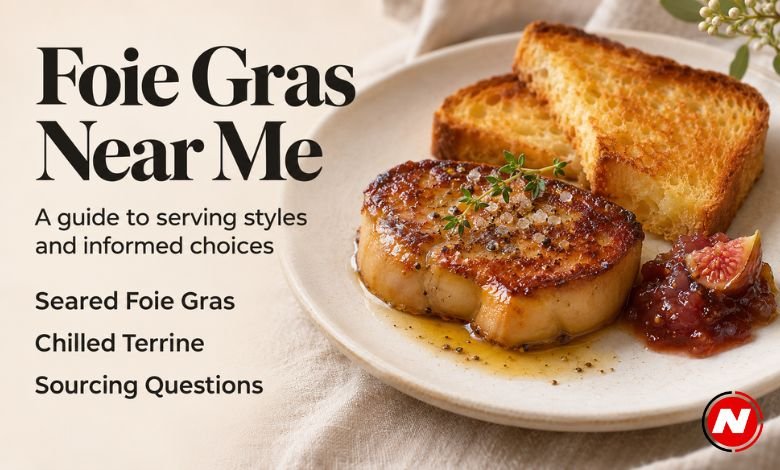
A small slice arrives beside warm toast and a spoonful of fruit chutney. The presentation looks simple, yet foie gras carries a reputation that can make ordering it feel surprisingly complicated. Is it served hot or cold? Does a pâté offer the same experience? And where should you begin looking?
Searching for foie gras near me is about more than finding the closest restaurant. It means understanding a distinctive food, choosing a preparation you will enjoy, and checking what a seller actually offers.
From French restaurant menus to specialist delicatessens, several routes are worth exploring. Before booking a table or buying a jar, a little knowledge can help you choose more confidently.
What Is Foie Gras, and What Makes It Different?
Foie gras is the liver of a specially fattened duck or goose. Traditional production involves force-feeding, known as gavage, a detail that matters when considering both the product and its animal welfare implications. It is strongly associated with French cooking and appears in several preparations.
Its appeal centers as much on texture as on taste. Foie gras has a rich, buttery character, with a savory flavor that can feel quite different from an ordinary liver pâté. A small serving gives you plenty to explore.
Duck foie gras generally has a more pronounced flavor, while goose foie gras is often described as more delicate. Neither automatically makes the better choice; preparation and personal preference matter too.
Imagine two plates arriving at the same table. One holds a warm, browned slice; the other features a neat portion of chilled terrine. Both may contain foie gras, but the eating experience differs considerably.
That distinction helps first-time diners. Before choosing a restaurant, decide whether you want a freshly cooked dish or a prepared, chilled starter. The answer will make unfamiliar menu descriptions easier to understand.
Where to Begin Your Local Search
The most useful foie gras near me search starts with a simple decision: do you want to eat out, collect something ready to serve, or cook at home?
For a restaurant meal, look through current menus from French restaurants, bistros, and fine dining venues. Search for the actual dish rather than relying on a restaurant’s cuisine label. A French menu does not guarantee that foie gras is available.
Read the full description carefully. A starter featuring a slice of foie gras is a different order from a dish finished with a small amount of foie gras mousse.
For shopping, investigate specialist delicatessens, French food shops and gourmet retailers. Check whether the listing describes raw liver, a chilled terrine or a preserved product.
Adding your town or postcode can make search results more useful. Try related phrases such as “French restaurant”, “foie gras terrine” or “specialist delicatessen” alongside your location.
Before traveling, contact the business directly. Ask whether the item is currently available, how it is prepared, and whether you need to order ahead.
An old menu photograph can offer a clue, but direct confirmation is more useful when you are planning an entire meal around one dish.
Seared, Terrine or Mousse: Understanding the Menu
The biggest surprise when searching for foie gras near me may be how many different products appear under similar descriptions. Knowing a few terms helps you choose with confidence.
Seared foie gras is served warm, with a browned exterior and a soft interior. It suits diners who enjoy a contrast between the surface and the center. Fruit sauces with sweetness and acidity are familiar accompaniments because they balance its richness.
Foie gras terrine is prepared in a mould and commonly served chilled, sliced. With bread and a modest accompaniment, it offers a more restrained presentation that lets you focus on the flavor.
Foie gras torchon is another preparation commonly served in chilled slices. On a menu, it signals a different experience from a freshly seared portion. Both terrine and torchon pair well with baguette, toasted brioche, or fruit chutney.
Mousse and pâté need closer attention. They can contain foie gras alongside other ingredients, so they should not automatically be treated as equivalent to a whole-lobe preparation.
French consumer guidance distinguishes between foie gras entier, preparations made from pieces of lobes, and reconstituted bloc de foie gras. These names describe differences in composition, making the full label more useful than the headline wording alone.
If the description remains unclear, ask the server or retailer to explain it in plain language.
How to Judge Value Before You Order
A beautifully written menu can create high expectations. The practical question is what arrives on the plate.
Start with the preparation and portion. Is foie gras the main feature of a starter, one element of a tasting menu, or an optional addition to another dish? Those formats are difficult to compare through price alone.
Ask what comes with it. Toast, fruit, and sauce can shape the experience, but an elaborate garnish does not tell you how much foie gras the dish contains.
For packaged products, compare the ingredient list, net weight, and product description. A smaller whole foie gras preparation and a larger mousse may serve different purposes, even if their packaging looks equally luxurious.
Check whether the product is ready to eat or requires cooking. Raw foie gras is intended for preparation, while chilled and preserved products have their own storage instructions. Follow the label rather than assuming every jar, tin or vacuum pack can be handled in the same way.
Dietary details also deserve attention. Some preparations include wine or spirits, while accompanying bread, sauces and mousses may introduce other ingredients you need to avoid.
The best value is the option that matches your plans. A ready-to-serve terrine may suit a quiet meal at home, while a restaurant lets you try a cooked preparation without buying and preparing the raw ingredient.
Sourcing and Animal Welfare Questions Worth Asking
Foie gras has a culinary reputation, but its production also attracts serious criticism. Understanding that debate is part of making an informed purchase.
The RSPCA opposes foie gras production because of welfare concerns associated with force-feeding, including stressful handling, possible throat damage, and the effects of an enlarged liver. These concerns explain why some diners choose to avoid the product.
If sourcing matters to you, ask for the producer’s name, country of origin, and an explanation of the production method. A broad description such as “premium” tells you little about those details.
Geographical origin and animal welfare are separate questions. Knowing where a product comes from can help establish traceability, but it does not answer every question about how the birds were raised.
You can also ask whether a restaurant offers an alternative. Mushroom pâté, for example, provides a different flavor while filling a similar role as a rich starter served with bread.
There is no need to rush the decision because a dish appears on a special menu. Clear information should help you decide whether it fits your preferences before you place an order.
Conclusion
Finding foie gras near me becomes easier when you know what you want from the experience. A warm seared starter, a chilled terrine and a spreadable mousse each offer something different.
Check current availability, read descriptions carefully, and ask direct questions about ingredients, portion size, and sourcing. Those details are more useful than a luxurious photograph or an impressive name.
Whether you choose to try foie gras or explore an alternative, the strongest dining decision starts before the plate reaches the tablewith a clear understanding of what you are ordering.
(FAQs)
Where should I look for foie gras near me?
Start with current menus from French restaurants and specialist food retailers in your area. Add your town or postcode to the search, then contact the business to confirm the product and preparation before visiting.
Is foie gras the same as ordinary pâté?
No. Foie gras refers to specially fattened duck or goose liver. Pâté is a broader preparation. A pâté containing foie gras may also contain other ingredients, so check the label or menu description.
Should foie gras be served hot or cold?
Both are possible. Seared foie gras is served warm, while terrine and torchon are commonly served chilled. Your choice depends on whether you prefer a cooked dish or a sliced, prepared starter.
What should I order for a first taste?
Choose according to texture. A terrine offers a straightforward way to explore the flavor with bread, while a seared portion adds a browned exterior. Ask the server to explain the dish and its accompaniments before deciding.
Can I buy foie gras to serve at home?
Yes, where retailers stock it. Check whether you are buying a ready-to-serve preparation or a raw product. Read the storage instructions, confirm the serving guidance, and check all ingredients before purchasing.