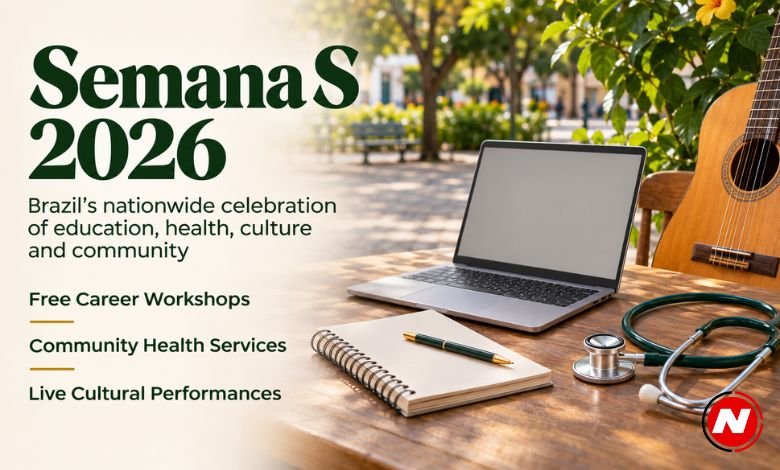
A music performance can fill a public square. A training workshop can open a new career path. Bring those experiences together with health services, sport and community support, and an event begins to mean something more to the people attending it.
That was the appeal of Semana S 2026, a Brazilian initiative that combined practical opportunities with the energy of a public celebration. Its main national program took place on 15 and 16 May, while some regional activities followed longer schedules.
Organizers reported that the event reached more than three million people nationwide. Yet its significance went beyond the headline number. Through free activities delivered by Sesc, Senac, and their partners, the program brought learning, wellbeing, and culture into spaces where businesses, workers, and families could meet.
What Made Semana S 2026 Different?
Officially named Semana S do Comércio de Bens, Serviços e Turismo, the event highlighted the social role of Brazil’s commerce, services and tourism sectors. It showed how organizations connected to these industries contribute to everyday life through education, cultural activities, and community services.
The Confederação Nacional do Comércio de Bens, Serviços e Turismo, commonly known as CNC, coordinated the initiative nationally. State commerce federations, business unions, Sesc and Senac helped turn that national framework into local programs.
Each institution brought a different strength. Sesc contributed activities linked to health, culture, leisure and social support. Senac focused on professional education, skills development and opportunities connected with working life.
The result was a program with plenty of reasons to attend. A student might be interested in training, a parent might look for family activities, and a business owner might join a discussion about innovation.
The national dates gave the event a shared identity, but regional schedules let organizers respond to local needs. In Belo Horizonte, for example, activities extended from 11 to 17 May.
That local flexibility was important. Brazil’s communities differ greatly, and a useful national initiative needs room for those differences. The program could share a common purpose while offering different experiences from one location to another.
Education and Careers Were at the Heart of the Program
One of the strongest features of Semana S 2026 was its attention to professional development. Alongside entertainment, the program created opportunities to explore skills, ask career questions and discover possible routes into further training.
Senac activities included workshops and career support, with local programs covering subjects such as technology, business and gastronomy. Some locations also held employment fairs.
For someone unsure about their next step, a short workshop can be a useful starting point. It introduces a subject without requiring the same commitment as a longer course.
Consider a visitor interested in food-related work. A practical gastronomy session could help them understand the skills involved and decide whether to explore professional training. That is a possible benefit of the format, rather than a guaranteed outcome for every participant.
Employment fairs served another purpose by bringing job opportunities and career information into the same setting. They gave visitors a place to investigate vacancies and speak with participating organizations.
Business owners and existing workers were part of the picture too. Innovation discussions and professional activities recognized that learning continues throughout a career.
The value of these opportunities should be described carefully. Attending a session does not automatically lead to employment. However, making information and training easier to discover can help people make better-informed decisions about what to do next.
Health and Community Support Added Everyday Value
Large public events often attract attention through their biggest performances. Here, some of the most useful activities addressed quieter, everyday concerns.
Health services featured within local programs, giving visitors access to checks and information alongside the wider event. Belo Horizonte’s published schedule, for example, included blood pressure measurements, blood glucose checks and body composition assessments.
The exact services depended on the location. Some activities required registration or appointments, so local program information mattered for anyone planning a visit.
Bringing services into an event setting can make them easier to notice. Someone attending for another reason may discover support they hadn’t previously considered or known how to access.
Citizenship assistance also formed part of the program. In Curitiba, the Justiça no Bairro Sesc Cidadão initiative offered free support connected with access to justice and rights.
These activities broadened the event’s purpose. They recognized that a community’s needs include practical questions about documents, services, and everyday responsibilities, alongside opportunities for work and leisure.
Food donations added a further community element. Through Sesc Mesa Brasil, visitors were encouraged to contribute non-perishable items, with local arrangements determining the requested amounts.
That approach gave participants another way to take part. Someone could attend a cultural activity or workshop while also contributing to a food support program serving people facing difficult circumstances.
Music and Culture Created the Biggest Shared Moments
The cultural side of the event gave it visibility and atmosphere. Free performances gave people a reason to gather, while the surrounding program connected those crowds with other activities.
In Belo Horizonte, Praça da Estação hosted a line-up that included Ludmilla, Ana Castela, Dilsinho, Pato Fu and Gian & Giovani. The variety reflected the different audiences the program aimed to welcome.
Recognizable performers can draw attention to an event, but the cultural program also created space for developing talent. In Curitiba, the Sesc Paraná Youth Orchestra performed at Parque Barigui.
Its 54 musicians presented a program that combined Brazilian music with themes from films, television, games, and anime. That mixture offered familiar entry points for listeners who might not usually seek out an orchestral concert.
The performance also connected entertainment with education. Audiences could see young musicians apply their training in a public setting, offering a visible example of the work behind the scenes.
This is where the event’s different themes came together particularly well. Cultural education produced a performance, the performance attracted an audience, and the wider program gave that audience more to explore.
Free access mattered too. Removing the ticket price reduced one barrier to participation, although transport, available time, and venue capacity could still influence who could attend.
What the Nationwide Reach Really Tells Us
Organizers reported that Semana S 2026 reached more than three million people across Brazil’s 26 states and the Federal District. That scale points to the strength of a coordinated program delivered through established regional networks.
However, reach is only one measure of success. A large attendance figure does not explain how each visitor experienced the event or whether a single visit led to a lasting change.
The more meaningful questions come afterward. Did someone pursue further training? Did a business contact become useful? Did a family discover a service they could return to?
Those questions do not diminish the event’s achievement. They help explain the difference between a busy program and a lasting contribution to community life.
The official event website has announced a return in 2027. Future visitors will still need to check confirmed dates, registration arrangements and local schedules when those details are published.
For organizers, the opportunity is to build on what made the program useful: accessible activities, clear information, and a strong connection between public celebration and practical support.
Conclusion
Semana S 2026 brought career opportunities, community services, and cultural experiences into one shared program. Its national reach drew attention, while local activities gave people practical reasons to participate.
The event’s lasting value will depend on what follows those encounters. A first workshop, a useful conversation or an inspiring performance may seem like a small moment within a nationwide celebration. For the person taking part, it could be the moment that makes their next step feel possible.
(FAQs)
What was Semana S 2026?
It was a nationwide Brazilian initiative offering educational, cultural, health, sporting and community activities through the commerce, services and tourism network.
When did the main program take place?
The central national program ran on 15 and 16 May 2026. Some locations offered extended schedules, including Belo Horizonte’s activities from 11 to 17 May.
Who organized the event?
CNC coordinated the initiative nationally, working with state commerce federations, business unions, Sesc and Senac.
Were all activities available without registration?
No. Although the program promoted free activities, some services and sessions required advance registration or an appointment. Arrangements varied by location.
Will there be another edition?
A return in 2027 has been announced. Check future official announcements for confirmed local dates, program details, and registration information.