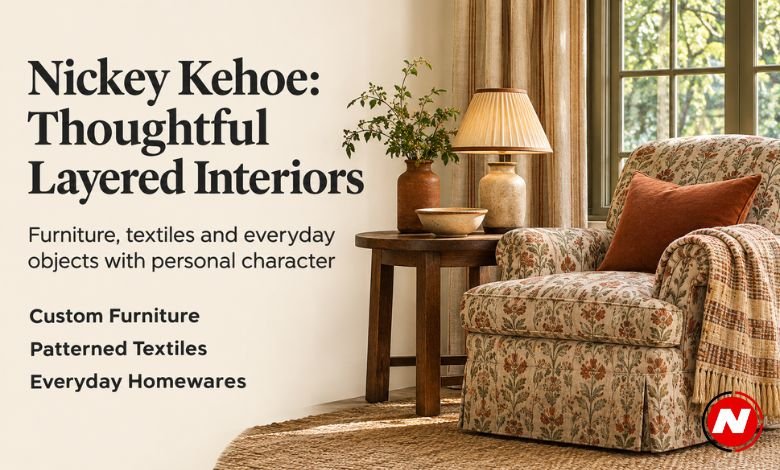
A comfortable chair, an unusual lamp, a patterned coverlet: sometimes the smallest details give a room its character. The challenge is bringing those details together so that a home feels welcoming, practical, and personal. This is where Nickey Kehoe offers an interesting perspective.
Founded by designers Todd Nickey and Amy Kehoe, the business combines an interior design studio with original furniture and carefully selected home furnishings. Its shops bring together pieces that serve different purposes, from upholstered seating and lighting to kitchenware and vintage objects.
Looking through this world reveals an approach built around relationships between color, texture, shape, and everyday use. For anyone curious about layered interiors, the brand offers plenty to explore and useful ideas about why certain rooms make us want to stay.
How Nickey Kehoe Began
Todd Nickey and Amy Kehoe began their design partnership in Manhattan in 2004. They later established their studio and boutique in Los Angeles, developing a business that connects interior design with furniture and retail.
That connection helps explain the breadth of their offering. Designing a room involves thinking about how people move through it, where they sit, and what they need close at hand. Choosing furniture and accessories brings those larger decisions down to individual objects.
The founders launched their original furniture collection in 2008. Their stated ambition was to create pieces that could continue through different stages of life, with the possibility of being reupholstered, repainted and passed along.
This gives the collection an emphasis on adaptability. A chair might move from a sitting room to a bedroom. A change of fabric could give a familiar sofa a different character.
The wider business now includes shops in Los Angeles and New York. Together with its design studio, these locations give customers several ways to explore the founders’ work, whether through a complete interior or a single object.
What Gives the Interiors Their Character?
Nickey Kehoe’s appeal becomes clearer when you consider how different materials can work together. Upholstery, timber, ceramics, glass and patterned textiles each contribute something distinct to a room.
A soft chair invites you to sit. A wooden table adds a firm surface and structure. A woven rug introduces texture, while a painting or ceramic vessel gives the eye somewhere to pause.
The result depends on balance. Too many objects competing for attention can make a space tiring. Too little variation can leave it feeling unfinished. Layered interiors work best when each addition has a purpose within the whole.
Pattern can help create that balance. A small print adds detail to a cushion or lampshade, while a larger design can set the mood for curtains, upholstery, or wallpaper.
Color provides another connection. A shade that appears quietly in a rug might return in a bowl, textile or piece of artwork. Repetition gives different objects something in common without requiring everything to match.
These are useful ways to interpret the brand’s varied offering. They also explain why a personal interior takes more consideration than simply buying attractive things. The relationship between the pieces matters as much as each purchase.
Original Furniture with Space for Personal Choice
Furniture is central to Nickey Kehoe, especially through its original collection of upholstered and wooden pieces.
The brand says it makes this collection in Los Angeles in family-owned and operated workrooms. Its designs draw on familiar furniture forms while letting customers influence the final look.
Upholstery choices include fabrics from several established textile houses. The collection also offers wood finishes and a customer’s own material program, creating opportunities to tailor a piece to a particular setting.
These decisions can have a considerable effect. A chair covered in a quiet, plain fabric allows its outline to take the lead. A patterned covering introduces a different energy and may make that same chair a focal point.
Wood finish also changes the relationship with the surrounding room. A darker finish can define a pale interior, while a lighter surface may sit more gently alongside other natural materials.
Appearance is only part of the decision. Seat depth, height, and overall dimensions determine how comfortable a piece feels and how well it fits.
Anyone considering custom furniture should also consider access, fabric care, and daily use. A beautiful sofa still needs to suit the people who will spend their evenings on it.
HOUSEHOLD and the Importance of Everyday Objects
Some of the brand’s most approachable ideas appear through HOUSEHOLD, which highlights objects used throughout the day.
The offering covers kitchen and tabletop items, bedding, bath accessories, candles, and garden and utility products. It combines the company’s own designs with pieces selected from other makers.
This makes practical objects part of the decorating conversation. A serving bowl can remain on a table between meals. Glassware adds shape and texture to an open shelf. A patterned coverlet can change the feeling of a bedroom without replacing its furniture.
The wider assortment includes mochaware ceramics, braided glassware and fringed jacquard bedding. Such pieces show how decoration can appear in objects with a clear everyday function.
Wallpaper and textiles extend that interest in pattern. The collection includes floral, geometric, and plaid designs, offering different levels of visual detail.
The Faded Flora wallpaper has a particularly specific starting point: the founders describe its inspiration as a turn-of-the-century book of hand-blocked textile samples discovered in southern France.
For someone exploring this approach at home, a small textile or useful ceramic piece offers a manageable beginning. Living with it reveals more than a quick photograph can: whether the color feels right, whether the object works well, and whether it continues to bring pleasure.
Exploring the Shops and Bringing Ideas Home
Nickey Kehoe has a retail presence on both American coasts, with locations that bring its furniture and home accessories together.
In Los Angeles, the showroom and HOUSEHOLD shop are listed at 7266 and 7270 Beverly Boulevard. The New York location is at 49 East 10th Street.
Visiting a shop can make the details easier to understand. Photographs communicate color and atmosphere, but they offer limited sense of scale, comfort, and surface texture.
Seeing a chair in person helps establish its proportions. Handling a fabric reveals its weight. Looking closely at a wooden finish shows details that may disappear on a screen.
The same attentive approach is useful when making changes at home. Start by identifying what the room needs. Perhaps the seating is comfortable, but the lighting feels harsh. Perhaps the colors work together, but the space needs more texture.
Solving one clear problem gives you a direction for what to buy. It also allows time to understand how a new piece interacts with existing belongings.
A personal room rarely needs every idea introduced at once. Leaving space for future discoveries can help it feel natural.
Conclusion
Nickey Kehoe brings together furniture, textiles and everyday objects through a thoughtful view of how people live. Its appeal lies in the connections between those pieces: their shapes, colors, textures, and usefulness within a room.
The most valuable takeaway is simple. Pay attention to what you enjoy using and living alongside. A comfortable chair, a well-chosen light or a bowl that becomes part of a daily routine can give a room lasting character.
(FAQs)
What is Nickey Kehoe known for?
The business is known for combining interior design services, original furniture, and curated home furnishings. Its offerings include seating, lighting, vintage objects, artwork, rugs, wallpaper, and everyday household accessories.
Who are the founders?
Todd Nickey and Amy Kehoe are the designers behind the business. They began their partnership in 2004 and later established a studio and boutique in Los Angeles.
Where is the original furniture made?
The company states that its original furniture collection is handmade in Los Angeles by family-owned and operated workrooms. Products sourced from other makers may come from different places.
Can customers customize furniture?
Yes. The collection offers upholstery and wood-finish choices, along with the option to use a customer’s own material program. The available options and requirements should be discussed for the particular piece being considered.
What can customers find in HOUSEHOLD?
HOUSEHOLD includes practical and decorative products for daily life, such as kitchenware, tableware, bedding, bath accessories, candles and garden items. The assortment includes both original designs and selected products from other brands.