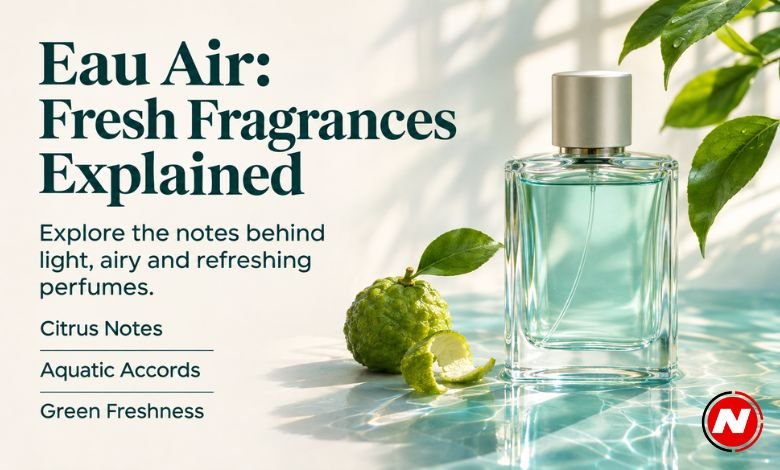
A perfume does not always need to make a dramatic entrance. Sometimes, its appeal comes from something quieter: a crisp citrus opening, a watery floral note or the soft impression of clean air against warm skin.
Eau Air brings those sensations to mind. The phrase suggests freshness and lightness, yet it can also cause confusion. Is it a particular perfume, a fragrance family or simply an appealing way to describe a scent?
The answer depends on the context. The words alone do not identify a standard perfume category or a fixed formula. To understand their appeal, it helps to explore the fragrance styles they suggest—and the small details that separate a refreshing scent from one that merely has a refreshing name.
What Does Eau Air Actually Mean?
In French, eau means water, while air means air. Together, the words create an immediate association with natural elements, open spaces and a feeling of freshness.
However, Eau Air should not automatically be understood as the name of one specific product. Without a brand or full product description, its meaning remains open.
In fragrance writing, it can suggest an airy, water-inspired scent. That impression might involve citrus, delicate flowers, green leaves or marine accords. These elements belong to several established fragrance styles rather than one single category.
The distinction matters because an attractive phrase cannot explain everything inside a bottle. It does not reveal the perfume’s concentration, ingredients, strength or lasting power.
A fragrance described as fresh might smell sharply herbal. Another might be softly floral, with a smooth, musky finish. Both could suit the atmosphere suggested by the words, despite smelling quite different.
The most useful approach is to treat the phrase as a starting point. Look for the manufacturer, the complete product name and the listed notes before deciding what a particular fragrance offers.
The Notes That Create a Fresh, Airy Impression
Freshness in perfume has more than one personality. It can feel sparkling and energetic, cool and watery, or soft and almost transparent.
Citrus notes are one familiar route. Lemon often gives a crisp impression, grapefruit can introduce a bitter edge, and bergamot can add brightness with a more rounded character.
Imagine peeling a citrus fruit at a kitchen table. The brief burst of scent feels lively and clear. A citrus-led perfume may aim to capture something of that immediate freshness, although the finished composition can be far more complex.
Green notes create a different scene. They may suggest leaves, stems, grass or herbs, giving a perfume a botanical character. Some green fragrances feel gentle; others have a sharpness that makes them quite distinctive.
Aquatic accords work through the suggestion of water and atmosphere. They can evoke sea air, damp surfaces or a cool breeze. These are constructed scent effects rather than proof that a perfume contains seawater.
Softer base notes can give the composition balance. Musk may provide a smooth finish, while woods can introduce a dry or gently warm quality.
The result depends on how these parts work together. A watery floral and a bitter green citrus perfume can both feel refreshing, but they offer very different experiences.
Why Lightness Can Be More Interesting Than Loudness
There is something appealing about a fragrance that leaves space around the person wearing it. It can become a small detail of daily life rather than the centre of attention.
That helps explain the attraction of the Eau Air idea. It suggests a perfume that feels comfortable and expressive without necessarily being overwhelming.
Consider an ordinary morning: a clean shirt, an open window and a few minutes before leaving home. A bright, understated scent can fit naturally into that scene. Its appeal comes from how it complements the moment.
Yet lightness does not mean a lack of character. A small bitter note, an unusual green accent or a soft woody finish can make a composition memorable.
Nor does “fresh” always mean subtle. Some marine fragrances have a forceful presence, while certain green notes can feel sharp and persistent. The overall effect depends on the formula and how much is applied.
Personal preference matters here. One wearer may enjoy a fragrance that stays close to the skin. Another may want something more noticeable.
Instead of judging a scent only by whether it is strong or weak, consider its balance. Does it feel pleasant throughout the day? Are its main notes enjoyable? Does its presence suit the setting?
Those questions reveal more than a fashionable description.
Freshness, Concentration and Lasting Power Are Different Things
One of the easiest mistakes at a perfume counter is assuming that a fresh-smelling fragrance must be a weaker one.
Scent character and concentration describe different qualities. Freshness concerns the impression a perfume creates. Concentration concerns how the fragrance is formulated.
Labels such as eau de toilette and eau de parfum provide information about concentration, although formulations vary between brands and products. They do not tell you whether the perfume smells citrusy, aquatic, floral or woody.
A fresh composition can therefore be an eau de parfum. Equally, an eau de toilette can have a rich or distinctive character.
Lasting power adds another layer. A bright opening may fade while quieter notes remain noticeable underneath. That does not necessarily mean the whole perfume has disappeared.
Fragrances are often described through top, heart and base notes. These overlap as the scent develops, allowing different details to become more noticeable over time.
A perfume that begins with sparkling citrus might later reveal herbs, flowers, musk or woods. Its final character may be quite different from its first impression.
This is why a quick spray cannot tell the complete story. Give a fragrance time before deciding whether its freshness lasts in a way you enjoy.
How to Choose a Fragrance That Matches Your Expectations
Before exploring Eau Air-style scents, decide what you actually want freshness to smell like.
“Clean and lemony”, “green and herbal” or “soft and watery” are useful descriptions. They give you a clearer direction than simply asking for something light.
Read the listed notes, but keep an open mind. A note list offers clues; it cannot fully describe the balance, texture or development of a finished perfume.
Start with paper blotters to narrow your choices. Once a fragrance interests you, try it on your skin and allow the opening to settle.
Picture choosing a perfume during a busy shopping trip. Its first spray feels bright and exciting, but an hour later it becomes sweeter than expected. That later stage deserves attention because it forms part of the wearing experience.
A sample gives you time to make a calmer decision. Wear it during an ordinary day and notice how it feels in familiar surroundings.
Think about application, too. Begin with a small amount and assess the result before adding more. A fragrance may seem comfortable outdoors but more prominent in a small room.
Finally, separate scent preferences from broader product claims. A fresh smell does not, by itself, establish that a perfume is natural or environmentally preferable. Those questions require information about the actual product.
Choose the fragrance you enjoy wearing after the first excitement has passed. That is usually a stronger guide than packaging or a poetic name.
Conclusion
Eau Air suggests a fragrance experience built around water, openness and a lighter touch. Its meaning becomes clearer when you look beyond the phrase to the actual product, fragrance notes and development on the skin.
Fresh perfumes can be sparkling, green, watery or softly floral. Each offers a different interpretation of the same appealing idea.
The right choice is the one that continues to feel comfortable and interesting long after the opening spray. Sometimes, a quiet scent leaves the clearest impression.
(FAQs)
Is Eau Air a recognised perfume category?
The phrase does not, on its own, identify a standard fragrance family or concentration. Depending on the context, it may suggest an airy scent style or relate to a particular product name.
What does an airy perfume usually smell like?
An airy perfume may feature citrus, green, aquatic, floral or musky impressions. The description refers to an overall feeling of lightness, so different airy fragrances can still smell very different.
Are aquatic fragrances made from seawater?
An aquatic accord describes a scent effect. Perfumers use fragrance materials to suggest water, marine freshness or damp air. The description alone does not indicate seawater as an ingredient.
Do fresh perfumes always fade quickly?
No. Freshness describes character rather than a guaranteed wear time. Some bright opening notes may settle quickly while other parts of the fragrance remain noticeable.
Can fresh fragrances be worn in every season?
Yes. There is no fixed season for enjoying them. Some people prefer citrus in warm weather, while others enjoy green, floral or softly woody freshness throughout the year.