
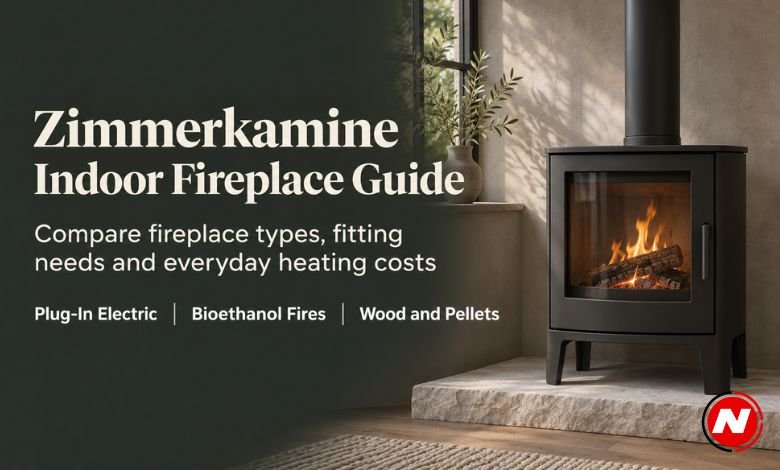
The most important part of an indoor fireplace may be the part you never see. Behind the flames, there could be a simple plug, a tank of liquid fuel or a flue that carries smoke outdoors. That difference shapes everything from the work involved in fitting the fire to how often you are likely to use it.
Zimmerkamine is the German term for indoor fireplaces. It covers electric fires, bioethanol fireplaces and stoves that burn logs or pellets. The choice gets easier once you decide what you want from the room. A soft glow beside the sofa calls for a different purchase from a stove you plan to use most evenings through winter. Your layout, heating needs and budget will narrow the options.
What to consider before choosing an indoor fireplace
Start with the room you spend the most time in. If it already feels warm by the time you settle down, you may only want the light and movement of a fire. If it loses heat quickly, look at how much warmth the appliance can deliver and how long you expect to run it.
Where the fire goes matters as much as how it looks. A wide fire can give an open-plan room a focal point, while a freestanding stove might suit an awkward corner. Measure how far the appliance would project into the room. It is easy to judge the width from a picture and forget how much floor space the fire or its surround will occupy.
If you rent, think about whether you want to take the fireplace with you when you move. A freestanding model is easier to plan around than one built into a wall. For anything that needs permanent fitting, discuss the work with your landlord before you order.
Electric fireplaces for a glow at the touch of a button
An electric fireplace creates the appearance of flames without burning fuel in the room. Models with a separate flame-only mode can give you the glow even when the heating is off. If you want warmth as well, check that the model includes a heater and that you can adjust its output.
Look beyond the flame effect when comparing electric Zimmerkamine. A freestanding fire needs somewhere to sit and a suitable socket within reach. A wall-mounted or recessed design may take more planning. Check the fitting dimensions as well as the width of the front, especially if you want the fire to sit flush with the wall.
It is easy to estimate the cost of a short burst of heat. A 2 kW heater running at full power for half an hour uses 1 kWh of electricity. Multiply that by your unit rate. In everyday use, a lower setting or a thermostat that switches the heater off when the room warms up can reduce how much electricity it uses.
Bioethanol fireplaces and the trade-off behind a real flame
A bioethanol fireplace burns liquid fuel to produce a real flame. It is easy to see the appeal in a room with no chimney. A small burner can change the feel of a bare corner, while a wider firebox can bring the movement of a flame to a simple fireplace surround.
The practical difference shows up after the flame goes out. There is fuel to buy and store, and the burner needs attention between uses. Because a flueless model releases the products of burning fuel into the room, indoor air quality matters when you weigh up this type of fire. Its main appeal is the live flame, especially if you plan to light it only occasionally.
Wood-burning and pellet stoves for regular warmth
A wood-burning stove can make sense in a room you use most evenings, provided the building can accommodate it. Ask an installer to assess the space and the chimney flue before you choose a model. A large stove may look right against a broad wall and still produce more heat than a well-insulated room needs.
Think through the weekly routine as well. A log stove means finding space for dry firewood, carrying it in and clearing out the ash. A pellet stove feeds pellets automatically from a storage compartment, so there is less fuel to add by hand while the fire is running. Both types need upkeep and a suitable flue.
An existing chimney can make a stove project seem straightforward. Its condition and suitability still need checking. That early assessment can affect the fitting cost and may change which models make sense for the room.
Compare the price you pay with the cost of using the fire
The price of the appliance tells only part of the story. Compare Zimmerkamine by what it takes to get each option working in your home. A plug-in fire may be a simple purchase. A built-in fire may need a surround and fitting. With a stove, the quote may include a hearth, flue work and labour.
Then think about an ordinary week in winter. If the fire will be on for an hour at the weekend, the price of fitting it may matter more to you than small differences in running costs. If you expect to use it most nights, fuel, electricity and maintenance deserve a closer look. Use your likely routine when comparing prices.
Conclusion
Choosing among Zimmerkamine comes down to what you want the fire to do on a typical evening. Electric models suit a quick glow and occasional heat. Bioethanol offers a live flame, with fuel handling and indoor air quality to consider. A wood or pellet stove can serve a bigger heating role where there is a suitable flue.
The best test is to picture the fireplace in use a month after it goes in. If it still makes sense for the room, the budget and the work you are willing to put into it, you have found a fire you are likely to enjoy.
(FAQs)
Do all Zimmerkamine need a chimney?
No. Electric fireplaces and flueless bioethanol burners can work without a chimney. Wood-burning and pellet stoves need a suitable flue to carry combustion gases outdoors.
Can I use an electric fireplace with the heater switched off?
Yes, if the model has a separate flame-only setting. Check the controls before buying, as the display and heater operate separately on some models.
Can a bioethanol fireplace heat a living room?
It gives off some warmth while it burns. For regular room heating, consider a dedicated heater, since a flueless bioethanol fire releases combustion products into the room.
What is the difference between a log stove and a pellet stove?
A log stove burns firewood that you add by hand. A pellet stove feeds compressed wood pellets from a storage compartment into the burner automatically.
Which fireplace is easiest to move to another room?
A freestanding plug-in electric fire is usually the simplest to move. Check its weight and dimensions, as well as whether the new room has a suitable socket.


