
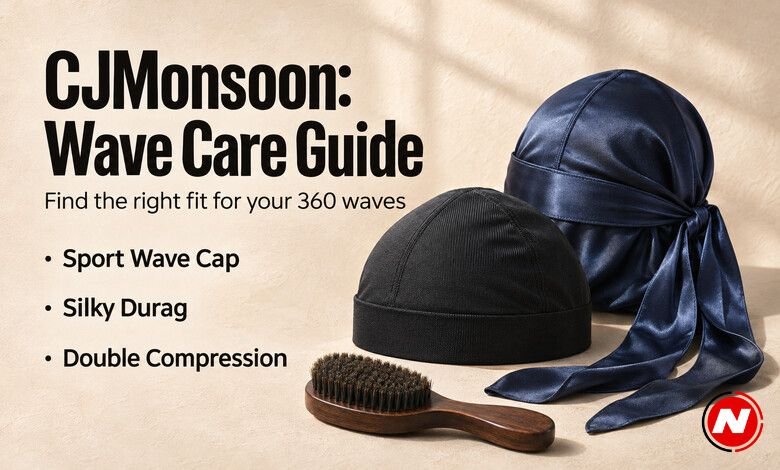
The first thing you notice about a wave cap is how it feels when you pull it on. The real test comes later, when you lift it off and see whether the hair around your crown, temples, and nape stayed where you brushed it. That’s where small details, like band width or how a seam sits, can make a difference.
CJMonsoon is a name associated with Monsoon Caps, a wave-care brand known for compression caps and silky durags. Its headwear is designed to hold brushed hair in place. The right choice depends on when you need that hold, how much coverage you want, and which fit feels comfortable enough to wear regularly.
What CJMonsoon Headwear Does After You Brush
A good brush session sets the direction of your waves. A compression cap or durag then applies gentle pressure to keep the hair close to your head. Think of the cap as the last step of the session. Once you’ve worked through the crown, sides, and back, the headwear helps keep those sections in place while you go about your day or settle down for the night.
Coverage matters because hair can lift in one area while the rest of your pattern looks fine. If your front waves usually stay flat but the back lifts, check where the cap ends at the nape. If your crown is the section you spend the most time brushing, look for fabric that sits smoothly over it. A cap that feels firm across the forehead can still sit loosely elsewhere.
The same principle applies to 540 and 720 waves. Those patterns use different brushing angles, but the headwear’s job stays the same. It holds the hair in the direction you’ve already brushed it. Choose the fit based on which areas of your head need coverage and how comfortably the cap sits.
Monsoon Sport Cap, Regular Caps and Silky Durags
The Monsoon Sport Cap is the activewear option associated with the range. A pull-on cap makes sense if you want to cover your waves before a gym session or during an active day. When comparing listings, pay attention to the fabric, the stretch around the opening, and how far the cap comes down at the back. Those details tell you more about how it might feel in use than the word sport on its own.
A regular compression cap is a straightforward choice after brushing. You can wear it alone, and some wavers pull one over a durag for extra hold. Start with a single layer and see what your hair looks like when you take it off. If one section keeps lifting, check whether the cap is reaching that area before adding another layer.
A silky durag gives you more control over the tension because you tie it yourself. You can smooth the fabric over the crown, lay the straps flat, and adjust the fit at the back. If you prefer a wider strap, check the photos for its actual width and look for any folded edges where it crosses the forehead. If you care about the fabric, check the fiber listed on the label. Silky describes how the material feels.
You may also come across the Dual Storm Cap name. Its exact construction and current availability could not be confirmed. If a listing catches your eye, look for photos of the inside and a clear explanation of how the cap is made before assuming it offers a particular type of compression.
How to Use a Wave Cap Without Losing Your Brush Work
Start by brushing each section in the direction of your pattern. When you put on a pull-on cap, open it with both hands and lower it over the hair. Take a moment to smooth any folds and check that the back edge reaches the area you want to cover. With a durag, position the fabric over the crown first, then flatten the straps before tying them.
If you’re wolfing, which means growing your hair between cuts while maintaining your waves, pay attention to how the fit changes. A cap that sat easily over a fresh cut may feel snugger as your hair grows. Use a mirror to check which section lifts when you remove it. If it’s always the same spot, check how the fabric sits there and whether your brush strokes follow the direction you want.
You can also judge the fit by how it feels when you reach for the headwear. A cap you wear for half an hour after brushing has a different job from a durag you wear overnight. For sleeping, check whether the band presses on your temples when you lie on your side or whether the knot bothers you when you lie on your back. A small adjustment can make the same piece much easier to wear.
What to Check Before Buying CJMonsoon Gear
Start with the product photos. For a cap, look for a view of the back and the inside band. For a durag, check the strap length, seam placement, and the amount of fabric around the crown. If you already own a piece that fits well, compare its shape and measurements with the listing. That gives you a better reference than a broad label such as one size.
Older reviews can help you identify a style, but stock and retail terms can change. I couldn’t verify current brand-wide delivery times, free-shipping thresholds, or discounts. Check the seller’s name, the exact model, and the total price at checkout. If you’re ordering from overseas, read the returns terms as well, especially if the size is uncertain.
Conclusion
CJMonsoon headwear fits into the part of wave care that comes after brushing. A pull-on cap offers quick coverage, a silky durag gives you control over the tension, and a sport cap suits those who want to keep their hair covered while active.
When choosing between them, think about the section of hair that gives you the most trouble and when it tends to lift. That tells you what to look for in the fit. The moment that matters is when the cap comes off, and your waves are still lying the way you brushed them.
Frequently Asked Questions
What is CJMonsoon known for?
CJMonsoon is associated with Monsoon Caps and Monsoon Custom Apparel. The name is linked to wave caps, silky durags, and other compression headwear used to keep brushed waves laid down.
Can a Monsoon wave cap work for 540 or 720 waves?
Yes. The cap helps hold brushed hair in place, no matter which wave pattern you wear. Keep your brushing angles consistent and choose a cap that covers the sections you want to keep flat.
Can I wear a compression cap over a durag?
Yes. Some wavers use a cap over a durag for extra hold, especially as their hair grows between cuts. Smooth the first layer before adding the second, and make sure the bands feel comfortable together.
Is a cap or a durag better for sleeping?
It depends on which stays in place comfortably. A tied durag lets you adjust the fit. A pull-on cap may suit you if you prefer to sleep without a knot. Try whichever feels secure when you rest your head on the pillow.
Can wearing a wave cap alone give me 360 waves?
A wave cap helps preserve the direction you’ve brushed your hair. Building 360 waves takes regular brushing along consistent angles around the crown, sides, and back.


