Incfidelibus Explained: The Strange Meaning and Online Story Behind the Name

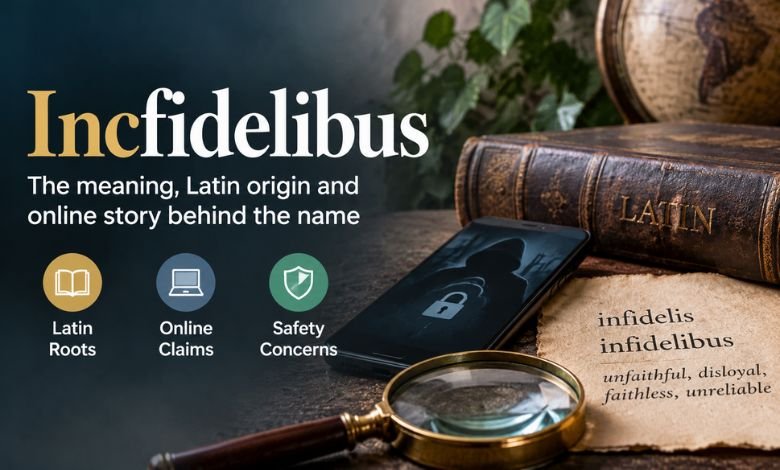
Some words are easy to define. Incfidelibus is not one of them. It looks ancient, sounds mysterious and has been connected with very different subjects online. Some people treat it as a Latin expression, while others associate it with technology, phone monitoring and digital security.
The confusion begins with its spelling. The recognised Latin form is infidelibus, without the letter “c”. That small difference matters because it suggests that the version used online may be a creative name, spelling variation or typing error rather than a genuine Latin term.
Its digital history adds another layer. Older internet posts connected the name with phone-access services, while the current website using it publishes general articles. This article separates the language from the online claims and explains what can be said with confidence.
What Does Incfidelibus Actually Mean?
There is no single, widely accepted meaning for Incfidelibus. It is not a common English word, and its exact spelling is not recognised as a standard Latin expression.
The closest established Latin word is infidelibus. This comes from infidelis, which can mean unfaithful, disloyal, faithless or unreliable. The meaning changes slightly according to the sentence in which it is used.
In Latin grammar, infidelibus is a plural form. Depending on the context, it may carry a sense similar to “to the unfaithful”, “for the disloyal” or “among those without faith”. It should not always be translated in exactly the same way.
The additional letter “c” separates the online name from the traditional word. It may be the result of a spelling mistake, a deliberately altered version or a brand created to sound distinctive. There is no confirmed record explaining why that spelling was selected.
This means the safest definition is simple: it is an uncommon digital name that resembles a real Latin word but does not have a verified independent meaning of its own.
The Latin Connection Behind the Name
The recognised word infidelis is formed from the Latin root connected with fidelis, meaning faithful, loyal or trustworthy. Adding in- changes the sense and creates the opposite idea.
This language family later influenced English words such as “fidelity” and “infidel”. Fidelity refers to loyalty or faithfulness, while infidel historically described someone considered outside a particular religious faith.
Yet the older Latin idea was not limited to religion. It could also refer to someone who was dishonest, unreliable or disloyal. The surrounding sentence decided whether the word concerned faith, trust, personal loyalty or moral behaviour.
That point is important. Translating old words without context can produce a definition that sounds certain but is actually incomplete. Latin relies on grammatical endings, so the same base word may take different forms according to its role in a sentence.
The spelling Incfidelibus does not follow the recognised form. A genuine historical phrase would normally use infidelibus. Describing the altered version as a confirmed ancient word would therefore be inaccurate.
It is still possible that the creator of the online name was inspired by Latin. A term connected with secrecy, trust or betrayal would suit an identity dealing with private relationships or digital monitoring. However, that remains an interpretation rather than a proven origin story.
How Incfidelibus Became an Online Identity
The name gained attention through older online material that linked it with mobile phones, messaging accounts and monitoring services. Promotional posts claimed that a person or service using the name could access private communications or help clients monitor another person’s device.
Many of these messages focused on relationship problems. They targeted people who suspected a partner of cheating and promised access to WhatsApp messages, phone records or social media accounts.
Such claims can be emotionally powerful. Someone who feels betrayed may act quickly, especially when an advert promises hidden evidence. But emotional pressure is also what makes these offers dangerous.
An online claim is not proof that the advertised service exists or works. Anyone can create an account, publish a testimonial or promise access to private data. Without a verified company, transparent payment terms and lawful methods, there is no dependable way to know who is behind the offer.
There is another problem: secretly accessing another person’s device may be illegal. Even if two people are married or in a relationship, one partner does not automatically have the right to enter the other person’s private accounts.
That is why Incfidelibus should not be described as an established hacking technology. It is not the recognised name of a computer programme, security protocol, malware family or technical method. The cybersecurity connection comes from old online promotions using the name.
The difference may sound small, but it changes the whole story. A brand associated with technical claims is not automatically a genuine technical product.
The Modern Website and Its Changed Purpose
The current website carrying the name has a different public identity. Its content covers general subjects such as technology, online platforms, education, fashion, website reviews and digital trends.
This looks more like an online magazine than a specialist phone-monitoring operation. Visitors may find guides, explanations and articles about unfamiliar websites rather than a direct offer to access private accounts.
However, it would be wrong to assume that the modern publishing website and the older service are controlled by the same people. Websites change hands. A domain can expire, be purchased by someone else and return with completely new content.
The name may remain the same while its purpose, owner and audience change. Without dependable ownership records connecting the different periods, they must be treated separately.
This explains why the term produces mixed descriptions. One person may know it through older phone-monitoring claims. Another may visit the present website and see ordinary magazine content. Someone interested in languages may simply notice its similarity to Latin.
All three experiences involve the same spelling, but they do not necessarily refer to the same organisation or idea.
Digital Safety Lessons From the Story
The unusual history behind the name offers a wider lesson about trust on the internet. A professional-looking title, technical language or confident promise does not prove that a service is genuine.
Offers involving secret access to messages should always be treated with care. They may expose a person to fraud, malware, data theft or legal trouble.
One major warning sign is a request for sensitive details. A supposed expert may ask for passwords, verification codes, identity documents or direct access to a device. Sharing these details could allow that person to take control of the customer’s own accounts.
Payment method also matters. Fraudulent operators often prefer gift cards, cryptocurrency or direct transfers because the money can be difficult to recover. They may demand an extra payment later, claiming that another tool or security code is needed.
Real cybersecurity professionals work with clear permission. They explain what they can legally do, provide written terms and identify the person or company providing the service. They do not guarantee secret access to any account in the world.
Common warning signs include:
- Promises to enter any phone or social media account
- Requests for passwords or one-time security codes
- Pressure to pay immediately
- No clear business name or physical address
- Anonymous testimonials with no proof
- Claims of complete secrecy and guaranteed results
- Demands for repeated payments
Anyone worried about a compromised account should use official recovery options. Changing the password, checking active login sessions and enabling two-factor authentication are safer first steps.
If a phone behaves strangely, a qualified technician can inspect it for harmful applications. Victims of blackmail, fraud or illegal monitoring should keep evidence and contact the appropriate authorities.
Why the Name Still Attracts Curiosity
Mystery plays a large part in the continuing interest. The name sounds old, but its exact spelling lacks a clear classical definition. It has a digital past, yet it is not a recognised technical term. The modern website also presents a different purpose from the one linked with earlier posts.
That combination naturally creates questions. People want to know whether it is Latin, a company, a hacking service or an online magazine. The honest answer is that the meaning depends on where and how the name is being used.
In a language discussion, it is best treated as a variation of infidelibus. In older technology-related material, it functions as an identity associated with unverified monitoring claims. In its modern web context, it serves as the title of a general content platform.
Understanding these differences prevents unrelated claims from being mixed together.
Conclusion
Incfidelibus is not a word with one simple definition. It resembles the genuine Latin form infidelibus, yet its additional letter makes it a non-standard spelling. It later became connected with online claims involving phone monitoring, although those claims do not make it a recognised cybersecurity term.
The modern website using the name now publishes general informational content. There is no clear evidence proving that its current publisher is responsible for the older services associated with the title.
The most sensible way to understand the name is to examine its context. Separate the Latin connection from the online brand, and separate historical promotions from the present website. Above all, treat secret phone-access promises with caution because mystery should never be mistaken for trust.
(FAQs)
What is Incfidelibus?
It is an unusual online name with no single confirmed definition. It closely resembles the Latin word infidelibus, but its spelling includes an additional “c”.
Is Incfidelibus a real Latin word?
The exact spelling is not recognised as a standard Latin word. The accepted form is infidelibus, which comes from infidelis and relates to being unfaithful, disloyal or without faith.
Is it connected with hacking?
Older online posts associated the name with phone monitoring and account-access claims. However, it is not a recognised hacking method, cybersecurity tool or technical standard.
Is Incfidelibus.com a phone-monitoring website?
Its current public content focuses on general articles, technology topics, education, fashion and website reviews. This differs from the monitoring claims connected with older uses of the name.
Can phone-monitoring services be trusted?
Any service offering secret access to another person’s phone should be treated with extreme care. It may involve fraud, privacy violations or illegal activity. Never share passwords or verification codes with an unknown operator.
Why are there different explanations of the term?
The confusion comes from its Latin-like spelling and its use by different online identities. The language connection, historical promotions and present website should be examined separately.