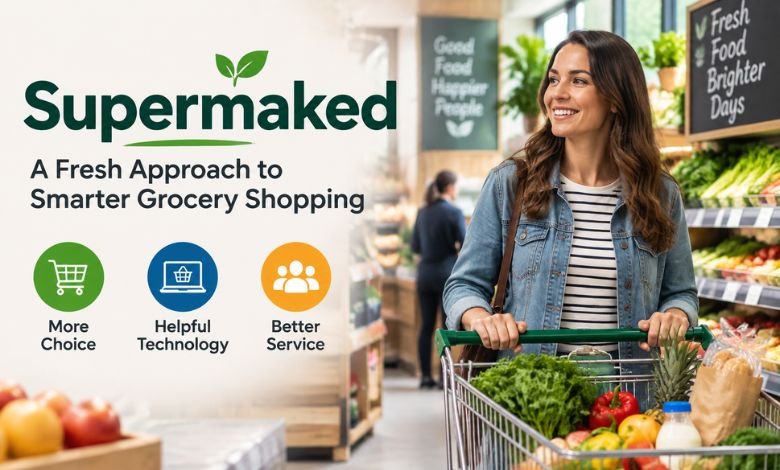
Grocery shopping should be one of the easiest jobs of the week. Yet a quick visit can soon become tiring when shelves are confusing, a basic product is unavailable or the queue takes longer than the shopping itself. Supermaked describes a modern retail idea that tries to solve these familiar problems through better planning, useful technology and more flexible service.
The term looks similar to “supermarket”, but it is not an established English retail category. It is better treated as a distinctive name linked with convenient local shopping. The idea brings together the strongest parts of a traditional food shop and the practical benefits of digital retail. Its purpose is not to make shopping complicated or fully automated. Instead, it focuses on helping people buy daily essentials with less delay, less confusion and more choice.
Understanding the Meaning Behind Supermaked
The spelling immediately creates curiosity because it is only slightly different from the familiar word “supermarket”. That similarity makes its retail connection easy to recognise. At the same time, the changed ending gives the name a separate identity that could be used for a website, local shop or broader shopping concept.
There is no single industry definition for the term. It should not automatically be described as a large supermarket company, an international chain or a special software system. Those claims would require clear business evidence. A fair explanation is that it represents a modern approach to grocery retail, with an emphasis on convenience, organisation and customer service.
The concept becomes clear through the problems faced by an ordinary shopper. People often enter a shop with limited time and a simple task. A badly arranged store makes that task harder than it needs to be.
A modern local market can improve that experience without changing the nature of grocery shopping. Clear departments, accurate shelf labels and sensible product placement can have an immediate effect.
A Retail Model Designed for Real Daily Life
Convenience is often treated as if it only means speed, but it includes much more. A convenient shop should be easy to enter, easy to understand and reliable enough that customers can finish their task without unexpected trouble.
Consider a parent collecting groceries on the way home. The customer may have a child waiting, dinner to prepare and little patience for a missing price label. In this situation, a clean layout and an accurate stock system are not small details. They shape the entire visit.
An older person may need help with a heavy item, while a worker may collect an online order during a short break. A good retail model recognises these different needs.
This is where the Supermaked idea has practical value. Customers could choose a normal in-store visit, prepare an order online, collect a packed basket or request home delivery. These options allow the shop to fit the customer’s day rather than demanding a fixed routine.
Choice also matters inside the store. Self-checkout may suit a person buying three items, while a staffed till may be better for a full trolley or someone who needs assistance. Providing both options can reduce delays without removing human contact.
Product range needs the same practical thinking. A local shop needs dependable essentials, fresh food, household goods and products suited to its community. A carefully chosen range can be more helpful than endless versions of every item.
How Digital Tools Can Support Better Grocery Shopping
Technology has a useful role in retail when it fixes a genuine problem. A digital stock system can show staff which products are selling quickly and which shelves need attention. This can reduce the gap between an item running out and a replacement reaching the shelf.
Better stock control supports smarter ordering. Excess fresh food may spoil, while insufficient stock leaves customers without what they need. Sales records can help managers respond to actual demand.
An online grocery service offers another form of flexibility. Customers can prepare a basket at home, check the expected cost and choose collection or delivery. This is particularly useful for people managing work, family duties, illness or limited transport.
Digital payments and electronic receipts may also make checkout faster. However, these services should remain optional. Cash, printed receipts and staff assistance are still important for many people. Modernisation works best when it adds choices instead of taking familiar ones away.
The same principle applies to self-checkout. A reliable machine can speed up a small purchase, but employees must remain available to solve scanning, payment and age-verification problems.
Retail software can also help employees work more effectively. If staff can check availability quickly, they spend less time walking between the stockroom and shop floor. They can give customers a clear answer and concentrate on service, cleanliness and product quality.
Why People Still Matter in a Modern Store
A shop may use advanced systems, but customers often judge it through small human moments. A helpful employee who finds an item, explains a price or handles a complaint fairly can build more trust than a polished mobile application.
Local knowledge is especially valuable. Staff may understand which products are important during religious events, school holidays or changes in the weather. They may also know when certain fresh goods sell quickly. This knowledge helps the store make decisions that reflect the community rather than relying only on general sales patterns.
The concept becomes more believable when it keeps this personal side of retail. A modern shop can use efficient systems behind the scenes while maintaining friendly service on the shop floor.
Community trust develops through consistent behaviour. Prices must be clear, promotions must be honest and complaints must be handled properly. If an online order contains a replacement item, the customer should know before payment or delivery. Convenience loses its value when it creates uncertainty.
Benefits, Limitations and Questions That Remain
The strongest benefit of this retail approach is a smoother customer experience. Better layouts can reduce wasted time. Accurate inventory records can improve availability. Online ordering can make groceries easier to access, while flexible checkout choices can prevent one long queue from controlling the whole store.
Retailers may benefit from clearer demand data, better use of staff time and less avoidable waste. These gains depend on careful management rather than technology alone.
Cost is a serious limitation. Payment terminals, stock software, delivery systems and training all require money. A smaller shop may need to solve its biggest problems first and introduce other improvements gradually.
Customer privacy needs equal attention. An app or loyalty programme may collect contact details, purchase history and payment data. A responsible retailer should explain what is collected and protect it properly. People should not have to exchange unnecessary personal details for a basic discount or delivery service.
Accessibility is another test. Digital screens may be difficult for customers with poor eyesight, limited movement or little experience with technology. A store cannot call itself convenient if part of the community struggles to use it. Clear signs, staffed tills, cash payments and direct help must remain available.
There is also an important difference between a promising name and a proven business system. Supermaked can describe a useful direction for grocery retail, but the name itself does not prove that every feature has been created or tested. Any store using such an approach must earn trust through its daily service.
Conclusion
Supermaked reflects a practical vision of grocery retail in which good organisation and useful technology work together. Its most valuable ideas are not dramatic: clearer layouts, dependable stock, flexible ordering, faster payment and staff who are ready to help.
The concept should not be presented as more established than the available facts allow. Its real strength is the simple question behind it: how can an everyday shop serve people better? A retailer that answers that question with fairness, accessibility and reliable service can create a modern shopping experience without losing the human qualities that customers still value.
(FAQs)
What is Supermaked?
It is a retail-oriented term connected with the idea of simpler, better-organised grocery shopping. It can refer to a distinctive online name or a broader concept combining local service with modern shopping tools.
Is it another word for supermarket?
Not in standard English. “Supermarket” remains the correct general term. The altered spelling may be used intentionally as a name, although it can also occur as a typing mistake.
Is it a major supermarket chain?
There is not enough confirmed evidence to present it as a major national or international chain. It is more accurate to discuss it as a retail name and modern shopping idea.
What services could this type of shop offer?
Possible services include organised aisles, live stock records, online ordering, collection, delivery, digital payments, self-checkout and staffed customer support.
Can smart inventory systems reduce food waste?
They can help managers understand demand and change ordering levels. This may prevent some excess stock, but waste reduction still depends on staff decisions, storage standards and careful planning.
Does modern retail mean shops will have fewer employees?
Not necessarily. Technology can automate basic tasks, but people are still needed to prepare orders, maintain shelves, check fresh food, solve payment issues and support customers.