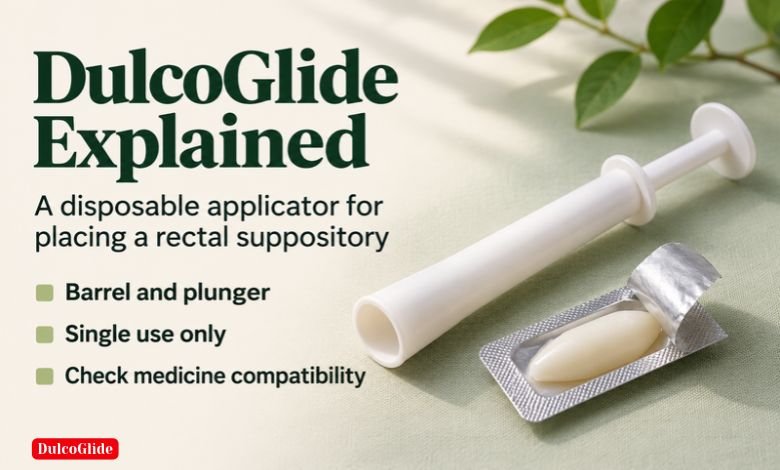
The clue is in the small print on an older Dulcolax box. Alongside the words medicated laxative suppositories, the carton mentions disposable applicators. That extra line explains why two similar names still appear in searches for constipation relief. DulcoGlide was the applicator used to place a suppository in the back passage. Dulcolax was the brand of the medicine supplied with it.
The contents depended on the pack. One US carton contained both the medicine and the applicators, while UK pharmacies also listed the accessory separately. The UK leaflet for Dulcolax Twelve Plus describes inserting the suppository by hand. So if you have seen an old pack online, the label on the carton you have today is the better guide to what is inside.
How the two products ended up in one box
In 2014, a US pharmacy trade publication described Dulcolax laxative suppositories available with or without applicators. One version came with five suppositories, each containing 10 mg of bisacodyl, and a set of disposable applicators. The bundle offered a different way to deliver the same medicine.
The name itself had appeared a little earlier. The US trademark record for DulcoGlide lists September 2013 as the claimed date of first commercial use. The application was filed in July 2014, and the registration followed in June 2015. Those dates help explain why some of the packaging and product references still found online go back more than a decade.
UK shoppers may remember a smaller box. British pharmacy listings show a three-pack containing individually wrapped applicators, with the suppositories sold separately. If you are trying to identify a pack from a photograph, look for the contents on the front or side. Similar branding can make two very different packs look like the same purchase.
What the DulcoGlide applicator actually did
The design used two parts. A barrel held the suppository, and a plunger released it once the applicator was in position. The device was then taken out, leaving the suppository in the rectum. Each applicator was intended for one use.
The idea was practical. Someone who found it awkward to position a suppository with a finger had another way to handle it. The published directions warned against forcing the device, since doing so could cause injury. They also referred to using it with a suitable suppository. If the medicine and applicator came from separate packs, a pharmacist could help check whether they belonged together.
The medicine has its own role. Bisacodyl is a stimulant laxative, which means it encourages the bowel to move. The applicator helps with placement. The medicine comes with instructions on dose, timing, and possible side effects.
Can you still buy DulcoGlide in the UK?
Older UK pharmacy listings are easy to mistake for current stock. One pharmacy marks the three-pack as no longer available, while another shows it as out of stock. These listings confirm that the accessory was sold separately. Current UK availability remains unclear.
The US trademark registration was canceled in December 2021. That gives a date for the change in the trademark record. A nationwide or worldwide withdrawal date is harder to establish from the available product records.
If you are at the pharmacy because you want help inserting a suppository, ask about the problem directly. A pharmacist can check what comes in the box and talk through the directions for the exact medicine. The current UK Dulcolax Twelve Plus leaflet describes blister strips containing the suppositories and explains how to insert one by hand.
What to check before using a rectal suppository
Start by reading the leaflet for the medicine you have. Instructions can vary by product, even between packs sold under the same brand. If you also have an applicator, check its directions and ask a pharmacist about compatibility if either pack leaves you unsure.
Bisacodyl suppositories are unsuitable in some circumstances. The UK Dulcolax Twelve Plus leaflet lists a bowel blockage, an anal fissure and severe tummy pain with nausea and vomiting among the reasons to avoid that product. It also advises asking a pharmacist or doctor before use if you are pregnant or breastfeeding.
The product is intended for short-term relief of occasional constipation. The UK leaflet says to use Dulcolax Twelve Plus suppositories daily for a maximum of five days. If you keep needing a laxative or your symptoms persist, speak to your GP so they can look into the cause.
Where a suppository fits into constipation care
Constipation can show up as hard or lumpy stools, more straining than usual or a feeling that you still need to go after using the toilet. Going less often than normal can also be a sign. A change in routine, low fiber intake, too little fluid, and some medicines can all contribute.
For occasional constipation, the NHS suggests gradually increasing fiber, drinking enough fluids and keeping active. If those changes are insufficient, a pharmacist can help you choose a suitable laxative. It helps to tell them how long you have been constipated and whether anything in your diet, routine or medicines has changed.
Speak to your GP if constipation keeps returning or fails to improve with treatment. Blood in your stool, unexplained weight loss or a sudden change in your bowel habits are also reasons to get checked.
Conclusion
DulcoGlide was a disposable suppository applicator sold separately in the UK and included in an older US Dulcolax pack. That history explains why the names appear together and why old photographs show different contents. If you are looking for constipation relief today, check the full name and strength on your carton, then follow the leaflet for that product.
(FAQs)
Does the applicator make bisacodyl work faster?
The available product information describes a tool for placing the suppository and gives no evidence that it speeds up relief. The UK Dulcolax Twelve Plus 10 mg leaflet gives a usual working time of 10 to 30 minutes for the medicine itself.
Can you wash and reuse the applicator?
The original accessory was designed for single use. The published directions say to discard it after use and keep it out of the toilet.
Can you use it with a different suppository?
Ask a pharmacist to check the exact product and strength. A similar shape alone doesn’t give enough information to judge compatibility.
Is the applicator suitable for children?
The old UK three-pack listing excluded children under 12. The medicine has separate age guidance, so ask a pharmacist or doctor about the specific suppository before giving it to a child.
What if you find it difficult to insert a suppository by hand?
Tell the pharmacist that it’s difficult, such as reaching or gripping. They can check the instructions with you and discuss whether a suitable aid or another form of treatment is available.