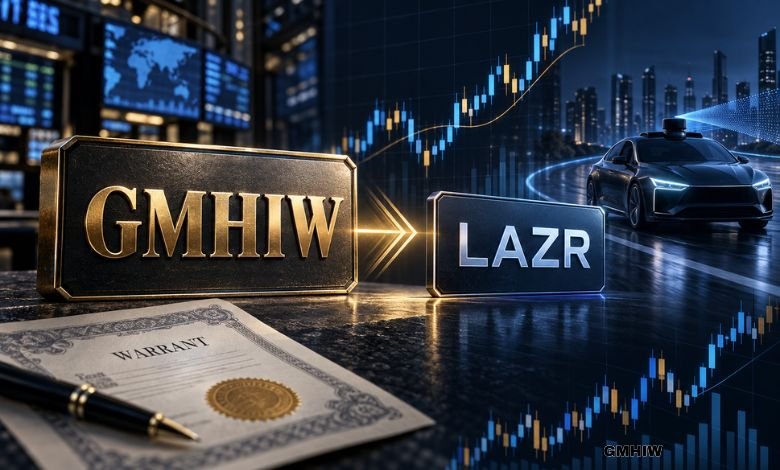
Some stock symbols remain visible online long after trading has ended. GMHIW is one of those symbols. It once represented the public warrants of Gores Metropoulos, Inc., a special purpose acquisition company that later completed a merger with Luminar Technologies.
The symbol attracted attention during the strong rise of SPAC deals and automotive technology investments. However, the merger changed the company’s identity as well as the tickers attached to its securities. GMHI became LAZR, while its warrants moved to LAZRW before eventually being removed from Nasdaq.
For anyone discovering the old symbol through a market chart, company filing or investment discussion, the history can appear confusing. The story becomes clearer once the purpose of the SPAC, the nature of its warrants and the effect of the Luminar merger are understood.
What Was GMHIW?
GMHIW was the trading symbol used for warrants issued by Gores Metropoulos, Inc. These warrants traded separately from the company’s ordinary shares after the securities included in its initial public offering were divided.
Gores Metropoulos was formed as a special purpose acquisition company, commonly known as a SPAC. Unlike a normal public company, it did not enter the stock market with an established operating business. Its main purpose was to raise capital and search for a private company with which it could complete a business combination.
The company launched its public offering in early 2019. Investors initially purchased units under the symbol GMHIU. Each unit contained one Class A share and one-third of a public warrant.
Once separate trading began, the share portion used the ticker GMHI. The warrant portion received the GMHIW symbol. This allowed investors to hold or trade the two types of securities independently.
A warrant is different from a share. It gives its holder the right to purchase a share at an agreed exercise price if the conditions written into the warrant agreement are met. It does not automatically provide the same ownership and voting rights as ordinary stock.
How the Gores Metropoulos SPAC Worked
A SPAC raises money before identifying or completing a merger with an operating company. The money from the public offering is normally placed in a trust account while the management team searches for a suitable target.
Investors support the SPAC because they believe its sponsors can find and complete a promising deal. However, they may not know which private business will ultimately be selected when they first buy the units.
Gores Metropoulos was connected with The Gores Group and businessman Dean Metropoulos. Its structure followed the standard SPAC model: raise funds, identify a target, present the proposed transaction to shareholders and complete the combination if the required conditions are satisfied.
The warrants provided investors with an additional opportunity. Each whole public warrant originally carried the right to purchase one Class A share at an exercise price of $11.50. Since each IPO unit contained one-third of a warrant, an investor generally needed three warrant fractions to create one whole warrant.
The warrants could become attractive if the underlying shares traded comfortably above the exercise price. They could also lose value if the share price remained low or if the business combination failed to meet market expectations.
This added both potential reward and extra risk. Warrant prices can move more sharply than ordinary shares because their value depends on the underlying share price, available exercise period and contractual redemption conditions.
The Merger With Luminar Technologies
The direction of Gores Metropoulos changed when it selected Luminar Technologies as its merger partner. Luminar was developing lidar technology for vehicles, including systems intended to support advanced driver-assistance features and future automated driving.
Lidar systems use laser pulses to measure the distance between a sensor and surrounding objects. The information can help a vehicle identify roads, other vehicles, pedestrians and obstacles. This made Luminar part of a growing industry focused on improving how vehicles understand their surroundings.
On 24 August 2020, Gores Metropoulos announced a formal agreement to combine with Luminar. The proposed deal gave the private technology company a path to the public market through an existing listed SPAC.
The transaction placed Luminar in front of a larger group of public investors. It also gave the company access to fresh capital that could support research, manufacturing and commercial development.
The merger was completed on 2 December 2020. At that point, Gores Metropoulos changed its name to Luminar Technologies, Inc. The legal structure of the public company continued, but its business identity became connected with Luminar and its automotive technology operations.
The completed transaction reportedly added around $380.6 million to the company’s cash position after the relevant transaction effects. This capital was important because developing and producing advanced vehicle sensors requires substantial investment.
How GMHIW Changed After the Merger
Corporate mergers often result in new market symbols, particularly when a SPAC adopts the name of its target company. That is exactly what happened following the Luminar transaction.
The common shares previously listed under GMHI began trading under LAZR. At the same time, the public warrants connected with the company moved from their former symbol to LAZRW.
The change did not mean the old warrant and the new warrant were unrelated investments. Instead, it reflected the new corporate name and market identity created by the completed business combination.
Someone reviewing an older chart may therefore see one symbol before December 2020 and another afterwards. Without knowing about the merger, it may appear that the first security disappeared without explanation.
The LAZRW public warrants did not remain listed permanently. Luminar later exercised its right to redeem the outstanding public warrants under the conditions set out in the warrant agreement. The warrants were delisted from Nasdaq on 5 March 2021 following their exercise and redemption.
For that reason, the original symbol is not an active trading opportunity. It belongs to the historical period before Gores Metropoulos became Luminar Technologies.
Understanding the Risks of SPAC Warrants
SPAC warrants can look appealing because they may cost less than the underlying shares. However, a lower market price does not automatically make them safer or more valuable.
Their worth depends heavily on the performance of the related share. If a warrant allows a holder to buy a share for $11.50 while the share trades below that amount, exercising the warrant would usually offer no immediate financial advantage.
If the share rises far above the exercise price, the warrant may increase in value. Even then, investors must consider the remaining exercise period, redemption terms and any restrictions included in the agreement.
Redemption is one of the most important risks. A company may have the right to call its public warrants once its share price meets certain conditions. Holders may then receive a limited amount of time to exercise or sell them.
Anyone who overlooks a redemption notice can face an unfavourable outcome. The warrant may be redeemed for a small amount after the deadline, even if it previously carried a higher market value.
Warrants can also experience sharp price movements. Excitement around a merger announcement may push their value higher, but delays, shareholder concerns or disappointing business updates can produce equally rapid falls.
Investors must therefore read the official warrant agreement rather than relying only on social media posts or old market charts. The agreement explains the exercise price, expiry rules, redemption powers and other conditions that determine how the security works.
Why the Old Symbol Still Appears Online
Inactive tickers often remain inside financial databases because historical information continues to be useful. Market websites may preserve old charts, trading prices and corporate descriptions even when a security has stopped trading.
Search engines can also display archived pages for several years. A user may enter the symbol and find an old quote that looks current, although it actually represents the final period in which the warrant was available.
The date attached to any market page is therefore important. A displayed price may be a final recorded figure rather than a live quotation. The absence of current trading volume can provide another clue that the security is no longer active.
Old symbols are also found in regulatory filings produced before a merger. Documents from Gores Metropoulos naturally use its earlier share, unit and warrant tickers. Later filings use Luminar’s corporate name and LAZR symbol.
Understanding this timeline allows readers to connect the two sets of records. It also prevents the common mistake of comparing the former warrant price directly with Luminar’s ordinary share price.
Why This History Matters to Investors
The history of GMHIW offers a practical lesson about researching SPAC investments. A ticker is only a label assigned to a particular security at a particular stage in a company’s development.
A merger can change the company name, share symbol and warrant ticker within a short period. Later exercises, redemptions or restructuring decisions can remove some of those securities from the market completely.
Investors should first determine whether a symbol represents a unit, an ordinary share, a preferred share, an option or a warrant. These securities may be connected with the same company, but they do not provide identical rights.
It is also important to build a clear timeline. The date of the public offering, merger announcement, shareholder approval, transaction closing and warrant redemption can explain most changes visible in historical trading information.
In this case, the timeline begins with the Gores Metropoulos IPO, continues through the Luminar merger and ends with the redemption and delisting of the public warrants. Each step changed how investors needed to interpret the security.
Conclusion
GMHIW was an important part of the Gores Metropoulos SPAC structure, but it was never the company’s ordinary share ticker. It represented public warrants that could be traded separately after the original IPO units were divided.
The Luminar Technologies merger changed the company’s identity and its market symbols. GMHI became LAZR, while the warrants moved to LAZRW before being exercised, redeemed and delisted in March 2021.
The symbol now belongs to market history, yet its story remains useful. It shows why investors must look beyond a ticker, identify the security behind it and follow every corporate event that may change its trading status.
(FAQs)
What does GMHIW mean?
It was the Nasdaq trading symbol for the public warrants of Gores Metropoulos, Inc., a SPAC that later combined with Luminar Technologies.
Was it the same as GMHI stock?
No. GMHI represented the company’s Class A shares, while the ticker ending in “W” represented its public warrants. The two securities had different prices and investor rights.
What company did Gores Metropoulos merge with?
Gores Metropoulos merged with Luminar Technologies, a company working on lidar sensors and related technology for the automotive industry.
What happened to the warrant ticker after the merger?
Following the business combination, the public warrant symbol changed to LAZRW. Luminar’s Class A common stock began trading under LAZR.
Can these former warrants still be purchased?
No. The public warrants were delisted from Nasdaq on 5 March 2021 after their exercise and redemption. Online pages showing the old symbol contain historical information.
Are SPAC warrants the same as ordinary shares?
No. Ordinary shares provide direct equity ownership, while warrants offer a conditional right to purchase shares at a set price. Warrants also carry separate expiry and redemption risks.