

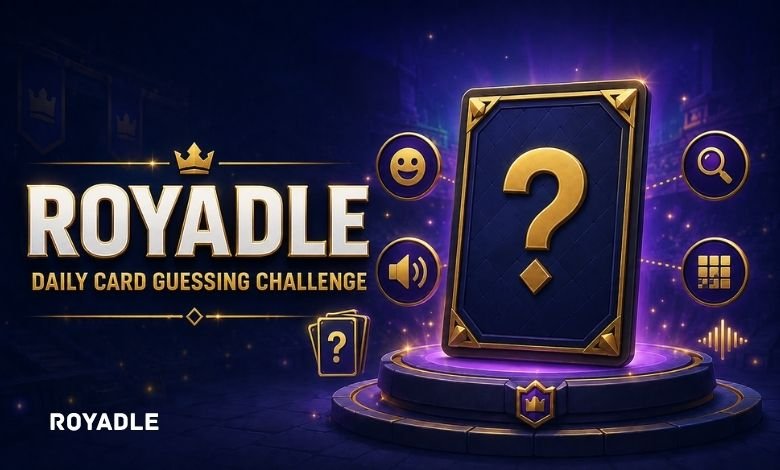
Clash Royale players spend countless matches learning how different cards look, sound and behave. But recognising those same cards from a tiny image, a collection of emojis or a short sound can be much more difficult. That simple idea forms the basis of Royadle, a daily online guessing game inspired by Wordle.
The goal is to identify a hidden Clash Royale card by examining the clues provided. Players can test themselves across five modes: Classic, Emoji, Sound, Zoom and Pixel. Each mode focuses on a different skill, from general card knowledge to visual and audio memory.
New puzzles are added daily, making the game a quick challenge for both regular players and long-time Clash Royale fans. It is easy to understand, but finding every correct answer may require serious knowledge of the card collection.
What Makes Royadle Different?
Many Clash Royale activities focus on battles, deck building and rankings. This guessing game moves away from competitive matches and places the cards themselves at the centre of the experience.
Players are asked to remember details that are often overlooked during a busy match. These may include a card’s colours, character design, voice, sound effect or visual theme. Something that appears familiar in the arena can become surprisingly difficult to recognise when it is separated from its usual setting.
The daily structure also keeps the experience focused. Instead of a constant barrage of questions, the game gives players new puzzles every day to solve. This gives people an incentive to return without the challenge being a long one.
The idea is simple enough for casual users, but the different modes add depth. A person may solve a visual puzzle immediately but struggle with an audio clue. Another player may recognise sounds easily while finding the Emoji mode confusing.
How the Five Guessing Modes Work
Each game mode asks players to discover a hidden card. However, the type of clue changes, creating a different experience in every section.
Classic Mode
Classic mode is the most direct version of the daily card puzzle. Players study the information given and use it to reduce the number of possible answers.
Success depends on familiarity with Clash Royale cards and the ability to make careful comparisons. An early guess may not reveal the answer, but it can help players think about which cards fit the available clues.
This mode rewards broad game knowledge. Players who remember a large part of the card collection may recognise the answer quickly. Newer fans can still take part, although they may need more time to consider the possibilities.
Classic mode is a good place to begin because it introduces the main guessing concept clearly. It is less dependent on interpreting unusual symbols or recognising isolated sounds.
Emoji Mode
Emoji mode describes the hidden card through a group of symbols. Players must decide what those emojis represent and connect their meaning with a Clash Royale card.
The symbols may suggest an element, character, weapon, action or other recognisable feature. However, emojis can be interpreted in several ways, which makes the correct answer difficult to spot.
A fire symbol might point towards a flame-based card, but it could also represent an attack, character or spell connected with heat. Players must look at the complete group of emojis rather than depending on a single symbol.
This mode brings humour and creative thinking into the challenge. It asks players to describe cards through ideas instead of relying on direct information.
Sound Mode
Sound mode tests how closely players have listened during Clash Royale battles. It provides an audio clue linked to the mystery card, leaving players to work out which character, troop or other card produced it.
Many cards have memorable voices and effects. These sounds may seem easy to recognise when they are heard alongside an animation. Without the image, however, the same audio can feel less familiar.
Players who normally use sound while playing may have an advantage. They have heard card voices and effects repeatedly, even if they never made an effort to memorise them.
The mode can produce surprising results. A player may instantly recognise a card they rarely use simply because its sound has remained in their memory.
Zoom Mode
Zoom mode displays only a close section of a card image. Instead of seeing the complete design, players must examine a limited view and search for useful details.
Colour is often important, but it is not always enough. Several cards may use similar shades, clothing or backgrounds. A small feature such as part of a weapon, helmet or face may provide the strongest clue.
The challenge rewards players who remember card artwork. It also demonstrates how different an image can look when its familiar shape and surrounding details are removed.
Some answers become clear immediately because the visible section contains a distinctive feature. Others remain uncertain until players connect several small details.
Pixel Mode
Pixel mode hides the finer details of the card behind a pixelated image. Players must rely on the general shape, colour pattern and outline to identify it.
A card with a unique design may remain recognisable even with limited detail. Cards that have similar colours or character shapes can be much harder to separate.
This mode tests overall visual memory rather than knowledge of one specific feature. Players are encouraged to step back mentally and think about which card best matches the complete pattern.
Pixel puzzles can be frustrating when several answers seem possible. That uncertainty makes the final recognition more satisfying, especially when the player succeeds from very little information.
Why Daily Card Puzzles Are So Enjoyable
A good daily guessing game does not require a long explanation or a major time commitment. Players can understand the objective quickly, attempt the available puzzles and then return the next day.
This short format works well for Clash Royale fans. A full battle demands concentration and quick reactions, while Royadle can be played at a more relaxed pace. There is no need to manage elixir, protect towers or predict an opponent’s next move.
The game can also become a friendly competition. Players may compare which clues they understood, discuss a difficult answer or challenge friends to complete all five modes. An unusual Emoji clue or confusing Pixel image can create plenty of conversation.
Daily puzzles also feel more meaningful than unlimited random questions. Everyone receives a fresh challenge, and each answer belongs to that particular day. This creates anticipation without demanding hours of attention.
How the Game Tests Real Clash Royale Knowledge
Knowing a card’s name is different from recognising it without its normal context. A person may use a particular card regularly but still fail to identify a small part of its artwork.
The different modes examine several types of memory. Classic mode tests general knowledge and logical thinking. Emoji mode focuses on association, while Sound mode measures audio recognition. Zoom and Pixel modes depend heavily on visual recall.
This mixture prevents the game from favouring only one skill. A player who struggles in one mode may perform much better in another. It also makes every daily session less predictable.
The challenges may help players notice details they previously ignored. Battles move quickly, so there is rarely time to examine artwork or think about individual sounds. A guessing puzzle removes that pressure and gives those details greater importance.
Older or less frequently used cards may also return to a player’s attention. Most people rely on a limited selection when building decks, but the hidden answer can come from beyond their usual choices.
Who Should Try Royadle?
The game is mainly designed for people who already enjoy Clash Royale. Long-time players can use it to test years of card knowledge, while newer users can treat it as a fun way to become familiar with the collection.
It is also suitable for players who want a Clash Royale-related activity without starting a competitive match. The puzzles provide a connection to the game’s characters and designs in a quieter format.
Different modes appeal to different people. Visual thinkers may prefer Zoom and Pixel, creative players may enjoy Emoji, and those who remember voices or effects may perform best in Sound mode.
No player needs to be an expert to take part. Some answers may be difficult, but that is part of the experience. Getting a clue wrong can still help someone remember the card more clearly in the future.
Conclusion
Royadle takes the familiar Clash Royale card collection and turns it into a varied daily guessing experience. Classic, Emoji, Sound, Zoom and Pixel modes test memory in ways that ordinary battles do not.
Its simple format makes it easy to start, while the hidden cards can still challenge experienced fans. For anyone who believes they know every Clash Royale card by sight, sound or theme, this daily guessing game provides the perfect opportunity to prove it.
(FAQs)
What is Royadle?
It is a daily online guessing game in which players attempt to identify hidden Clash Royale cards through different clues.
Is the game inspired by Wordle?
Yes. It follows the familiar idea of solving a new daily puzzle, but its challenges are based on Clash Royale cards rather than words.
What modes does the game include?
Players can choose from Classic, Emoji, Sound, Zoom and Pixel modes. Every mode uses a different clue format.
Do players need detailed Clash Royale knowledge?
Detailed knowledge can make the puzzles easier, but it is not required. New and casual players can also participate and learn more about the cards.
What is the difference between Zoom and Pixel modes?
Zoom mode reveals a close section of an image, while Pixel mode reduces the image’s clarity. Both test visual recognition in different ways.
Are new puzzles released regularly?
Yes. New puzzles are available daily, allowing players to return for another card recognition challenge.
