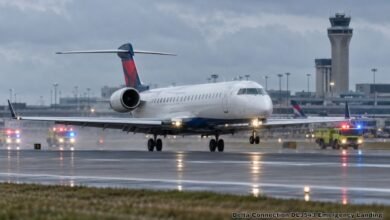
Delta Flight DL275 Diverted LAX: What Forced the Tokyo-Bound Plane to Change Course?


A flight to Tokyo unexpectedly became a journey to California when a Delta Air Lines aircraft changed direction over the northern Pacific. The plane had already been in the air for several hours when its crew decided that continuing towards Japan was no longer the best option.
The Delta Flight DL275 Diverted LAX incident happened in late May 2025. The Airbus A350-900 had departed from Detroit and was heading to Tokyo Haneda when a reported problem involving an engine anti-ice system led to the diversion.
Instead of landing at a nearby airport in Alaska, the plane flew south to Los Angeles International Airport. It arrived safely, but its unusual route left passengers and people following the flight online with one main question: why did the pilots choose an airport several hours away?
How an Ordinary Flight Took an Unexpected Turn
Delta Flight DL275 was scheduled to connect Detroit Metropolitan Wayne County Airport with Tokyo Haneda, one of Japan’s busiest international airports. The journey normally takes passengers across the northern Pacific before reaching Tokyo.
The aircraft operating the service was an Airbus A350-900 with the registration N508DN. This type of plane is built for long international journeys and is widely used on routes between North America and Asia.
The first part of the flight appeared normal. The plane travelled north-west from Detroit and reached its cruising altitude as it continued towards the Pacific.
The situation changed when the crew reportedly received information about a possible problem with an engine anti-ice system. At the time, the aircraft was believed to be hundreds of nautical miles south-west of Anchorage.
Rather than carrying on towards Tokyo, the pilots turned the plane south. Its new direction soon became visible on public flight-tracking websites, where users noticed that the aircraft was moving towards the western coast of the United States.
The turn did not lead to an immediate landing. DL275 remained in the air for several more hours before approaching Los Angeles. It eventually landed safely on Runway 06R at LAX.
There were no reported injuries. After landing, the aircraft left the runway normally and was taken out of service so that engineers could examine the reported fault.
The Tokyo section of the journey did not continue with the same plane. Passengers were left facing a major delay and needed new arrangements to reach their destination.
Why Delta Flight DL275 Diverted LAX Instead of Anchorage
The decision to fly to Los Angeles caused almost as much interest as the technical problem itself. Anchorage appeared much closer to the aircraft’s position, so turning south towards California looked unusual.
In aviation, however, the closest airport is not automatically the best airport. Pilots are expected to choose a suitable landing point, and suitability involves much more than distance.
The crew must consider the condition of the plane, the type of warning displayed in the cockpit and whether the aircraft can safely stay in the air. Fuel, wind, visibility and runway conditions also affect the decision.
Maintenance support can be equally important. An Airbus A350 is a large and technically advanced aircraft. Not every airport has the necessary equipment, replacement parts or qualified engineers available at short notice.
Los Angeles is an important location in Delta’s network. The airline operates domestic and international services from LAX and regularly sends wide-body aircraft through the airport.
Landing there would give Delta access to its own ground teams and a wider range of technical support. It would also make it easier to assist passengers, unload baggage and arrange alternative flights.
This does not mean maintenance was the only reason for choosing Los Angeles. Delta did not publish a detailed account of every discussion between the flight crew and its operations centre.
Weather conditions or other operational concerns may also have played a part. The final choice was probably based on several factors rather than one simple reason.
The important point is that the crew apparently believed the plane could safely reach LAX. If the warning had suggested an immediate threat, the pilots would have been expected to land much sooner.
What Was Wrong with the Engine Anti-Ice System?
Reports about the Delta Flight DL275 Diverted LAX incident focused on the anti-ice system connected with one of the aircraft’s engines. That description sounds serious, but it does not mean the engine had stopped working.
The Airbus A350-900 is powered by two Rolls-Royce Trent XWB engines. These engines are designed for long journeys through changing weather and very low temperatures.
Air at cruising altitude can be extremely cold. When moisture is present, ice may form around certain parts of the aircraft or engine.
An engine anti-ice system helps prevent that build-up. It normally uses heated air to protect areas where ice could affect airflow or engine performance.
A warning may appear if the system is not responding correctly. It can also be triggered by a faulty component or an unexpected reading from one of the aircraft’s sensors.
Such a warning does not prove that dangerous ice has already formed. It tells the pilots that a system they may need is not working exactly as expected.
Continuing towards Tokyo would have taken DL275 farther over the Pacific, where suitable airports are separated by long distances. The crew would also have had to consider the weather expected along the remaining route.
Turning back while the aircraft was still within reach of several major airports gave the pilots more control over the situation. It prevented them from taking an unnecessary chance with a technical problem that had not yet been fully understood.
A Diversion Is Not Always an Emergency
The word “diversion” can sound frightening, particularly when an engine system is involved. It can easily create the impression that the plane was moments away from a serious accident.
The known details do not support that description. DL275 remained airborne for hours after changing direction and completed a normal landing in Los Angeles.
There is also no confirmed evidence that either engine shut down. The available information points to a reported anti-ice system problem, not a complete loss of engine power.
A diversion is often a preventive decision. Pilots may change course because continuing would reduce their options, even though the plane is still flying normally at that moment.
Modern passenger aircraft constantly monitor their own systems. A cockpit warning allows the pilots to identify a possible fault before it develops into something more difficult to manage.
The crew then follows the appropriate checklist and discusses available landing options. Air traffic controllers help clear a new route, while the airline’s operations centre can provide weather and maintenance information.
This process may look calm from inside the cabin, but it involves several decisions being made at the same time. The pilots must manage the aircraft, understand the warning and prepare for an arrival that was not part of the original flight plan.
That appears to be what happened during the Delta Flight DL275 Diverted LAX event. The journey was heavily disrupted, but the technical concern was dealt with before it became a confirmed emergency.
What Happened After the Plane Reached Los Angeles?
Once the aircraft landed at LAX, it could not simply refuel and continue to Tokyo. Engineers first needed to determine why the warning had appeared and whether repairs were required.
Aircraft inspections can take time because maintenance teams must identify the exact cause rather than make assumptions. A warning may come from the main system, a valve, a sensor or another connected component.
The remaining flight to Tokyo was reportedly cancelled. Passengers therefore had to wait for Delta to provide alternative travel options.
For people on board, a safe landing did not end the inconvenience. They may have faced missed connections, accommodation problems and a much later arrival in Japan.
For the airline, the diversion also created additional work. It had to manage the aircraft inspection, support the passengers and adjust other operations affected by the unavailable plane.
Although these consequences can be expensive, they do not outweigh safety concerns. Airlines would rather inspect a plane on the ground than continue a long ocean crossing with an unexplained warning.
Why This Incident Received So Much Attention
Technical diversions happen across the airline industry, but this flight attracted unusual interest because of its long route to Los Angeles.
People watching the flight online could see that the plane had turned away from Tokyo. They could also see that it was passing airports that appeared closer than LAX.
Without information from the cockpit, that route naturally created questions. It also encouraged online speculation, including claims that were not supported by confirmed evidence.
Some descriptions presented the flight as a near disaster. Others suggested multiple emergencies had happened at the same time. No reliable public information has confirmed those dramatic versions.
What can be said with reasonable confidence is much simpler: a technical warning was reportedly detected, the crew selected Los Angeles as its diversion airport, and the plane landed safely.
The Delta Flight DL275 Diverted LAX story matters because it shows that the safest decision is not always the most obvious one to people watching from the ground.
Conclusion
The Delta Flight DL275 Diverted LAX incident turned a direct journey from Detroit to Tokyo into a long and unexpected trip to California. A reported engine anti-ice warning led the pilots to abandon the planned Pacific crossing and choose a major airport for inspection.
Not every detail behind the decision has been made public. It is therefore better to avoid dramatic claims about an engine failure or a near crash.
What the incident clearly shows is that flight crews do not wait for a technical concern to become dangerous. The diversion caused delays and frustration, but it also gave engineers the opportunity to inspect the aircraft safely on the ground.
(FAQs)
What happened to Delta Flight DL275?
The Tokyo-bound flight changed course after a reported engine anti-ice system problem. It flew to Los Angeles and landed without any reported injuries.
Where was DL275 originally going?
The aircraft was travelling from Detroit Metropolitan Wayne County Airport to Tokyo Haneda Airport in Japan.
What type of aircraft operated the flight?
DL275 was operated by an Airbus A350-900. The aircraft involved reportedly carried the registration N508DN.
Did one of the engines fail?
There is no confirmed evidence of a complete engine failure. Reports referred to a possible problem with an engine anti-ice system.
Why did the plane fly to LAX?
Los Angeles offered long runways, Delta ground support and facilities capable of handling an Airbus A350. Other factors, including weather and maintenance requirements, may also have influenced the decision.
Were any passengers injured?
No injuries were reported after the aircraft landed safely at Los Angeles International Airport.