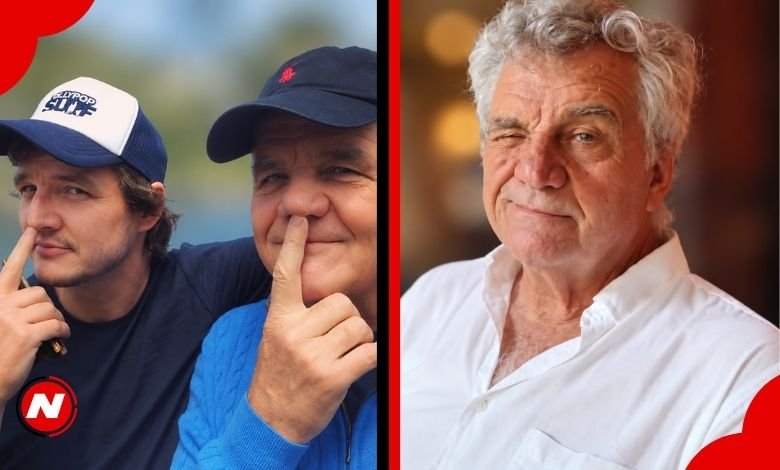
José Balmaceda Riera is a Chilean doctor who built a long career in fertility medicine before becoming widely known as Pedro Pascal’s father. His life extends far beyond this family connection. It includes medical education, work in assisted reproduction, political exile and a difficult professional controversy in the United States.
Born in Chile, he was forced to leave the country with his wife, Verónica Pascal Ureta, during Augusto Pinochet’s military rule. The family later settled in America, where Balmaceda continued his medical training and established himself as a reproductive endocrinologist.
Pedro Pascal’s success has created fresh interest in his father. However, José’s own journey remains a separate and complex story involving professional achievement, family responsibility and major personal change.
Quick Bio
| Field | Details |
|---|---|
| Full Name | José Balmaceda Riera |
| Birth Year | 1948 |
| Age | 78 years old as of 2026 |
| Birthplace | Chile |
| Nationality | Chilean |
| Profession | Doctor and fertility specialist |
| Medical Field | Reproductive endocrinology |
| Education | Pontifical Catholic University of Chile |
| Former Wife | Verónica Pascal Ureta |
| Children | Javiera, Pedro, Nicolás and Lux |
Early Life and Medical Education in Chile
José Balmaceda Riera was born in Chile in 1948. Detailed facts about his childhood and parents have remained private, but his education shows that he developed a serious interest in medicine from an early stage of his adult life.
He studied at the Pontifical Catholic University of Chile, where he qualified as a medical surgeon. His training created the foundation for his later work in obstetrics, gynaecology and reproductive health.
Fertility medicine was still developing when Balmaceda entered the profession. Doctors and scientists were beginning to understand more about reproductive hormones, infertility and the medical conditions that could prevent conception.
He chose to concentrate on this emerging area. Rather than following a general medical path, he continued his education in subjects connected to human reproduction. This specialisation later took him outside Chile and into American academic medicine.
His early professional years were interrupted by political events. Chile was experiencing deep division, particularly following the military coup of September 1973. The new government targeted political opponents and people connected to left-wing organisations.
Balmaceda and his wife belonged to a family with close links to supporters of former president Salvador Allende. Their situation eventually became dangerous enough for them to leave the country.
Political Exile and a New Beginning Abroad
José was married to Verónica Pascal Ureta, a child psychologist from Chile. Her cousin, Andrés Pascal Allende, was a senior member of the Revolutionary Left Movement and a nephew of Salvador Allende.
The couple’s political and family connections placed them under pressure during Pinochet’s dictatorship. They moved between safe locations and eventually entered the Venezuelan embassy to seek protection.
Their two young children, Javiera and Pedro, temporarily stayed with relatives. Pedro was still a baby, while Javiera was only a few years old. The separation was a painful but necessary step while the parents arranged a way out of Chile.
The family received asylum and travelled to Denmark in 1976. Denmark offered safety, but it was not their permanent destination. After a relatively short period there, they moved to San Antonio, Texas.
Life in the United States gave José Balmaceda Riera an opportunity to continue his professional development. He received support through a Rockefeller fellowship and advanced his knowledge of reproductive biology.
Verónica also continued her education and developed her career in child psychology. The couple’s academic background helped them rebuild a stable family life after the uncertainty of political exile.
Pedro spent much of his childhood in Texas and California. Despite living in America, the family retained close links with Chile. The children spoke Spanish, spent time with Chilean relatives and remained connected to the country’s traditions.
Career in Reproductive Medicine
Balmaceda trained in obstetrics and gynaecology at the University of Texas. He later gained specialist qualifications in reproductive endocrinology, an area dealing with fertility, reproductive hormones and related medical conditions.
His work included assisted reproduction, in vitro fertilisation and treatments for patients struggling to conceive. These services were becoming more widely available during the 1980s, although many techniques were still new.
José held academic positions at the University of Texas and the University of California, Irvine. Combining teaching with clinical work allowed him to participate in both patient care and the development of fertility treatment.
He also worked with the GIFT procedure, known in full as gamete intrafallopian transfer. During this treatment, eggs and sperm are placed together inside a fallopian tube. Fertilisation then takes place within the patient’s body instead of a laboratory.
GIFT attracted significant interest before modern IVF became the preferred option for many patients. The procedure represented an important stage in the evolution of assisted reproductive care.
José also became involved in Chile’s reproductive medicine community. His professional background includes membership in international fertility organisations and a period as president of the Chilean Society of Reproductive Medicine.
After returning to Chile, he continued to be associated with fertility treatment and medical education. His work helped establish his identity as more than a parent of a successful actor.
The UC Irvine Fertility Controversy
A complete account of José Balmaceda Riera must include the controversy surrounding the fertility programme at the University of California, Irvine.
Balmaceda worked at the centre alongside doctors Ricardo Asch and Sergio Stone. The clinic attracted patients seeking advanced fertility treatment and became known for procedures that were still relatively new at the time.
In 1995, an investigation raised serious concerns about the clinic’s handling of eggs and embryos. Patients accused doctors of transferring reproductive material to other women without the original patients’ knowledge or permission.
The dispute involved sensitive questions about consent, medical ethics and genetic parenthood. It became one of the most widely discussed fertility cases of its period and resulted in legal action from affected patients.
Financial activities connected to the clinic also came under examination. Balmaceda and Asch later faced fraud and tax-related charges in the United States.
Balmaceda denied committing medical wrongdoing. He left the United States for Chile while the investigation was continuing and did not face a completed American trial that produced a guilty or not-guilty verdict.
At the time of the disputed treatments, California did not have a specific criminal law covering the unauthorised use of a patient’s eggs. The state introduced stronger legal protection in 1996, making it a criminal offence to use eggs or embryos without written consent.
The controversy damaged the centre’s reputation and had long-term consequences for the families involved. It also influenced wider discussions about patient rights, informed consent and regulation within fertility medicine.
Marriage, Children and Family Relationships
José and Verónica had four children: Javiera, Pedro, Nicolás and Lux. The siblings followed different professional paths while maintaining strong connections with their Chilean background.
Javiera Balmaceda built a successful career in international television and film production. Pedro became a globally recognised actor, while Lux Pascal pursued acting and completed advanced dramatic training at the Juilliard School.
Pedro was born José Pedro Balmaceda Pascal in Santiago, Chile, in April 1975. During the early part of his acting career, he used the surname Balmaceda.
He later adopted his mother’s surname, Pascal, as his professional name. The decision honoured Verónica after her death in 2000. Pedro also found that Pascal was easier for American casting professionals and audiences to pronounce.
The family experienced major changes during the 1990s. José and Verónica returned to Chile with their younger children, while Pedro remained in the United States to pursue acting.
Pedro has spoken about how suddenly losing the family home he knew in California affected him. He was beginning his independent life when his parents relocated, creating a period of uncertainty for the young actor.
Although José generally avoids entertainment publicity, photographs and family references show that Pedro has maintained a relationship with his Chilean relatives. His pride in his full name and heritage remains an important part of his identity.
Why Interest in José Balmaceda Riera Continues
Interest in José has grown mainly because Pedro Pascal became one of the most recognisable actors of his generation. His performances in Game of Thrones, Narcos, The Mandalorian and The Last of Us introduced his family history to a global audience.
Pedro’s background is closely connected to the political experiences of his parents. Their departure from Chile shaped where he grew up, the languages he spoke and his understanding of identity and belonging.
José’s medical career also attracts attention because it contains both achievement and controversy. He worked in a developing field that offered new hope to families, yet his time in California remains linked to serious accusations involving patient consent.
Reliable details about his present personal life remain limited. His current relationship status, finances and everyday activities have not been openly confirmed. Exact claims concerning his wealth should therefore be treated with caution.
Conclusion
José Balmaceda Riera has lived a life shaped by medicine, migration and family change. He trained as a fertility specialist, rebuilt his career after leaving Chile and contributed to reproductive health during an important period of medical development.
His professional history also includes a serious controversy that remains part of his story. While Pedro Pascal’s fame brought his name to a wider audience, José’s biography stands on its own as a complicated account of ambition, exile, medical work and public scrutiny.
Also read: Savani Quintanilla: Inside the Music Career of A.B. Quintanilla’s Son
(FAQs)
Who is José Balmaceda Riera?
He is a Chilean reproductive endocrinologist and fertility specialist. He is best known outside medicine as the father of actor Pedro Pascal.
What is José Balmaceda Riera’s age?
He was born in 1948. This makes him approximately 78 years old in 2026, depending on the confirmed date of his birthday.
Who was José Balmaceda Riera married to?
He was married to Chilean child psychologist Verónica Pascal Ureta. She was the mother of his four children and died in 2000.
How many children does he have?
José has four children: Javiera, Pedro, Nicolás and Lux. Pedro and Lux are actors, while Javiera works in film and television production.
Why did Pedro Pascal’s family leave Chile?
The family left because of political danger during Augusto Pinochet’s dictatorship. They received asylum in Denmark and later moved to the United States.
What happened during the UC Irvine fertility case?
The clinic where José worked faced accusations involving the use of patients’ eggs and embryos without consent. José denied medical wrongdoing and did not face a completed US trial that reached a verdict.