Look at an old notebook and you may find a forgotten business name, the outline of a story, or a rough drawing of something you once wanted to make. The idea probably felt important when you wrote it down. So why did it stay on the page?
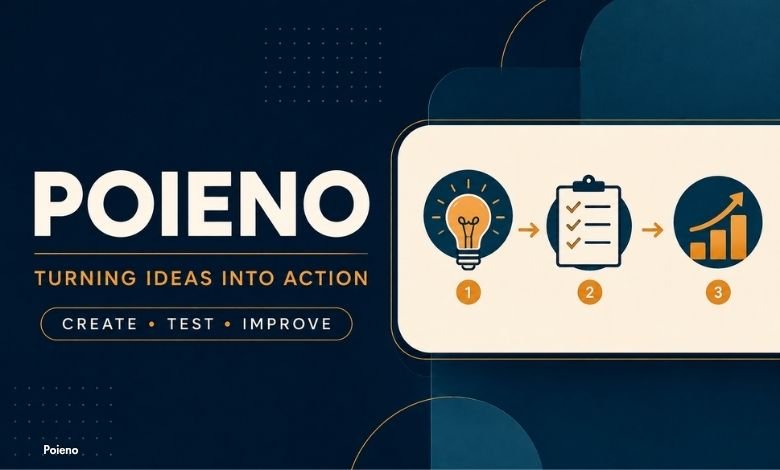
Poieno is an emerging concept that looks at the distance between imagination and action. It is based on a simple view: thinking of something is only the first part of creating it. The idea must be tried, shaped, questioned, and improved before it can have a useful life beyond the mind.
The term is still developing and does not have one formal definition. Even so, its message can be understood without complicated language. Good ideas need more than excitement. They need someone who is willing to begin, even when the way forward is not completely clear.
A Name for the Work That Follows an Idea
Inspiration usually receives plenty of attention. People enjoy talking about the moment when a new thought arrives, but they speak less about the ordinary work that follows. That work can involve making calls, checking costs, rewriting pages, solving small problems, and starting again after something goes wrong.
This is the area Poieno tries to describe. It connects original thinking with purposeful creation. The focus is not only on what a person imagines but also on what they do with it. A plan gains meaning when it moves into a form that can be seen, used, tested, or shared.
The finished result could be almost anything. A teacher may create a new classroom activity. A young designer could produce a sample from a sketch. A local shop owner might introduce a simpler ordering system. Someone at home may develop a weekly routine that finally helps them manage their time.
None of these examples needs to attract public attention. A creation can be valuable because it solves one small problem well. Size is not the main issue. Purpose is.
Beginning Without Having Every Answer
People often delay a project because they believe the correct starting conditions have not arrived. They may want more money, extra training, better equipment, or a longer period of free time. Sometimes those things are necessary. Often, however, the project can begin in a smaller form.
Imagine someone who wants to open a bookshop café. Renting a building immediately would involve serious risk. A more realistic beginning might be a monthly reading event held in an existing café. The organiser could learn whether people attend, what books interest them, and whether the idea creates enough support to continue.
That smaller test is not the full dream, but it provides something useful: evidence. The person is no longer guessing about every part of the plan.
The same principle works for creative projects. Someone who wants to make a documentary does not have to begin with expensive equipment and a large crew. A short interview recorded carefully could reveal whether the story is strong enough to develop.
Starting small should not be confused with thinking small. A modest first move can protect time and money while helping a larger idea grow in the right direction.
Poieno makes room for this kind of beginning. It accepts that people rarely understand a project fully before working on it. Some knowledge arrives only after the first decision has been made.
The First Version Is Allowed to Be Imperfect
A first attempt can be disappointing. The image in a person’s mind may be clear and impressive, while the result looks rough. This difference leads some people to believe they lack ability. More often, it simply means they have reached the point where learning becomes real.
A person making handmade furniture may discover that a beautiful design is uncomfortable to use. A writer may notice that the strongest part of a story is not the section they originally considered important. A business owner may find that customers want a simpler service at a lower price.
These discoveries can feel like setbacks, but they are useful. They show where the original idea and the real situation do not match.
Improvement begins when the creator is willing to notice that difference without becoming defensive. The product may need another material. The story may require a new opening. The service may need to focus on a different group of customers.
There is no shame in changing the plan. Refusing to change after receiving clear information is usually more damaging than admitting the first version needs work.
This does not mean following every comment. Some advice will be based on personal taste, and some people will criticise without understanding the purpose of the project. A creator has to look for repeated concerns, useful details, and feedback from the people the work is meant to serve.
Over time, the idea becomes less imaginary and more practical. It may no longer look exactly as it did at the beginning, but it is more likely to work.
How Poieno Could Work in Everyday Life
The concept is easy to connect with business because companies constantly create and test products. Yet it may be just as useful in education and personal development.
A student who is struggling to revise might have a long list of possible study methods. Rather than creating a complicated timetable for an entire term, the student could try one method for seven days. At the end of the week, it would be easier to decide whether the plan was helpful.
A teacher may notice that students lose interest during a certain part of a lesson. Instead of repeating the same material more loudly, the teacher could present it through a practical task or familiar example. The response of the class would show whether the change worked.
In a workplace, an employee might see that the same information is entered into several documents. A simple shared form could reduce repeated work. Testing it with one team would be safer than forcing an untested system across the whole organisation.
Personal goals can also benefit from practical experimentation. Someone who wants to improve fitness may promise to exercise every day, then give up after a week. Beginning with two manageable sessions could create a routine that actually lasts.
These examples are ordinary, and that is the point. Purposeful action is not reserved for founders, inventors, or artists. It appears whenever a person turns a thought into a practical step and pays attention to the result.
Knowing When an Idea Should Change
Persistence is often presented as the answer to every problem. People are told to keep going and never give up. That advice can be helpful during a difficult stage, but it is not always wise.
Some ideas fail because they are badly timed. Others cost too much, solve a problem that few people have, or depend on resources that are not available. Repeating the same attempt will not automatically fix these weaknesses.
A person using the Poieno mindset would look closely at what the evidence is saying. If customers like a product but find it expensive, there may be a way to reduce production costs. If nobody appears interested even after several fair tests, the basic idea may need to change.
Ending a project can be a responsible decision. The experience may still leave the creator with useful skills, contacts, and a clearer understanding of what to do next.
There is also a middle option. An idea does not always need to succeed in its original form or disappear completely. Parts of it may be used elsewhere. A planned mobile application could become a simpler web service. A course that attracted few students might become a series of short guides.
Creation is rarely a straight road. Turning, pausing, and removing unnecessary parts may all be signs of progress.
Why This Idea Feels Relevant
People now have access to more creative tools and information than earlier generations could have imagined. A beginner can learn design, writing, coding, or marketing from home. Small businesses can reach customers without owning a physical shop.
At the same time, the number of choices can make starting more difficult. There is always another tutorial to watch, another expert to follow, or another tool to compare. Preparation can quietly become a way of avoiding the work.
Poieno offers a useful reminder that information should eventually lead somewhere. Learning is important, but experience shows how knowledge works in a particular situation.
The concept may develop in several directions. It could become a framework for creative projects, a business method, or an approach used in schools. It may also remain a broad idea that different people adapt to their own needs.
Its future importance will depend on whether it stays practical. If it becomes only a fashionable word attached to motivational messages, it will lose much of its meaning. Its strength lies in connecting imagination with honest effort.
Conclusion
Poieno gives attention to a part of creativity that is easy to overlook. Ideas may arrive suddenly, but useful results usually come from slower work: trying, checking, changing, and trying again.
The first step does not have to be dramatic. It only has to be real. A small experiment can answer questions that months of private thinking cannot.
Some ideas will grow, some will take a different shape, and others will end. Each outcome can teach something. Imagination opens the possibility, but action is what allows an idea to find its place in the world.
(FAQs)
What does Poieno mean?
Poieno is a developing concept about taking an idea and giving it a practical form through action, testing, learning, and improvement.
Is it a recognised philosophy?
It does not currently have one universally accepted definition or a formal set of rules. It is better understood as an emerging creative mindset.
Can businesses use this idea?
Yes. A business can use it to test a product, improve a service, study customer reactions, or try a small change before making a larger investment.
Is failure part of the process?
Failure can be part of it. An unsuccessful test may reveal a problem with cost, timing, design, or demand. That information can guide the next decision.
How can a beginner apply it?
A beginner can choose one clear idea and create the smallest version that can be tried in real life. The result should then be reviewed honestly.
Does planning still matter?
Planning is important because it gives direction and reduces avoidable risk. However, planning should eventually lead to practical work.