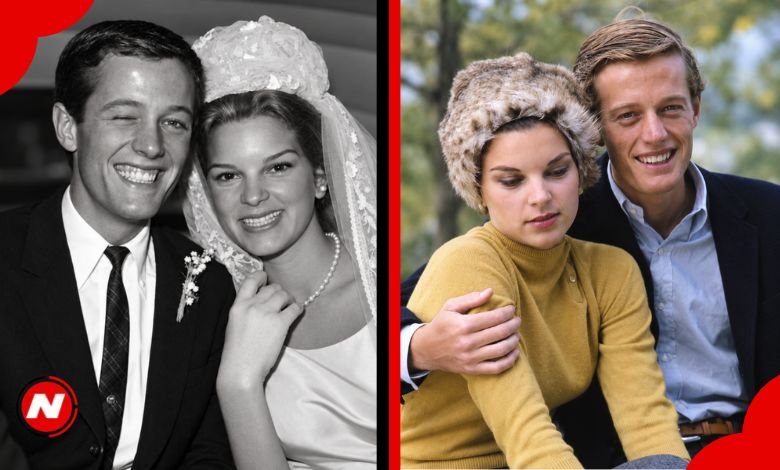
The Fonda name brings to mind famous films, award-winning actors, and decades of Hollywood history. Yet some people connected to that family have remained far less visible. Susan Brewer, Peter Fonda’s first wife and the mother of Bridget and Justin Fonda, is one of them.
Biographical references describe her as an artist, but much of her personal story remains outside the public record. She married Peter in 1961, before Easy Rider made him a defining face of his generation. Their children later entered the film industry through different careers.
Her story raises a question: how much do we really know about someone whose family became famous? The answer begins with her marriage, her children, and the few details that reliable accounts have preserved.
Quick Bio: Susan Brewer
| Field | Details |
|---|---|
| Full Name | Susan Jane Brewer |
| Commonly Known As | Susan Brewer |
| Profession | Artist |
| Best Known For | Being Peter Fonda’s first wife and the mother of his two children |
| Former Husband | Peter Fonda |
| Marriage Date | 8 October 1961 |
| Reported Separation | 1972 |
| Divorce Year | 1974 |
| Marriage Duration | Approximately 13 years before divorce |
| Number of Children | Two |
| Daughter | Bridget Fonda |
| Daughter’s Birth Year | 1964 |
| Daughter’s Profession | Actress |
| Son | Justin Fonda |
| Son’s Birth Year | 1966 |
| Son’s Profession | Film camera department professional |
| Former Father-in-Law | Henry Fonda |
| Former Sister-in-Law | Jane Fonda |
| Artistic Career Details | Limited publicly documented information |
| Current Residence | Not verified in the sources reviewed |
Her Background and Place in the Fonda Family
Susan Brewer is also identified as Susan Jane Brewer in published biographies. Those references describe her as an artist and record her marriage to Peter Fonda. They provide a useful starting point, although they reveal relatively little about her life before the marriage.
The sources available for this article do not clearly establish details about her childhood, education, or early creative interests. Without that information, building a detailed account of her upbringing would be misleading.
Her connection to the Fonda family, however, is well documented. Peter was the son of actor Henry Fonda and Jane Fonda’s younger brother. Through her marriage, Susan became connected to a family whose work already held a significant place in American cinema.
That connection became even more visible when her daughter, Bridget, developed her own acting career. For audiences discovering Bridget’s films, questions about her parents naturally followed.
Still, the family tree tells only part of the story. It explains why readers recognize Susan’s name, but not her personality, private ambitions, or everyday experiences.
This distinction matters when writing about someone with a limited public profile. A family connection can be confirmed. A person’s feelings and motivations need their own evidence.
Marriage to Peter Fonda Before His Biggest Success
Susan Brewer and Peter Fonda married on 8 October 1961, according to published reference biographies. Their relationship began early in Peter’s career, when he was still finding his footing as an actor.
A profile originally published in Esquire in 1968 places their wedding around his appearance in the New York stage production Blood, Sweat and Stanley Poole. It offers a glimpse of a period shaped by theatre work and new opportunities.
Peter already carried a famous surname. However, the screen image that audiences would later associate with him had not yet fully formed. The marriage came years before his best-known role.
That changed with Easy Rider in 1969. Peter starred in, co-wrote, and produced the film. Its success linked him closely to the restless spirit and changing culture of the late 1960s.
For modern readers, it is easy to see the marriage entirely through that later fame. The dates reveal a different perspective: Susan was part of his life before the film became a cultural landmark.
The relationship ended during the following decade. A later People account reports that the couple separated in 1972 and that their children went to live with their mother. Peter’s New York Times obituary dates their divorce to 1974.
These accounts distinguish between separation and divorce. They do not provide Susan’s own detailed explanation of the marriage’s breakdown.
Their relationship remains an important chapter in Peter’s biography. Beyond the documented timeline, however, its private details should not be treated as an open invitation to speculate.
Raising Bridget and Justin: A Family Beyond the Screen
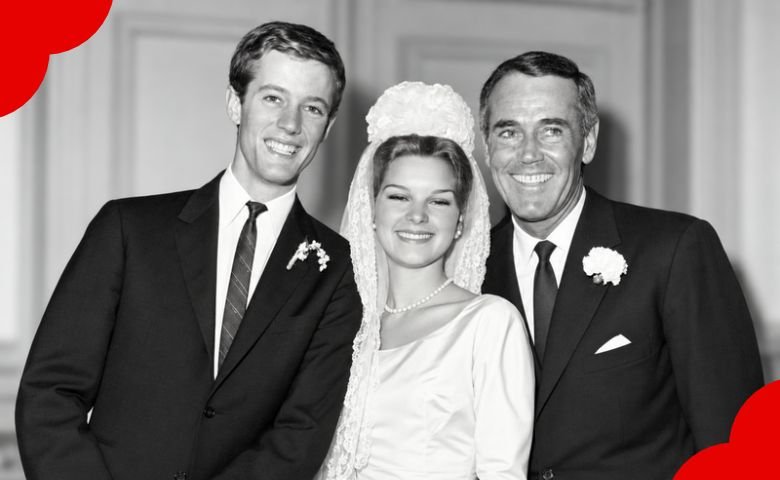
Perhaps the most enduring part of Susan Brewer’s public story is her connection to her children. She and Peter welcomed Bridget Fonda in 1964 and Justin Fonda in 1966.
Their children grew up with a surname already associated with acting. Later, both became involved in filmmaking, although their professional paths looked quite different.
Bridget became the more familiar face to cinema audiences. Her films included Single White Female, Singles, Point of No Return, Jackie Brown and A Simple Plan.
Her career covered several genres. She appeared in romantic comedies, thrillers and crime dramas, building a body of work that gave viewers more to remember than her famous relatives.
The family connection nevertheless followed her into interviews. Being Henry Fonda’s granddaughter, Peter Fonda’s daughter, and Jane Fonda’s niece brought attention as well as comparisons.
Susan’s place in that story is sometimes less visible because discussions of Bridget often focus on the family’s acting history. Yet she was Bridget’s mother, a fact that belongs alongside those better-known connections.
Justin’s work took him behind the camera. American Film Institute records list him as a first assistant camera on Vertical Limit and as a clapper loader on Harley-Davidson and the Marlboro Man.
These credits show a practical connection to film production. His work was part of the filmmaking process, even though it did not bring the same public recognition as his sister’s performances.
The siblings’ careers help explain the continued interest in their mother. However, their professional achievements do not establish exactly how she guided their choices. That part of the family story would require clear personal accounts.
Her Artistic Identity and the Limits of Public Information
Published biographical references identify Susan Brewer as an artist. This is one of the few descriptions of her professional identity that appears beyond her marriage and children.
However, the available sources offer little detail about the artwork itself. They do not provide a clear exhibition history, a catalog of named pieces, or a full account of her artistic training.
That leaves several reasonable questions unanswered. What medium did she use? Did she exhibit publicly? How did her creative work develop over time? The material reviewed does not establish reliable answers.
Limited documentation does not mean that creative work lacked value. It means readers cannot assess the full career from the information currently available.
There is also a temptation to make a biography more exciting by adding plausible-sounding achievements. In this case, claims about major commissions, well-known collections, or artistic awards would need supporting evidence.
The same care applies to financial claims. Online profiles sometimes attach precise net-worth figures to people whose income and assets have never been publicly established. A repeated estimate is not a verified figure.
Her identity as an artist deserves inclusion. Details around that identity should remain proportionate to what can be supported.
Her Private Life After the Divorce
Following the divorce, Peter’s later relationships became part of his public biography. He married Portia Rebecca Crockett in 1975 and Margaret DeVogelaere in 2011. He died in August 2019.
Susan Brewer’s later life is much harder to follow through reliable public accounts. The sources reviewed do not provide a detailed recent interview or a confirmed description of her current daily life.
This means we cannot confidently answer questions about her residence, personal relationships, or recent creative projects. The absence of that information should not be turned into a dramatic story.
A limited public profile also doesn’t explain why someone remained less visible. Without a direct statement, it would be unfair to claim that she rejected fame, disliked Hollywood, or deliberately withdrew for a particular reason.
What we can say is that the record of her life is quieter than that of her former husband and daughter. Much of the information about her appears within accounts of their family history.
That is why her story continues to attract curiosity. Readers can recognize her place in a famous family while understanding that some parts of her life remain her own.
Conclusion
Susan Brewer remains part of the Fonda family’s history through her marriage to Peter and her relationship with their two children. Her artistic identity adds another dimension, even though its details are less widely recorded.
Her story does not need invented wealth, hidden drama, or imagined family moments to matter. The confirmed facts reveal a woman connected to several generations of cinema, while reminding readers that a famous family name does not make every private life a public story.
Also read: Maggie O’Brien: The Private Life of Lucas Black’s Wife
(FAQs)
Who is Susan Brewer?
She is an artist best known as Peter Fonda’s first wife and the mother of Bridget and Justin Fonda.
When did she marry Peter Fonda?
Published reference biographies give their wedding date as 8 October 1961.
When did their marriage end?
Some accounts report a separation in 1972. Peter’s New York Times obituary dates the divorce to 1974.
Who are her children?
Her children are Bridget Fonda, known for her acting career, and Justin Fonda, who has worked in film camera departments.
What is known about her artwork?
References describe her as an artist, but reliable details about specific works, exhibitions, and artistic training are limited.
Where is she today?
The sources reviewed do not establish her current residence or provide a detailed recent account of her personal life.