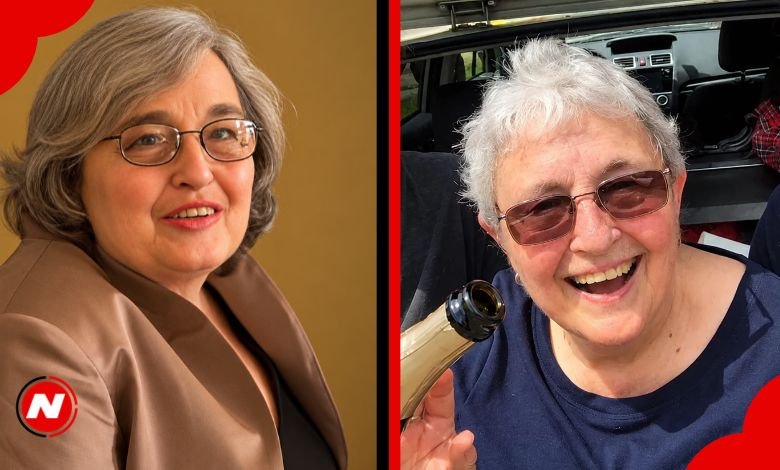
Some people become familiar to the public through a famous relationship, even when their own achievements tell a much wider story. Sherrill Redmon is one of them. Her name is often linked to Mitch McConnell, but her biography also includes motherhood, advanced historical study and a long career preserving women’s experiences.
Interest in her private life usually begins with questions about her marriage, children and life after divorce. Those questions deserve careful answers, without turning gaps in the public record into gossip.
What emerges is a life connected to two very different worlds: a family linked to American politics and a professional community devoted to women’s history. Understanding both gives a clearer picture of the woman behind the familiar name.
Quick Bio: Sherrill Redmon
| Field | Details |
|---|---|
| Full Name | Sherrill Redmon |
| Nationality | American |
| Profession | Historian and retired archivist |
| Main Field | Women’s history |
| Known For | Her archival career and former marriage to Mitch McConnell |
| Undergraduate University | University of Louisville |
| Doctoral University | University of Kentucky |
| Highest Qualification | PhD in History |
| Doctorate Completed | 1974 |
| Former Husband | Mitch McConnell |
| Marriage Year | 1968 |
| Divorce Year | 1980 |
| Number of Children | Three |
| Children’s Names | Eleanor “Elly”, Claire and Porter |
| Professional Institution | Smith College |
| Collection Directed | Sophia Smith Collection |
| Directorship | 1993–2012 |
| Length of Directorship | 19 years |
| Associated Initiative | Voices of Feminism Oral History Project |
| Retirement | August 2012 |
Her Background and Education in Kentucky
Sherrill Redmon’s educational background helps explain the career she later built. She studied at the University of Louisville before completing a PhD in history at the University of Kentucky in 1974.
That doctorate is an important detail in her personal timeline. She completed it during her marriage to McConnell, years before taking charge of the Sophia Smith Collection at Smith College.
Doctoral research involves sustained reading, investigation and careful use of evidence. Those skills also sit at the centre of archival work, where a document’s background can matter as much as its contents.
Her later professional activity shows a continuing interest in protecting historical records. A University of Louisville archives newsletter from the mid-1980s recorded her speaking to a professional group about preservation.
It is a modest detail, but a revealing one. Her working life involved explaining why records mattered, as well as caring for them. The letters, files and personal papers people keep can eventually help others understand an entire period of history.
Marriage to Mitch McConnell and Their Family
The marriage between Sherrill Redmon and Mitch McConnell began in 1968. They had three daughters together: Eleanor, also known as Elly, Claire and Porter.
Their family life developed during the earlier stages of McConnell’s political career. He became Jefferson County judge-executive in Kentucky before moving into national politics.
For readers familiar mainly with his years in Washington, the dates are worth understanding. The couple divorced in 1980, while his first election to the US Senate came in 1984.
Their marriage therefore belonged to a different chapter from the one that later made him a nationally recognised political figure. Looking at that sequence helps keep her biography in perspective.
Family relationships can explain why someone attracts public attention, but they cannot describe everything that person has done. In Redmon’s case, the marriage sits alongside a separate record of academic training and professional achievement.
Her children are an important part of that family history. However, the basic facts of parenthood do not provide a reliable picture of private conversations, household routines or the emotional life of the family.
Divorce and the Limits of the Public Story

The couple’s divorce in 1980 is a documented part of their biography. A detailed, reliable explanation of the private reasons behind it is much harder to establish.
It would be easy to build a dramatic account around the political differences associated with their later lives. However, later public positions cannot, by themselves, explain why a marriage ended years earlier.
The same care applies to descriptions of her feelings about her former husband. Without clear statements from her, claims about resentment, regret or personal conflict remain assumptions.
What can be followed more confidently is her professional path. During the years after the marriage ended, she continued working with historical records and eventually took a major leadership role at Smith College.
That career deserves attention on its own terms. It involved building collections, supporting research and developing relationships with people whose experiences could enrich the historical record.
Her biography does not need an invented account of life behind closed doors to be interesting. The documented events already show family responsibilities, scholarly achievement and substantial professional work across several decades.
Building a Career in Women’s History
In 1993, Sherrill Redmon became director of the Sophia Smith Collection at Smith College in Northampton, Massachusetts. She remained in the position until 2012.
The collection preserves material relating to women’s lives, organisations and activism. Its holdings allow researchers to examine experiences that can receive limited attention in more conventional political histories.
One significant initiative during her directorship was Voices of Feminism. The wider project sought to strengthen representation across race, class and sexuality, with support from the Ford Foundation between 2002 and 2008.
Its oral histories explored personal experience alongside public activity. Participants included labour organisers, peace campaigners, lesbian rights advocates and women of colour involved in reproductive justice.
The interviews often lasted several hours. That space allowed participants to discuss childhood, relationships, work and the events that shaped their activism.
The project also depended on colleagues, including oral-history director Joyce Follet. Redmon and Follet’s work with activist Loretta Ross offers a particularly personal example of the process.
Ross initially worried about losing access to her papers if she donated them. Reassurance about access and digitisation helped address her concerns. The episode shows that preserving history involves trust between people, alongside practical care for documents.
A Private Life and a Public Professional Legacy
The public record of Redmon’s career is considerably fuller than the record of her everyday private life. It documents projects, partnerships and institutional responsibilities, while leaving many personal questions unanswered.
That distinction matters when reading biographies of someone connected to a famous politician. A recognised name can create the impression that every aspect of a person’s life is public knowledge.
Her professional contribution extended beyond managing an archive. She worked with Barbara J. Love on the research behind Feminists Who Changed America, 1963–1975, a directory containing 2,220 biographical profiles.
She also helped bring archival stories to wider audiences. In 2010, she participated in an event celebrating New York women whose work advanced social justice and gender equality.
Redmon retired in August 2012. The following February, Smith honoured her during the Sophia Smith Collection’s 70th-anniversary celebrations, with a programme that included Gloria Steinem and Alison Bechdel.
Those events offer a substantial basis for understanding her legacy. Her work helped preserve other people’s life stories, even though the public account of her own personal life remains limited.
Conclusion
Sherrill Redmon’s private life attracts interest because of her former marriage, but her wider biography deserves equal attention. She was a mother and a historian whose professional work helped preserve women’s experiences for future generations.
The strongest account of her life respects the boundaries of what is known while recognising what she achieved. Her lasting contribution lies in the records she helped protect and the voices those records continue to carry.
Also read: Sanne Hamers: Her Private Life, Creative Career and the Story Behind Atelier Preserve
(FAQs)
Who is Sherrill Redmon?
She is an American historian and retired archivist. She directed the Sophia Smith Collection at Smith College for 19 years and was previously married to Mitch McConnell.
When did she marry Mitch McConnell?
They married in 1968. Their marriage lasted until 1980, before McConnell began his career in the US Senate.
How many children did the couple have?
They had three daughters: Eleanor, Claire and Porter. Eleanor is also known as Elly.
Why did their marriage end?
The divorce took place in 1980. The information discussed here does not establish the private reasons, so claims about what caused the separation should be treated carefully.
What is she known for professionally?
Her work focused on archives and women’s history. Her career included directing the Sophia Smith Collection, supporting oral-history projects and helping researchers document feminist activism.