The awkward part of a car repair is sometimes the piece standing between you and the repair itself. A speaker sits behind a door card. A loose connection hides beneath a console. A small trim panel refuses to lift, even after the visible screws have come out.
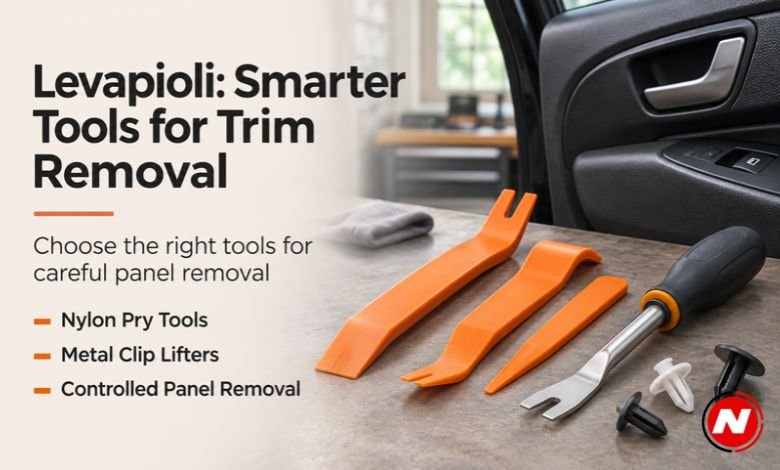
This is where levapioli can help. These tools lift retaining clips and help remove trim pieces, giving you a more controlled way to approach delicate panels.
Their purpose sounds simple, but choosing the wrong shape or pulling in the wrong direction can still cause damage. Understanding how these tools work, where they belong, and when to stop makes them far more useful than simply adding another set of levers to your toolbox.
What Are Levapioli and How Do They Work?
Levapioli is an Italian term used for tools that lift or remove trim pins and clips. English descriptions include clip lifters, trim pin removers, and trim removal tools. The names cover several designs rather than one standard shape.
A typical clip lifter has a split or forked end. This opening lets the tool sit around part of a fastener, applying lifting force close to the attachment point. Other tools have flat, tapered ends intended to enter suitable gaps between trim pieces.
The difference becomes clear when you picture a panel held by several clips. Pulling its outer edge may bend the panel before the nearest clip releases. Reaching closer to that clip changes where the force acts.
Some tools are straight, while others have curved ends or angled shafts. These variations help with access when surrounding parts leave little room for a hand or handle.
Their usefulness depends on matching the tool to the attachment. A wedge that separates two edges is not necessarily the right tool for extracting a push-pin fastener. First, know what holds the part in place.
Where These Tools Help Around a Vehicle
Many jobs begin with removing something that appears unrelated to the actual fault. Replacing a door speaker, for example, may require access behind a large interior panel before you can touch the speaker housing.
Car interior trim is therefore a common working area for these tools. Door cards, console surrounds and removable dashboard covers can all involve clips, although their removal methods differ between vehicles.
A suitable tool may help release an accessible fixing or gently open a gap where the repair instructions allow it. The aim is to work with the panel’s design rather than flex it until it comes loose.
Exterior applications can include certain moldings, wheel-arch liners, and other components secured with removable clips. Here, the fastener’s condition matters as much as the surrounding finish. An old fixing may already be brittle or distorted.
Similar tools can also be useful around motorcycle panels when the fasteners and access suit them. However, a fairing secured by bolts or interlocking tabs needs its own removal sequence.
Weatherstripping requires particular care. Some sections are clipped in place, while others are bonded or fitted into channels. Never treat a general trim lever as a universal seal-removal tool.
Nylon and Metal Tools: Understanding the Difference
Choosing levapioli involves more than picking the handle that feels comfortable. The material changes how the tool behaves and how carefully you must position it.
Nylon trim tools are commonly used around interior panels because they allow a plastic working edge to contact the trim. A broad wedge can also spread pressure over a larger area than a narrow metal tip.
However, plastic does not make a tool harmless. Dirt caught under the edge can scratch a finish, and too much force can still dent a soft surface or crack a thin mounting tab.
Nylon tools also vary in stiffness. A flexible tip may be useful for one gap but bend too much beside a tightly seated fastener. Repeatedly forcing a bending tool is a sign to reassess the shape and access.
Metal clip removers offer greater rigidity and can have slimmer working ends. These features can help when a suitable fastener sits in a confined space, but they also make careful placement important.
A metal blade resting against a visible panel can concentrate force and leave a mark. Extra leverage helps only when the tool bears against an appropriate point.
Neither material is the automatic winner. The better choice reaches the fixing properly while allowing controlled movement around the surrounding parts.
How to Remove Trim with Greater Control
Using levapioli well starts with understanding the removal sequence. Before touching a panel, check the instructions for the exact vehicle and component. Similar-looking trims can use different fasteners, hidden screws, or sliding hooks.
Look around the whole part first. A small cap may conceal a screw, while one edge may need to slide before another edge lifts. Starting at the wrong corner can put pressure on attachments that were never designed to release that way.
Clean the accessible working area and inspect the tool’s edge. Grit and damaged tips create avoidable risks, especially beside painted surfaces or glossy interior finishes.
Where a clip is accessible, position a suitable tool close to it. Support the panel and apply pressure gradually. Watch the attachment area rather than focusing only on how far the handle moves.
Suppose the panel bends sharply or stays firmly attached at one point; pause. More force will not reveal whether the cause is a stiff clip, an overlooked screw, or an interlocking tab.
Identify push-pin fasteners before extracting them. Some designs require you to release the center section first. Others use a different locking action, so pulling at the outer head may be the wrong approach.
As a panel comes loose, check behind it for wiring or other connections before moving it away. Releasing the clips does not always mean the component is ready to be lifted clear.
Keep removed fixings organized. Before refitting, inspect the clips and mounting points, replace damaged parts with the correct type, and confirm that everything sits evenly.
Choosing and Looking After a Useful Tool Set
A useful set provides shapes you can actually use. A large collection of near-identical wedges may be less practical than a smaller selection with clearly different widths, angles, and fork openings.
For occasional interior work, examine the working ends closely. They should be smooth, well formed and suited to the gaps and fasteners involved. A comfortable grip also helps you maintain control without squeezing harder than necessary.
Check product descriptions carefully. “Trim tool” can refer to a broad panel wedge, a dedicated fastener remover, or a mixed kit. The label alone doesn’t tell you whether the contents suit your project.
Think about access as well as material. A long handle needs room to move, while an angled tip may reach an attachment that a straight tool cannot approach cleanly.
Storage affects performance too. Loose tools can collect dirt or develop damaged edges when mixed with sharp metal equipment. Clean them after use and keep their working ends protected.
Finally, remember that tools cannot restore a damaged fixing. Keeping the correct replacement clips available can prevent the temptation to refit a panel with broken or unsuitable fasteners.
Conclusion
Levapioli can make access work more manageable by helping you apply force closer to a clip or suitable trim edge. Their real value comes from pairing the right shape and material with a clear understanding of the attachment.
Check the removal sequence, keep working edges clean, and stop when a panel behaves unexpectedly. A successful repair includes more than reaching the hidden component: it also means putting the surrounding trim back securely, neatly, and without avoidable damage.
(FAQs)
What does levapioli mean in English?
In automotive use, it refers to tools for lifting or removing trim pins and clips. Common English terms include clip lifters, trim pin removers, and trim removal tools.
Are plastic trim tools completely scratch-proof?
No. A plastic edge can trap dirt, develop rough spots, or damage a surface under excessive pressure. Clean tools and careful placement remain important.
Can these tools remove every car panel?
No. Some panels contain screws, adhesive, sliding tabs, or other attachments. The correct removal procedure determines whether a trim tool is suitable and where to use it.
Should beginners choose nylon or metal?
Nylon is often useful around delicate interior surfaces, but material alone should not decide the choice. Beginners should match the tool to the fixing and follow the vehicle’s removal instructions.
Why do clips sometimes break during removal?
Clips may be aged, brittle, previously damaged, or loaded in the wrong direction. Some fasteners also require replacement after removal. Correct technique reduces risk but cannot guarantee that every clip survives.