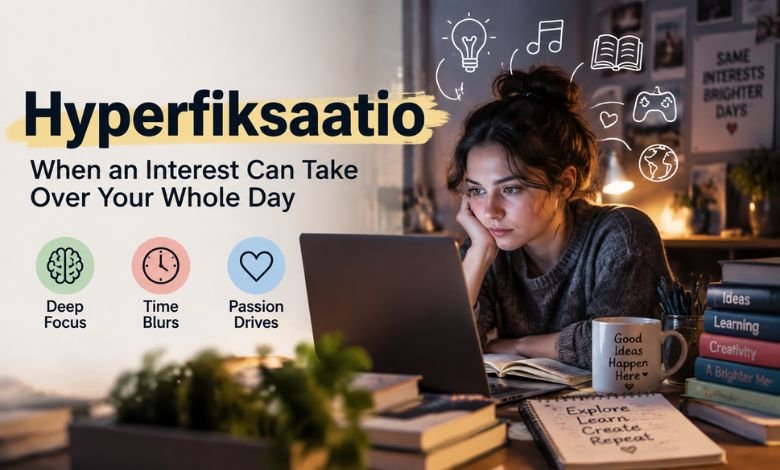
You sit down to watch one episode, read one article or work on a small idea. When you finally look at the clock, the room is dark, your phone is full of unanswered messages and dinner has been forgotten. The activity did not feel like a chore. In fact, it may have felt easier than anything else that day. This experience is often described as Hyperfiksaatio.
The Finnish word is used to describe a state of intense mental absorption. A person becomes so involved in one activity, subject or interest that other parts of life temporarily fade into the background. It can happen during study, work, gaming, art, music, television, online activity or even an emotional relationship.
Hyperfiksaatio is not always harmful. It can help someone learn, create and solve difficult problems. The difficulty begins when the person cannot step away, even when sleep, food, relationships or important duties need attention.
What Hyperfiksaatio Feels Like in Everyday Life
Hyperfiksaatio is more than simply enjoying something. Most people have hobbies they like and can spend hours on them from time to time. The difference is the level of absorption and the difficulty of changing direction.
A person may begin researching a new topic after seeing a short video or hearing an interesting fact. One question leads to another, then to another. Soon, the person is taking notes, watching explanations, reading discussions and planning a new project. The original task has disappeared from their mind.
During this period, time can feel unusual. Ten minutes may seem to pass, while two or three hours have gone by. Sounds, conversations and physical discomfort may not receive the attention they normally would.
The focus can be positive. Someone may spend an evening writing music, repairing a bicycle, learning a language or designing a website. They may feel calm, motivated and completely present.
It can also be emotionally complicated. A person may become fixed on a television character, an online creator, a new relationship or a problem that has no clear answer. Instead of feeling productive, the experience may create worry, repeated checking and mental exhaustion.
Why Does This Intense Focus Happen?
The human brain does not give every task the same level of attention. Activities that are interesting, challenging or emotionally rewarding tend to hold concentration more easily.
Routine duties often provide little immediate satisfaction. Washing dishes, answering emails or filling in forms may feel dull, especially when the end result is far away. A favourite activity, by contrast, may offer an instant sense of progress or pleasure.
This is one reason why a person can struggle to start a simple task but work for hours on something that captures their interest. It does not necessarily mean they are lazy or careless. The two activities may place very different demands on attention and motivation.
Strong emotions can make the focus even more powerful. Excitement, curiosity, attraction, fear and stress may all keep a subject active in the mind. Someone waiting for a message from a person they like may check their phone repeatedly. Someone worried about a health issue may spend hours reading about symptoms.
Lack of sleep can also affect attention control. When a person is tired, it may become harder to notice time passing or to move calmly between activities. Stress can have a similar effect, especially when one interest becomes a temporary escape from difficult feelings.
Hyperfiksaatio and ADHD
People often connect Hyperfiksaatio with ADHD because many people with ADHD describe periods of very deep concentration. This may seem to contradict the idea that ADHD involves attention difficulties, but the two experiences can exist together.
For some people with ADHD, the main issue is not an inability to focus. It is difficulty choosing, starting, stopping and shifting attention. A task that feels boring may be almost impossible to begin, while an engaging activity can hold the mind for an entire afternoon.
Imagine a student who cannot start an assignment for several days. When the deadline becomes close, the pressure creates enough urgency to produce intense concentration. The student may then complete most of the work in one long session, forgetting to eat or take breaks.
A similar pattern can happen with hobbies. A person may plan to play a game for half an hour but continue until early morning. They know they should stop, but the transition feels uncomfortable. The activity is providing stimulation, while the next task feels slow or demanding.
Not everyone with ADHD experiences this pattern, and intense focus alone does not prove that someone has ADHD. A professional assessment looks at a broader history, including attention, organisation, impulsive behaviour and the effect of symptoms in different settings.
How Autism Can Shape Deep Interests
Autistic people may also experience very deep interests. These are often called special interests and may become an important part of a person’s identity, routine and emotional life.
A special interest might involve trains, animals, films, computers, history, sport, music, maps, numbers or a particular area of science. The subject itself is less important than the meaning it has for the individual.
Many autistic people gain comfort from knowing a subject in detail. Repeatedly learning about the same topic can create structure in a world that may otherwise feel overwhelming. A special interest can also provide a way to connect with other people who share the same passion.
There may be differences between a long-term special interest and a short period of fixation. A special interest can remain important for years, while a temporary fixation may appear suddenly and fade just as quickly.
Interruptions can be particularly difficult when the interest is connected to routine or emotional comfort. A person may become upset when plans change, when someone interrupts without warning or when they are expected to leave an activity immediately.
This does not mean every deep interest is a problem. In many cases, it supports learning, confidence and social connection. Concern arises when it regularly prevents sleep, meals, personal care or necessary responsibilities.
The Positive Side of Hyperfiksaatio
Intense focus can produce real strengths. When a person is interested in something, they may absorb details quickly and remember them for a long time.
A student may develop a strong understanding of a difficult subject because they are willing to explore it beyond the lesson. A musician may practise for hours and notice small changes in sound. A programmer may remain with a complicated error until the solution becomes clear.
Creative work can also benefit from long, uninterrupted periods. Writers, photographers, designers and artists often need time without constant interruption. Deep attention can help them follow an idea from the first rough thought to a finished piece.
Some people build a career from an interest that once seemed unusual. A childhood fascination with animals may lead to veterinary work. A love of games may become a career in design, testing or streaming. An interest in languages may develop into translation, teaching or research.
The benefit depends on balance. Concentration is helpful when it supports a person’s goals. It becomes harmful when it takes away the ability to care for the body or respond to important parts of life.
When the Experience Starts Causing Problems
The clearest warning sign is repeated disruption. A person may miss work, ignore school tasks, cancel plans or lose sleep because they cannot stop the activity.
Physical needs are often the first things to disappear. Meals are delayed, water is forgotten and bedtime keeps moving later. After several days, tiredness may make concentration and emotional control even harder.
Relationships may also be affected. A partner or friend may feel ignored when messages are not answered or conversations are interrupted by the same subject. The person may not intend to be rude, but the effect can still be painful.
Some fixations create anxiety rather than enjoyment. Constantly checking social media, reviewing a conversation or thinking about one person can become emotionally draining. Instead of feeling refreshed, the person ends the day tense and disappointed.
A sudden loss of interest can bring another problem. Someone may spend weeks planning a project, buy equipment and make ambitious promises, then abandon everything when the excitement fades. This cycle can lead to frustration and self-criticism.
Practical Ways to Regain Control
The aim is not to remove every strong interest. The aim is to make room for it without allowing it to control the whole day.
Before beginning, choose a clear stopping point. This might be a specific time, the end of one episode or the completion of one small part of a project. A visible timer is often more useful than relying on a sense of time.
Place water and food nearby, especially if you know that you tend to forget basic needs. Set a reminder for meals and bedtime. These small actions can prevent an enjoyable activity from becoming physically harmful.
Break large projects into short sessions. Working for forty minutes and then taking a ten-minute break may feel more manageable than promising to finish everything in one sitting.
When it is time to stop, use a transition activity. Stretching, taking a short walk, washing your face or making tea can help your mind move towards the next task.
Writing down unfinished ideas can also make stopping easier. Many people continue because they fear losing their place. A quick note about the next step gives the brain permission to pause.
If attention problems repeatedly affect work, study, sleep or relationships, speak with a GP or qualified mental health professional. A single experience cannot diagnose ADHD or autism, but a wider pattern may deserve proper support.
Conclusion
Hyperfiksaatio can make a person feel completely absorbed in one part of life. For a while, the interest may offer pleasure, comfort, creativity and a sense of purpose. It can help someone learn a subject in detail or complete work that requires sustained attention.
The same experience can become difficult when the person loses sleep, misses meals, ignores responsibilities or cannot respond to people around them. It is often discussed in connection with ADHD and autism, but it is not a diagnosis and does not belong only to those conditions.
The healthiest approach is balance. Strong interests can remain an important part of life, provided there is also time for rest, relationships, daily duties and personal care.
(FAQs)
What is Hyperfiksaatio?
Hyperfiksaatio is a period of intense concentration in which a person becomes deeply absorbed in one subject, activity, idea or person. Time and everyday needs may become less noticeable.
Is it the same as having a hobby?
No. A hobby can be enjoyed while a person still controls when to stop. Hyperfiksaatio often involves a stronger pull and greater difficulty moving attention elsewhere.
Does it always mean ADHD?
No. It may occur in ADHD, but it can also happen to people without ADHD. Stress, excitement, curiosity and emotional attachment can all create intense focus.
Can autistic people experience it?
Yes. Autistic people may have strong, long-term interests that bring comfort, knowledge and enjoyment. These interests are not automatically harmful.
Is Hyperfiksaatio good or bad?
It can be either. It may support learning and creativity, but it becomes a concern when it repeatedly harms sleep, health, work or relationships.
How can someone manage it?
Timers, planned breaks, regular meals, sleep reminders and clear stopping points can help. Professional advice may be useful when attention is difficult to control.