Messeregge Explained: The German Soil Tool Helping Farmers Prepare Better Fields

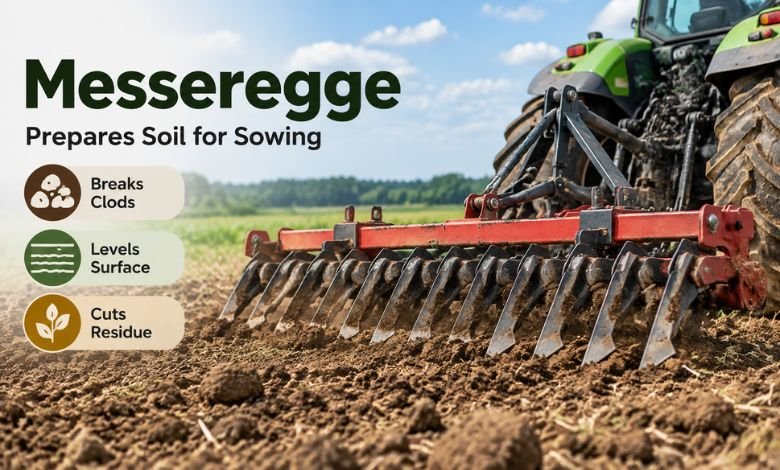
Modern farming depends on careful soil preparation. Before seeds are placed in the ground, farmers must deal with hard clods, uneven surfaces and leftover crop material. One tool linked to this work is the Messeregge, a German agricultural implement designed to disturb the upper layer of soil.
The machine is associated with knife-like blades rather than the ordinary teeth found on a basic harrow. These cutting parts move through the surface, breaking rough pieces of soil and helping create a more even seedbed. Some versions are fitted to the front of a tractor, while others may work as part of a larger cultivation system.
The term is not widely used in British or American farming language, which is why it can be difficult to understand when it appears in European equipment descriptions. Its purpose becomes clearer when it is compared with rollers, disc harrows and cultivators.
What Is a Messeregge?
Messeregge is a German term connected with a knife harrow. The word combines “Messer”, meaning knife, and “Egge”, meaning harrow. It refers to equipment that uses blade-like working parts to treat the topsoil.
The term does not always identify one fixed machine design. Manufacturers may produce different versions with variations in blade shape, spacing, weight and frame construction. One model may be intended mainly for seedbed preparation, while another may focus on residue cutting or shallow surface cultivation.
Unlike a deep plough, the machine does not turn over the full soil layer. Its work is closer to the surface, where it can break large lumps and smooth rough patches. This makes it useful during the final stages of field preparation.
A machine described under this name may also be found in European spare-part catalogues. Replacement knives, brackets and fasteners are often sold for specific models, so buyers need to check measurements before ordering parts.
How the Equipment Works
The machine is attached to a tractor and moved across the field. As the tractor travels forward, the blades enter the soil at a controlled depth. Their cutting action breaks some clods, disturbs compacted areas and moves loose soil across the surface.
The equipment is generally used for shallow work. Its purpose is not to loosen deep layers or replace a heavy cultivator. Instead, it prepares the upper surface for another operation, such as drilling, rolling or planting.
A front-mounted version can be useful when a farmer wants to combine operations. The knife attachment may work ahead of a rear implement, allowing the soil to be cut and levelled before it reaches a roller or seed drill. This can reduce the number of passes needed across the field.
The result depends on the design of the blades and the way the frame is adjusted. Blade angle controls how sharply the equipment enters the ground. Spacing affects how much of the field is covered, while the weight of the frame influences penetration.
If the machine is set too deeply, it may move more soil than required and place extra demand on the tractor. If it is set too lightly, large clods and untouched strips may remain.
Main Uses in Agriculture
Breaking Soil Clods
Large clods can form after ploughing or cultivation. They may create empty spaces around seeds and make it difficult for a drill to maintain a consistent depth.
The cutting elements help break down some of these lumps during a shallow pass. The aim is to produce a finer, more even surface without carrying out another deep operation.
Results are usually better when the soil contains moderate moisture. Wet soil can stick to the blades and smear across the field. Very dry soil may remain hard and resist the cutting action.
Preparing a Seedbed
A good seedbed should be level, firm enough to support machinery and loose enough for roots to develop. It also needs to provide close contact between seed and soil.
The machine can help create this condition by disturbing the surface and spreading loose material. A level field makes it easier for a seed drill to place seeds at a steady depth. It can also help crops emerge more evenly.
However, the equipment cannot correct every soil problem. Poor drainage, deep compaction and severe damage from unsuitable cultivation require different solutions.
Managing Crop Residue
Fields often contain stalks, stems and other plant remains after harvest. If this material is not distributed properly, it may block a drill or create uneven growth in the next crop.
Knife-based equipment can cut lighter residue into smaller pieces and help spread it across the field. This may support decomposition and make later cultivation easier.
Residue should not always be removed completely. Plant material on the surface can help reduce wind erosion and protect the soil from heavy rain. The machine should therefore be adjusted to manage residue without leaving the land bare.
Disturbing Small Weeds
Shallow cultivation can damage young weeds before they develop strong roots. The blades disturb the surface and may expose small plants to drying conditions.
Timing is important. A pass made too early may allow weeds to return, while a late pass may fail against established growth. The implement works best as part of a wider crop-management plan.
What Controls Its Performance?
Soil Condition
Soil type has a direct effect on the machine. Light soils may require less pressure, while heavy clay may need a stronger frame and careful timing.
Farmers should avoid working when the ground is plastic and wet. This can create smearing and compacted layers. Waiting for a workable condition often produces a cleaner finish and reduces fuel use.
Working Depth
The correct depth depends on the task. A very shallow setting may be suitable for light levelling, while a slightly deeper setting can deal with clods or residue.
More depth does not always mean better cultivation. Excessive penetration may disturb natural soil structure and bring wet material to the surface. The target should be the minimum depth needed for the job.
Tractor Speed
Travel speed changes the behaviour of the blades. At a faster pace, the machine may produce a more active cutting effect, but it can also throw soil and bounce over hard patches.
A slower speed may provide steadier contact in difficult conditions. Operators should follow the manufacturer’s guidance and judge the finish behind the machine rather than focusing only on speed.
Blade Maintenance
The blades are wearing parts. Stones and continuous contact with soil gradually reduce their sharpness. Bent or worn elements may leave narrow strips untreated.
Before work begins, operators should inspect the blades, bolts, frame and hydraulic connections. Replacing a damaged part early can prevent wider repairs and maintain an even field finish.
How It Compares with Other Tillage Tools
A roller presses and firms the soil. It is useful for levelling and improving seed-to-soil contact, but it does not normally cut through residue in the same way.
A disc harrow uses rotating discs to slice and mix the soil. It can work more aggressively and is often selected for stubble cultivation or heavier surface disturbance.
A tine harrow uses metal teeth or flexible tines. It scratches through the upper layer and may be used for light loosening or weed control. Its action differs from the continuous cutting effect of knife elements.
A cultivator usually works deeper and moves more soil. It is chosen when the field needs loosening below the surface or when compacted layers must be addressed.
The Messeregge sits between finishing and light cultivation. Its strength is controlled surface treatment rather than deep soil movement.
Choosing the Right Machine
Anyone buying this type of equipment should examine more than the name. Important details include working width, blade spacing, frame weight and tractor lifting capacity.
The attachment system must match the tractor. Front-mounted equipment can affect steering, visibility and balance, especially when the machine is heavy. Road transport also requires attention to width, locking points and safe clearance.
Parts support is another important consideration. Knives and fasteners will eventually need replacement, so buyers should confirm that suitable components are available.
The best machine is not always the largest one. A smaller implement that matches the tractor and field conditions may provide a more consistent finish with lower operating costs.
Conclusion
Messeregge describes a specialised knife-based soil-working tool used in European agriculture. Its work takes place close to the surface, where it helps reduce clods, manage light residue and create a more level seedbed.
The machine performs best when its depth and speed match the soil condition. Sharp blades, suitable tractor power and good timing are also essential. Used carefully, it can reduce the need for repeated passes and support more accurate sowing.
For farmers and machinery buyers, understanding this German term makes European equipment descriptions easier to interpret. It also highlights an important principle of soil management: successful field preparation often depends on small, controlled improvements made at the right time.
(FAQs)
What does Messeregge mean?
It is a German agricultural term for a harrow-style implement fitted with knife-like blades or cutting elements.
What is the main purpose of the machine?
It is used to break soil clods, level the surface, cut light residue and prepare land before sowing.
Is it suitable for deep cultivation?
No. It is mainly designed for shallow surface work. Deep loosening requires a cultivator, subsoiler or similar implement.
Can it be mounted at the front of a tractor?
Some versions are built for front mounting. The tractor’s lifting capacity and attachment system must be suitable for the machine.
Can it help with weeds?
It may disturb small weeds during shallow cultivation, but it is not a complete weed-control method.
When should the blades be replaced?
Blades should be replaced when they become bent, badly worn or unable to cut evenly across the field.