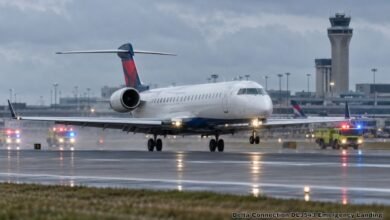
Most passengers boarding a flight from Istanbul to Manchester would expect a long but ordinary journey. On 15 August 2025, however, easyJet flight U22152 became the centre of an unexpected aviation emergency while crossing Germany. One of the pilots reportedly developed intense abdominal pain and was no longer fit to continue working in the cockpit.
The captain did not take any unnecessary chances. He informed air traffic control, activated emergency code 7700 and turned the Airbus A320 towards Cologne Bonn Airport. The aircraft reached the ground safely, where medical workers were waiting to help the sick crew member.
No passenger injuries were reported, although the journey to Manchester was delayed by several hours. The EasyJet U22152 Emergency Germany incident was alarming, but its safe ending showed why airlines train their crews to respond quickly when something goes wrong thousands of feet above the ground.
A Normal European Flight Suddenly Changes Course
EasyJet flight U22152 had departed from Istanbul and was heading towards Manchester with around 185 people reportedly on board. The aircraft being used for the service was an Airbus A320-200, registered as G-EZRX.
For a large part of the journey, there appeared to be nothing unusual about the flight. It climbed to its cruising level and continued across Europe as planned. The passengers had little reason to believe their arrival in Manchester would be seriously delayed.
The situation changed while the plane was flying over Germany at roughly 36,000 feet. The first officer reportedly became unwell after experiencing strong stomach pain. His condition left him unable to carry out his normal cockpit duties.
This placed the captain in a demanding position. He had to remain focused on flying while also considering the pilot’s health, the remaining distance to Manchester and the airports available nearby.
Continuing to the original destination would have kept the aircraft in the air for longer. The captain therefore chose Cologne Bonn Airport as the safer option. It was close enough for a prompt landing and had the facilities needed to receive the aircraft.
The decision may have disrupted the travel plans of everyone on board, but it reduced the time before the ill pilot could receive medical care. In such circumstances, reaching the scheduled destination becomes far less important than getting safely onto the ground.
Why the Captain Declared an Emergency
A pilot becoming unwell is treated differently from a minor illness involving someone elsewhere on the aircraft. Commercial flights usually operate with two pilots so that responsibilities can be shared and each person can monitor the other’s work.
If one pilot becomes unable to perform those duties, the other must take over the entire operation. This includes controlling the aircraft, speaking with air traffic controllers, checking weather conditions, selecting an airport and preparing for landing.
The captain of U22152 reportedly selected transponder code 7700. In everyday aviation language, this is often called “squawking 7700”. The code tells controllers that an aircraft is dealing with a general emergency and requires immediate support.
It does not tell controllers whether the problem involves a passenger, pilot, engine or another part of the aircraft. The crew must provide those details through radio communication when possible.
Once the alert is recognised, air traffic control can clear a direct route, move other flights away and contact emergency teams at the chosen airport. This gives the crew more space and reduces delays during the approach.
People watching the EasyJet U22152 Emergency Germany event on flight-tracking websites may have been worried when code 7700 appeared. Yet using the code was a sensible precaution. It allowed the captain to receive priority assistance instead of handling the diversion as an ordinary change of route.
The Unplanned Landing at Cologne Bonn Airport
Flight U22152 turned towards Cologne and began descending from its cruising altitude. The captain remained responsible for the aircraft while controllers guided it through the surrounding airspace.
Airport workers were informed before the plane arrived. This gave medical teams enough time to prepare and reach the correct area without delay.
The Airbus reportedly landed on runway 32R, around 27 minutes after the diversion decision was made. There was no reported technical failure during the approach, and the captain completed the landing safely.
Medical staff attended to the first officer after the aircraft stopped. He was later taken to hospital for further examination. Early aviation reports suggested that food poisoning might have caused the abdominal pain, but no detailed medical diagnosis was released publicly.
The aircraft did not need to be evacuated. There were also no reports of passengers being hurt during the descent or landing.
Although the word “emergency” often brings frightening images to mind, the aircraft was not reported to be out of control. The urgent issue was the health of a pilot rather than damage to the plane.
That distinction does not make the situation unimportant. A crew member’s sudden illness can become a serious safety concern, especially when the aircraft is still a considerable distance from its destination. The successful diversion meant the problem could be handled on the ground instead of remaining uncertain in the air.
A Five-Hour Delay for the Manchester Passengers
Landing safely in Cologne ended the immediate emergency, but the passengers still needed to reach Manchester. The aircraft could not simply depart again while one of its pilots was receiving treatment.
EasyJet had to arrange for another qualified pilot to travel to Cologne. Until that replacement arrived, the journey remained paused.
Passengers reportedly stayed on the aircraft during at least part of the wait. Sitting inside a plane after an unexpected landing would naturally have been frustrating, especially for anyone with a connection, hotel booking or family member waiting in Manchester.
Still, the delay was unavoidable from a safety point of view. Sending the flight onwards without a replacement pilot would have created an unnecessary risk.
Once the new crew member arrived and the required checks were completed, the aircraft departed Cologne. It eventually reached Manchester around five hours behind schedule.
A delay of several hours can be tiring, but the important point was that everyone completed the journey safely. The EasyJet U22152 Emergency Germany diversion put the pilot’s health and the passengers’ security ahead of the timetable.
What the Incident Reveals About Flight Safety
Much of aviation safety happens quietly. Passengers see the cabin crew, hear announcements and perhaps notice the aircraft changing altitude, but they do not see every decision being made in the cockpit or control centre.
During this incident, several groups had to work together. The captain controlled the plane, air traffic controllers arranged the new route, airport teams prepared for the landing and medical staff waited to treat the first officer.
Cabin crew members also had an important responsibility. They needed to maintain order, give passengers suitable information and support the cockpit without creating additional pressure.
Pilots regularly practise emergencies in simulators. These sessions are designed to make essential actions feel familiar, even when the real situation is stressful. Pilot illness is one of the events for which flight crews must be prepared.
The captain’s early decision also mattered. Waiting to see whether the first officer felt better would have kept the aircraft farther from immediate medical assistance. Turning towards Cologne created a clear and safer plan.
The event is a reminder that declaring an emergency is not a sign that safety procedures have failed. In many cases, it means those procedures have been activated at the right moment.
Why Emergency Code 7700 Gains So Much Attention
Modern flight-tracking platforms allow members of the public to follow aircraft almost anywhere in the world. When a plane displays code 7700, alerts can spread across social media within minutes.
This attention sometimes causes people to assume the worst before reliable information becomes available. In reality, aircraft can use the code for many different reasons. Some are highly serious, while others are precautionary.
In the case of U22152, the emergency signal gave the captain priority while approaching Cologne. It also allowed airport services to prepare before the aircraft landed.
The code itself did not make the situation more dangerous. It improved communication and helped everyone involved understand that the flight needed special handling.
That is one of the main lessons from the EasyJet U22152 Emergency Germany story. Clear information, shared quickly, can turn a worrying situation into an organised response.
Conclusion
The EasyJet U22152 Emergency Germany incident began with a sudden medical problem in the cockpit, but it ended safely because the captain responded without hesitation. Instead of continuing towards Manchester, he declared an emergency and selected Cologne Bonn Airport for an immediate diversion.
The first officer was able to receive medical treatment, while the passengers remained unharmed. A replacement pilot later joined the aircraft, allowing the journey to continue despite a lengthy delay.
For travellers, an emergency landing can be frightening and inconvenient. In this case, however, it demonstrated something reassuring: when an unexpected crisis appeared, the people responsible for the flight followed their training and brought the aircraft safely to the ground.
(FAQs)
What happened on easyJet flight U22152?
The first officer reportedly developed severe abdominal pain while the flight was travelling over Germany. He became unable to continue his normal cockpit duties, so the captain diverted to Cologne Bonn Airport.
What route was flight U22152 operating?
The easyJet aircraft was travelling from Istanbul, Turkey, to Manchester, United Kingdom, on 15 August 2025.
Why was emergency code 7700 activated?
Code 7700 is used to alert air traffic controllers to a general emergency. It helped flight U22152 receive priority handling and a direct route towards Cologne.
Was there a problem with the Airbus A320?
No mechanical or engine fault was publicly reported. The diversion was linked to the first officer’s medical condition rather than a known problem with the aircraft.
Were the passengers injured?
No passenger injuries were reported. The first officer received medical attention after landing and was taken to hospital for assessment.
Did the aircraft continue to Manchester?
Yes. EasyJet arranged a replacement pilot, and the aircraft later completed the journey to Manchester. The total delay was reported to be around five hours.