
Long before Catherine Zeta-Jones became a Hollywood star, her world centred on family life in Swansea, Wales. Her mother’s sewing, her first dance lessons and the encouragement she received at home all belong to that earlier story.
Patricia Fair, also known as Pat Jones, is best known as Catherine Zeta-Jones’s mother. A seamstress with Irish-Catholic roots, she raised Catherine and her two brothers with her husband, David Jones. Although her daughter’s career brought international attention, Patricia’s own story is closely connected to craftsmanship and family.
Catherine’s interviews offer revealing glimpses of that relationship. They describe a mother whose practical skills influenced her daughter’s taste, and whose encouragement helped a childhood interest in performing become something much bigger.
Quick Bio: Patricia Fair
| Field | Details |
|---|---|
| Name | Patricia Fair |
| Married Name | Patricia Jones |
| Also Known As | Pat Jones |
| Best Known For | Being Catherine Zeta-Jones’s mother |
| Occupation | Seamstress and dressmaker |
| Heritage | Irish-Catholic descent |
| Family Home | Swansea, Wales |
| Areas Associated With | Treboeth and Mumbles |
| Husband | David Jones, also known as Dai |
| Husband’s Business | Associated with a sweet factory |
| Number of Children | Three |
| Daughter | Catherine Zeta-Jones |
| Eldest Son | David Jones |
| Youngest Son | Lyndon Jones |
| Son-in-Law | Michael Douglas |
| Grandchildren Through Catherine | Dylan and Carys |
| Creative Skills | Sewing, dressmaking and curtain-making |
| Support for Catherine | Encouraged her early interest in dance |
| Creative Influence | Helped inspire Catherine’s interest in interiors |
| Public Profile | Mainly known through family photographs and Catherine’s interviews |
A Family Life Rooted in Swansea
Patricia Fair’s background provides a useful starting point for understanding Catherine’s upbringing. Fair is her maiden surname, while Patricia Jones and Pat Jones are other names used for her. These variations explain why readers may encounter different names in family profiles and photograph captions.
Patricia and David raised three children: David, Catherine and Lyndon. Catherine was the middle child and their only daughter. Biographical accounts describe Patricia as a seamstress of Irish-Catholic descent and David as a businessman associated with a sweet factory.
The family’s story is closely tied to Swansea, including Treboeth and the Mumbles area. These places form the background to Catherine’s memories of childhood, long before film premieres and international travel entered the picture.
What makes this background interesting is its distance from the entertainment industry. Patricia’s most clearly documented creative work involved making things with fabric. Her daughter would eventually earn a living through performance, but creativity was already present at home in another form.
That distinction gives the family story its character. Catherine’s early surroundings included both practical work and room for artistic interests. Looking at her mother’s contribution helps explain why the actress’s interests later extended beyond acting into sewing, decorating and home design.
The Seamstress Behind a Lasting Creative Influence
Descriptions of Patricia as a seamstress tell only part of the story. Catherine’s own recollections show how visible that work was during her childhood.
Speaking to Homes & Gardens, the actress remembered a home filled with beautiful fabrics and her mother’s love of soft furnishings. She directly connected those surroundings with her own interest in interior design. One particularly vivid memory involved finding dropped sewing pins in the carpet.
It is a small domestic detail, but it makes the influence easier to understand. Sewing was part of everyday life, with materials and work spreading into the spaces a child knew best. Catherine’s memories concern the experience of being around that craft, rather than simply knowing her mother’s occupation.
In a 2017 interview with Vanity Fair, Catherine also linked her childhood interest in decorating to watching her mother make clothes and curtains. The interview accompanied the launch of her home collection, Casa Zeta-Jones, giving those early memories a clear connection to a later business venture.
Her interest continued into adulthood. A Miami Living interview described Catherine decorating her homes and sewing curtains herself, connecting those skills to a family tradition that included her mother and great-grandmother.
Together, these accounts suggest an influence that lasted well beyond childhood. Patricia’s work gave Catherine an early example of how fabric, colour and careful making could change a room or a garment.
The connection is especially meaningful because Catherine has explained it herself. Her mother’s contribution to her creative life is supported by specific memories, rather than assumptions based on their family relationship.
Encouraging the First Steps Towards the Stage
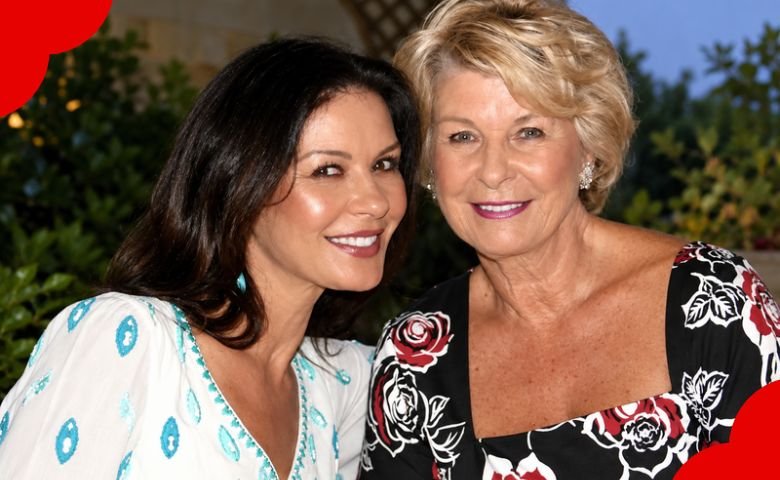
Patricia Fair also appears in one of Catherine’s earliest memories of becoming a performer.
In her 2021 interview with The New Yorker, Catherine recalled a nearby hall where dance teacher Hazel Johnson taught. She described her mother buying her tap shoes when she was four and helping her put them on. It was a simple beginning for a career that would eventually reach the West End and Hollywood.
The importance of that moment lies in its practicality. A young child’s interest became an activity she could actually pursue. Shoes and lessons gave her a way to explore performing through practice.
Catherine later spoke to Miami Living about competing in talent shows and working towards opportunities in London. Her early career included appearances in Annie and Bugsy Malone, showing how quickly childhood enthusiasm developed into serious theatre work.
Her subsequent achievements make those beginnings particularly striking. In 2003, Catherine won the Academy Award for Actress in a Supporting Role for Chicago. The award recognised a performance that brought singing, dancing and acting together.
It would be too simple to credit a long career to one childhood decision. Catherine’s training, ambition and professional work all mattered. Yet her account gives her mother a clear place at the beginning of that journey.
For readers interested in Catherine Zeta-Jones’s parents, this is one of the most useful insights available: encouragement took a concrete form. Patricia helped her daughter try something she loved, before anyone could know where it would lead.
A Close Relationship Beyond Public Success
Patricia Fair’s place in her daughter’s life extends beyond childhood memories. Public tributes and interviews show an affectionate relationship continuing through Catherine’s adult life.
On UK Mother’s Day in March 2023, Catherine shared a tribute thanking her mother for her love and inspiration. The accompanying photographs included a family image with Catherine’s children, Dylan and Carys, bringing three generations into the same celebration.
Other glimpses are quieter. During a December 2022 interview with Parade, Catherine explained that her parents were staying with her in Spain while Michael Douglas was working in Paris. She spoke warmly about enjoying time with them.
These accounts give the relationship substance beyond a familiar celebrity tribute. They show shared time as well as public appreciation: parents visiting their adult daughter, family members gathering and older relationships continuing alongside busy careers.
They also help keep Patricia’s story in proportion. The public evidence consists largely of Catherine’s recollections, interviews and family photographs. It offers meaningful details, but it does not amount to a complete account of Patricia’s private life.
Her work deserves attention within that limited record. She was a skilled seamstress whose influence her daughter has repeatedly acknowledged. Describing her only through Catherine’s fame would leave out the craft that makes her own contribution distinctive.
The most revealing parts of this family story are therefore quite ordinary: making curtains, buying dance shoes and spending time together. Their significance becomes clearer when Catherine explains how strongly she remembers them.
Conclusion
Patricia Fair’s story adds depth to the familiar account of Catherine Zeta-Jones’s rise to fame. Her daughter’s recollections reveal the importance of skilled work, creative surroundings and practical encouragement during childhood.
The strongest impression comes from the details Catherine remembers: fabric around the house, curtains being made and a first pair of tap shoes. Those memories give her mother a lasting place in the story, showing how everyday family experiences can continue to matter across a very different adult life.
Also read: Dakota Rain Burton: The Private Life Behind a Famous Musical Legacy
(FAQs)
Who is Patricia Fair?
She is the mother of Welsh actress Catherine Zeta-Jones. Also known as Pat Jones, she worked as a seamstress and raised her family with her husband, David Jones, in Swansea.
Why is she also called Pat Jones?
Fair is her maiden surname, and Jones is her married surname. Pat is a shortened form of Patricia. Biographical records list Patricia Jones and Pat Jones as alternative names.
How many children does she have?
Patricia and David have three children: David, Catherine and Lyndon. Catherine is the middle child and their only daughter.
How did her work influence Catherine Zeta-Jones?
Catherine has connected her interest in interiors to growing up around her mother’s fabrics, sewing and soft furnishings. Those memories help explain the personal background to her enthusiasm for home design.
Did she support Catherine’s early dance training?
Yes. Catherine recalled that her mother bought her tap shoes at four, when she began learning with local teacher Hazel Johnson. It is one of the actress’s clearest accounts of her mother’s early encouragement.