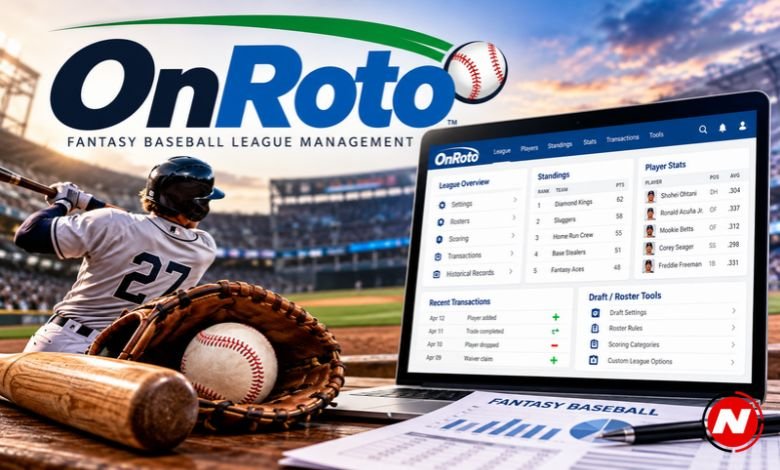
Fantasy baseball has changed dramatically over the years. Bigger platforms now offer mobile apps, automated drafts and simple league setups. Yet experienced players often want something different: more control, deeper statistics and rules that can be adjusted to fit unusual league formats.
That is where OnRoto has built its reputation. The online fantasy sports platform is best known as a highly customisable fantasy baseball league manager, particularly for rotisserie-style competitions.
Founded in 2007, the service has spent nearly two decades serving commissioners and players who prefer detailed league settings over a one-size-fits-all experience. Its connection with expert competitions such as Tout Wars has also helped give the platform credibility among serious fantasy baseball players.
A major ownership change in 2026 has now opened a new chapter in its story.
What Is OnRoto and How Did It Begin?
OnRoto is an online league-management service mainly associated with fantasy and rotisserie baseball. Instead of simply giving players a standard set of rules, the platform has focused on allowing commissioners to create leagues with much more detailed settings.
This matters because fantasy baseball can become surprisingly complicated.
Some leagues use traditional categories such as home runs, stolen bases, batting average, wins and saves. Others build their own scoring systems, roster rules, transaction limits, eligibility requirements and auction formats.
A platform designed for basic casual leagues may struggle when those rules become more complicated. OnRoto built much of its identity around handling that complexity.
The service was co-founded in 2007 by Scott Wilderman, who already had a long history in fantasy sports. Wilderman had previously founded the league-management service Total Quality Stats in 1994 and later helped establish The Rototimes in 1999.
His background is important because fantasy baseball has always involved more than simply selecting famous players. At its most competitive level, it is a game of numbers, projections, roster construction and careful decision-making.
That data-focused culture became closely connected with the way the platform developed.
Why Experienced Fantasy Baseball Players Use OnRoto
One of the biggest attractions of OnRoto is customisation.
Many mainstream fantasy sports services are designed to make joining a league quick and easy. That is useful for casual players, but experienced commissioners sometimes need much more control.
They may want unusual scoring categories. They may have special roster positions, unique free-agent rules or league-specific transaction systems. Some long-running leagues also have traditions that do not fit neatly into the standard settings offered elsewhere.
OnRoto has developed a reputation for supporting these kinds of specialised formats.
The platform includes tools connected with stat tracking, league standings, rosters, transactions, player information and historical records. Commissioners can use these systems to manage leagues throughout a season while players can follow how their decisions affect the standings.
Historical data can also be especially valuable.
Fantasy leagues sometimes continue for many years. In those competitions, previous seasons become part of the league’s identity. Owners remember old trades, championship runs, failed draft picks and rivalries.
Keeping those records organised can therefore be almost as important as managing the current season.
Another major attraction is the platform’s association with serious fantasy baseball competition. OnRoto has hosted AL-only and NL-only leagues connected with Tout Wars, a long-running competition involving experienced fantasy baseball analysts and industry figures.
That connection gives the service a different image from platforms aimed mostly at casual office or family leagues.
OnRoto and the 2026 Ottoneu Acquisition
The biggest recent development came in February 2026.
Ottoneu Fantasy Sports announced that it had acquired OnRoto, with Ottoneu founder Niv Shah purchasing the platform. The announcement also confirmed that the service would be hosted through FanGraphs.
For long-time users, an acquisition like this naturally raises questions.
Would existing leagues have to change? Would unusual league settings disappear? Would the service be turned into something completely different?
The initial announcement pointed in the opposite direction.
According to information shared at the time, preserving the specialised formats and custom options that existing players value was an important part of the plan. The companies described a gradual migration rather than an immediate replacement of the existing system.
The plan stated that the existing software would continue running during 2026, meaning users should see relatively little immediate disruption.
A more noticeable change is planned for 2027, when the web interface is expected to receive a significant visual update. The aim is to modernise how the platform looks while keeping its existing functionality and improving its ability to support complicated league options.
That balance could prove important.
Long-standing fantasy platforms often face the same problem: experienced users love powerful features, but older interfaces can feel difficult to new players.
Updating the presentation without removing the deeper commissioner tools could make the service easier to approach while protecting the qualities that made it popular in the first place.
Why OnRoto Still Has a Place in Fantasy Baseball
Fantasy sports are now a huge part of modern sports culture, but not every fantasy player wants the same experience.
Some people want to join a league, draft a team and check their results once or twice each week.
Others treat fantasy baseball more like a season-long strategy competition.
Those players study statistics, calculate player values, follow injuries, watch roster eligibility and make regular decisions involving trades, free agents and starting line-ups.
For that audience, detailed league settings and reliable information matter.
This is where a specialised platform can still compete with much larger services.
OnRoto does not need to become identical to every mainstream fantasy sports website. Its strongest position may come from serving leagues that need options mainstream systems do not easily provide.
Its history with Tout Wars demonstrates this point. Expert leagues can have detailed formats and experienced commissioners who know exactly what they want from their league-management software.
Customisation is therefore not simply an extra feature. For some users, it is the main reason to choose one platform over another.
The move into the Ottoneu and FanGraphs environment could also create interesting possibilities. The original acquisition announcement specifically noted the potential to integrate more of FanGraphs’ extensive player-evaluation content into the service.
If that development happens successfully, users could eventually get a stronger combination of fantasy league management and baseball analysis.
What Could the Future Look Like?
The next stage will be important for OnRoto.
Changing a platform used by experienced players is rarely simple. Long-time users often develop very specific workflows, and even small interface changes can affect how they manage their leagues.
At the same time, modernisation appears necessary if the platform wants to attract a new generation of fantasy baseball players.
A cleaner interface could make advanced commissioner tools less intimidating. Better integration with baseball analysis could also reduce the need for users to move constantly between separate websites while researching players.
The challenge will be preserving flexibility.
If the new version keeps the detailed options that helped build the service’s reputation while improving usability, the transition could strengthen its position in the fantasy baseball market.
The 2026 acquisition therefore appears to be more than a simple ownership change. It represents an attempt to take a long-running specialist platform and prepare it for its next phase without removing the features that made it distinctive.
Conclusion
OnRoto has lasted in fantasy baseball because it serves a particular type of player: someone who wants more than a simple draft-and-play experience.
Its detailed commissioner controls, flexible formats, statistical focus and history with competitive leagues have helped it develop a loyal place within the fantasy baseball world.
Now, the 2026 acquisition by Ottoneu’s founder has placed the platform at an interesting turning point. A modern interface and closer connection with FanGraphs could make it easier to use, while keeping the deep customisation that long-time players value.
For casual players, those advanced options may be more than they need. For serious commissioners running complicated leagues, however, that flexibility remains exactly what makes OnRoto stand out.
(FAQs)
What is OnRoto?
OnRoto is an online fantasy sports league-management platform best known for fantasy and rotisserie baseball. It provides tools for managing rosters, statistics, transactions, standings and customised league formats.
Who founded OnRoto?
The service was co-founded by Scott Wilderman in 2007. Wilderman had already been involved in fantasy baseball and sports statistics projects for many years before launching the platform.
Who owns OnRoto now?
In February 2026, Niv Shah, founder of Ottoneu Fantasy Sports, acquired OnRoto. The service is being hosted through FanGraphs as part of its next stage of development.
Is OnRoto connected with Tout Wars?
Yes. The platform has been used for Tout Wars leagues, including its AL-only and NL-only competitions. Tout Wars features experienced fantasy baseball writers, analysts and industry players.
What makes the platform different from other fantasy baseball services?
Its main strength is flexibility. Commissioners can manage detailed or unusual fantasy league formats that may be difficult to reproduce on more standardised platforms.
Is OnRoto changing after the acquisition?
Changes are planned gradually. The existing software was expected to remain largely unchanged through 2026, while a more modern web interface is planned for 2027. The stated intention is to retain existing functionality while improving presentation and support for complex settings.