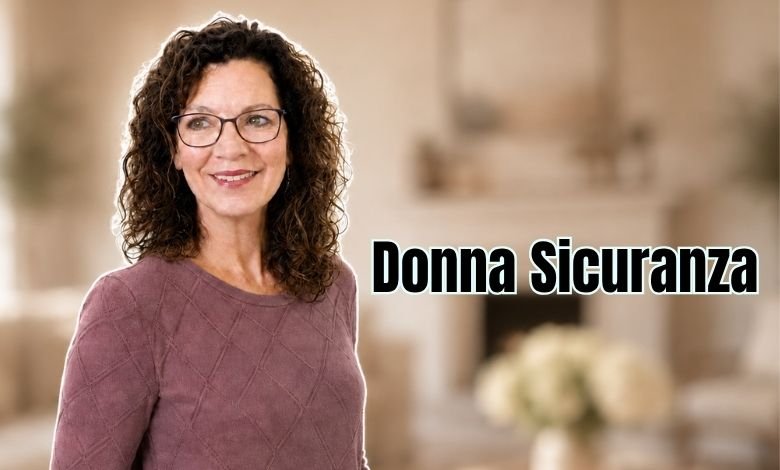
Donna Sicuranza is a Connecticut nonprofit executive known for her work with Tait’s Every Animal Matters (TEAM). The organisation’s official staff directory lists her as Donna Sicuranza Marconi, Executive Director. Her career is closely connected with making essential veterinary services more accessible to cat owners and caretakers.
The clearest account of her work begins with TEAM’s mobile feline clinic. Planned in 1996 and launched in 1997, the programme brought affordable spay, neuter and vaccination services into Connecticut communities. Sicuranza helped develop it alongside veterinarian Dr John A. Caltabiano, who was then TEAM’s president.
Her biography is therefore best understood through the organisation she helped build, the public records documenting her advocacy, and the practical needs behind its services.
Her professional story involves a mobile clinic, decades of public service, and the work required to turn concern for animals into accessible care.
Who Is Donna Sicuranza?
Donna Sicuranza is an animal welfare professional associated with Westbrook, Connecticut, where TEAM is headquartered. Her documented position is Executive Director, placing her within the organisation’s administrative leadership.
Readers may encounter her name in several forms. TEAM’s current directory uses Donna Sicuranza Marconi, while its Summer 2019 newsletter lists Donna J. Sicuranza. Earlier Connecticut legislative records identify her as Donna Sicuranza, Executive Director of Tait’s Every Animal Matters.
Following the organisation and job title helps connect these records. A longer professional name does not, by itself, establish a marriage history or explain a person’s family circumstances.
Her role also needs to be described accurately. TEAM lists its veterinary professionals separately from its administrative staff. The public record supports describing Sicuranza as a nonprofit executive and advocate, rather than assuming that she personally performs the clinic’s medical procedures.
Early Background and Public Records
A detailed account of Donna Sicuranza’s childhood is not established by the organisational sources used for this profile. Her birthplace, date of birth and early family experiences should not be presented as confirmed facts without supporting evidence.
However, limited childhood information does not mean that her career is undocumented. Official records provide a clearer starting point than the personal details sometimes repeated across biography websites.
At a Connecticut Judiciary Committee hearing in March 2002, Sicuranza introduced herself as TEAM’s Executive Director. She described the Westbrook organisation as developing programmes and services for animals in need and their caretakers.
That testimony also concerned an animal whose physical needs appeared to be met but whose life involved prolonged confinement on a chain. Her account raised a wider welfare question: providing food and water does not necessarily address every aspect of an animal’s circumstances.
This historical record gives her professional profile substance. It shows her speaking about animal welfare in a public setting long before the recent wave of online biographies.
Helping Develop TEAM’s Mobile Feline Clinic
One of the most important chapters in Donna Sicuranza’s career began in 1996. TEAM’s own historical account identifies her and Dr John A. Caltabiano as the people directing plans for its mobile feline spay/neuter clinic.
The problem was practical. People caring for cats needed veterinary services they could afford and reach. Bringing a clinic into communities offered another way to meet that need.
The mobile programme began operating on 1 March 1997. Rather than building its identity around emergency rescues alone, it focused on preventing unwanted litters through accessible sterilisation services.
TEAM’s history describes both early enthusiasm and doubts about the project. Establishing a new service meant convincing people that the model could work and continue beyond its first few months.
The clinic’s launch is a useful reference point in Sicuranza’s biography because it connects her leadership to a specific programme and date. It also shows that her association with TEAM reaches back to its early development, rather than being a recent appointment inferred from an online staff listing.
What Tait’s Every Animal Matters Does
Tait’s Every Animal Matters is a nonprofit charity based in Westbrook. Its best-known project is the TEAM Mobile Feline Spay/Neuter Clinic, which travels to communities across Connecticut.
The organisation describes its purpose as making feline sterilisation and vaccination services affordable and accessible. It welcomes both domestic and feral cats, connecting its work with pet owners as well as people caring for unowned animals.
Its published services include spay and neuter procedures, vaccinations, a kitten package, and parasite prevention and treatment. This gives readers a more accurate understanding of TEAM than describing it simply as an animal shelter or a general rescue centre.
The mobile approach addresses access in a concrete way. A service that visits different towns can bring care closer to people who would otherwise need to travel further.
That does not mean every animal or medical problem can be handled aboard the clinic. TEAM publishes admission conditions and asks caretakers to contact the organisation for appointments and information.
Her career centres on feline welfare.
Her Leadership and Communication Work
Nonprofit leadership involves keeping an organisation’s purpose connected with its everyday work. For a mobile veterinary programme, that means cooperation between the office, medical staff, caretakers and supporters.
Sicuranza’s public record includes a documented communications role. TEAM’s Summer 2019 newsletter credits her as its editor, showing that explaining the organisation’s work was part of her contribution.
In that publication, she acknowledged the different people behind the clinic’s progress. She recognised staff, donors and the caretakers who brought cats for treatment.
That description helps explain the nature of the achievement. A successful clinic depends on people carrying out different responsibilities, supported by its executive leadership.
Her editorial involvement gave supporters a direct account of TEAM’s activities and showed what their support made possible.
Participation in Animal Welfare Discussions
Donna Sicuranza’s advocacy has extended beyond TEAM’s internal operations. Connecticut legislative records and government meeting minutes document her participation in wider animal welfare discussions.
In March 2007, she testified before the Connecticut General Assembly’s Environment Committee. She identified herself as a Westbrook resident and TEAM’s Executive Director while supporting a bill concerning animal population control.
Her testimony drew on experience with cat owners and feral cat caretakers. She discussed the importance of affordable veterinary services and described her involvement in an advisory committee considering recommendations.
This provides an example of how practical experience can inform public discussion. Someone working with a service sees the difficulties people face when trying to obtain care, alongside the limits of existing arrangements.
A separate Department of Agriculture record lists Sicuranza among attendees at an Animal Population Control Program Working Group meeting on 27 June 2019. She was identified as representing Tait’s Every Animal Matters.
The meeting covered programme funding, the voucher system, public education and other animal population issues. Its minutes place her within that discussion without attributing every proposal or decision to her personally.
Together, these records show a career involving both service delivery and public advocacy. They support a more specific description of her contribution than a broad claim that she simply cares about animals.
Feral Cats and Community Support
TEAM’s work includes cats living outside conventional homes. Its website advocates Trap, Neuter and Release (TNR) and welcomes feral cats aboard the mobile clinic.
The organisation also describes a TEAM Incentive Program, known as TIP. Caretakers bringing eligible feral cats for sterilisation may receive a partial rebate. Humane traps are available through TEAM for a refundable deposit.
These arrangements make community involvement practical. A person willing to help a cat may still need equipment, an appointment and financial support to complete the process.
Sicuranza offered a personal example in the 2019 newsletter. She wrote about Sobie, a feral cat she fed near her farm. Before she could trap him for neutering, he was killed by a car. She connected experiences like his with the inspiration behind TIP.
That account gives her professional work a human context without inventing a wider personal history. It describes a particular animal, an attempt to help, and the difficult limits of that effort.
What Is Known About Her Personal Background?
Donna Sicuranza’s official professional profile does not provide a full personal biography. Her exact age, current relationship status and detailed family history are not established by the sources reviewed here.
Missing information should remain missing until reliable evidence becomes available. It would be misleading to assign her a birthday, spouse, children or financial estimate simply because another website includes those details.
It is equally important to avoid guessing why she shares limited personal information.
Her documented work gives readers reason to take an interest.
Conclusion
Donna Sicuranza’s biography centres on nonprofit leadership, feline welfare and access to veterinary services in Connecticut. Her role in developing TEAM’s mobile clinic and her participation in public discussions provide concrete evidence of that work.
TEAM reports that its veterinarians have sterilised and vaccinated more than 225,000 cats since 1997. This is an organisational achievement involving medical staff, administrators, supporters and caretakers.
Sicuranza’s place in that story is best described through those shared efforts and the records that document them. The result is a professional profile grounded in identifiable work, rather than speculation about a life outside public view.
(FAQs)
Who is Donna Sicuranza?
Donna Sicuranza is a Connecticut nonprofit executive associated with Tait’s Every Animal Matters. TEAM’s official directory lists her as Executive Director under the name Donna Sicuranza Marconi.
What is Donna Sicuranza known for?
She is known for her leadership at TEAM, her involvement in developing its mobile feline clinic, and her participation in animal welfare discussions in Connecticut.
When did TEAM’s mobile clinic begin?
The mobile feline spay/neuter clinic began operating on 1 March 1997, following planning led by Sicuranza and veterinarian Dr John A. Caltabiano.
Does TEAM help feral cats?
Yes. TEAM accepts feral cats for its mobile services and supports TNR. Eligible caretakers may also receive assistance through its incentive programme.
How old is Donna Sicuranza?
Her date of birth is not confirmed by the official professional sources reviewed for this article. An age should therefore not be presented as established information.
Is Donna Sicuranza married?
The reviewed sources do not establish her current marital status. Her professional listing as Donna Sicuranza Marconi does not, by itself, confirm a spouse or marriage history.