George Weisz: The Inventor Behind Rachel Weisz’s Family Story, His Engineering Career, Marriage and Private Life


Behind Rachel Weisz’s success in Hollywood lies a family history shaped by war, ambition and an unusual talent for making things work. Her father, George Weisz, spent much of his life away from cameras, building a reputation as a British engineer whose inventions helped people breathe during medical emergencies.
Born in Hungary in 1929, he arrived in Britain as a child refugee shortly before the Second World War. Years later, he developed portable breathing equipment that would become valuable to hospitals and emergency services.
There was another side to his life, too. He loved art, cared deeply about his family and eventually became involved in filmmaking himself. His marriage, relationship with his daughters and interest in Jewish history reveal a man whose experiences reached far beyond the workshop.
Quick Bio: George Weisz
| Field | Details |
|---|---|
| Full Name | George Weisz |
| Date of Birth | 20 December 1929 |
| Age | 90 Years (at the time of death) |
| Birthplace | Budapest, Hungary |
| Nationality | British |
| Heritage | Hungarian |
| Profession | Mechanical Engineer, Inventor and Philanthropist |
| Famous For | Developing a Portable Artificial Ventilator |
| Father | Joir Weisz |
| Mother | Kato Weisz |
| Education | University of Birmingham |
| Qualification | Engineering Degree (1950) |
| First Wife | Edith Teich |
| Second Wife | Judith Szekacs-Weisz |
| Marriage Year (Second Marriage) | 1994 |
| Children | Rachel Weisz and Minnie Weisz |
| Famous Daughter | Rachel Weisz |
| Notable Invention | Pneumatically Powered Portable Ventilator |
| Company | KAY Pneumatics |
| Documentary | Regina (2013) |
| Date of Death | 31 March 2020 |
George Weisz’s Early Life: From Budapest to a New Home in Britain
George Weisz was born on 20 December 1929 in Budapest, Hungary. His father, Joir Weisz, worked in banking, while his mother, Kato, dealt in antiques. Their home encouraged an interest in education, culture and practical knowledge.
Europe was changing rapidly during his childhood. Antisemitism was becoming increasingly dangerous, and his family understood that remaining in Hungary could threaten their future.
His father travelled to London in 1938. The following year, George, his mother and his two older sisters, Olga and Judith, left Budapest to join him.
He was only ten years old.
The journey stayed with him for decades. He later remembered German border officers shouting at his mother and how helpless he felt watching her being treated that way.
The family reached Britain safely, but several relatives did not survive the Holocaust. An uncle was among those murdered at Auschwitz.
These memories never entirely left him. They also help explain why he later devoted time and money to projects preserving Jewish history.
After settling in north London, he attended Hendon County Grammar School. Science came naturally to him, although his interest in machinery had started much earlier.
As a boy, he had taken apart his father’s pocket watch and managed to put it together again. He later repaired a washing machine himself.
Such experiments were early signs of the work he would eventually pursue.
He studied engineering at the University of Birmingham and graduated in 1950. Britain, which had offered his family refuge, became the country where he would build his career and raise his children.
How George Weisz Built His Engineering Career and Invented a Life-Saving Ventilator
His first major professional opportunity came at the English Electric Company, a business associated with important developments in British engineering and aircraft manufacturing.
He proved himself capable enough to become the company’s youngest works manager.
Yet working for somebody else was never going to satisfy all his ambitions. He wanted the freedom to develop his own ideas and turn them into useful products.
In 1960, he bought a small factory in Dunstable, Bedfordshire. The business supplied components to the motor industry, but he soon moved into more demanding engineering work.
One important contract involved producing parachute release equipment for RAF pilots. It was the kind of machinery where reliability mattered enormously, particularly in an emergency.
By 1966, he had established KAY Pneumatics, a company working with compressed-air systems.
Its technology was used for everyday purposes, including opening and closing doors on British trains and buses. Most passengers would never have known the name of the engineer behind such equipment.
His greatest contribution, however, came in medical technology.
In 1972, he developed a portable artificial ventilator powered by its own oxygen cylinder. The design could function without an ordinary electrical supply, making it particularly useful when conventional equipment was unavailable.
The machine became associated with the Pneupac name.
During the Gulf War, the British government also commissioned him to work on a ventilator that could support several patients in the event of a chemical weapons attack.
His engineering achievements earned official recognition, including a Queen’s Award for Technological Achievement in 1993.
Decades after the original invention, Pneupac breathing machines were still being used in NHS intensive care units during the COVID-19 pandemic.
That continuing use gave his work a particularly moving significance. Equipment developed long before the pandemic was helping medical teams deal with one of the most serious health emergencies of modern times.
Marriage, Wife Edith Teich and Life as Rachel Weisz’s Father
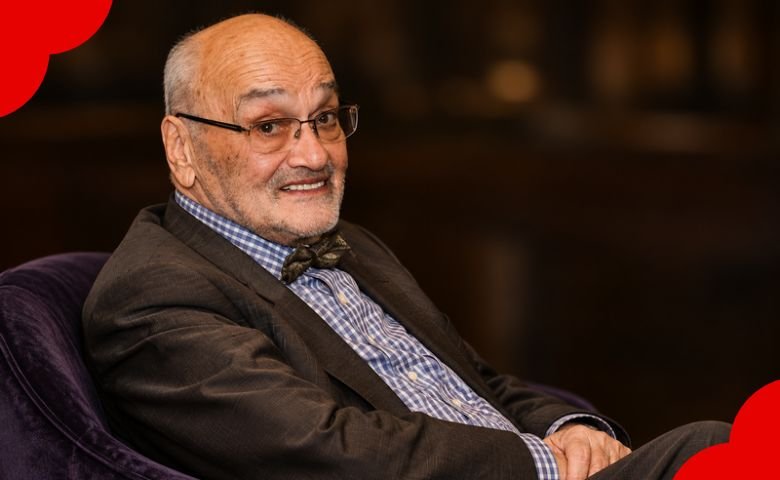
The engineer’s personal life was closely connected to the cultural world in which his daughters grew up.
His first wife, Edith Teich, had been born in Vienna. Like him, she had come to Britain after escaping the dangers facing families in continental Europe.
Edith originally worked as a teacher before becoming a psychotherapist.
Together, they raised two daughters in north London. Their eldest, Rachel Weisz, was born on 7 March 1970 and would later become one of Britain’s best-known actresses.
Their younger daughter, Minnie Weisz, followed a different creative path, establishing herself as a photographer and visual artist.
Education was taken seriously in the family. Rachel later recalled growing up in a household that felt different from many of her friends’ homes because her parents had brought their Central European backgrounds with them.
She also remembered their gratitude towards Britain for giving them a place of safety.
That background influenced her understanding of identity, history and belonging.
Her father’s approach to parenting could be quite direct. He believed that his children should develop their abilities without losing sight of their education.
When Rachel was offered an important acting opportunity as a teenager, he discouraged her from accepting it because he wanted her to continue studying.
Rachel eventually attended Cambridge University and pursued acting professionally. She went on to win an Academy Award for The Constant Gardener and appeared in films including The Mummy and The Favourite.
Their relationship was not without disagreements. In interviews, Rachel described her father’s willingness to offer criticism rather than automatic praise.
It was an old-fashioned approach in some respects, but one that reflected his belief in speaking openly.
George and Edith divorced in 1986.
In 1994, he married Dr Judith Szekacz, a Hungarian psychoanalyst. She became an important part of his later life and joined him in some of his cultural activities.
Despite having a famous daughter, he generally avoided celebrity events. He preferred to support Rachel without making himself part of the publicity surrounding her career.
The Regina Documentary and a Family Connection to Jewish History
A surprising chapter in George Weisz’s life began when he was in his eighties.
Having spent decades working in engineering, he turned his attention to film production. The subject was one that connected closely with his childhood and family history.
In 2013, he became involved as an executive producer of Regina, a documentary directed by Hungarian filmmaker Diana Groó.
The film tells the story of Regina Jonas, who became the first woman to be ordained as a rabbi in 1935.
Jonas worked with Jewish communities in Germany during a period of growing persecution. She was later deported and murdered at Auschwitz in 1944.
Her achievements had remained unfamiliar to many people for decades.
George felt that her story deserved a wider audience. He was especially interested in the strength she showed while helping vulnerable people during an increasingly dangerous period.
The production also became a family project.
Rachel provided the English-language voice of Regina Jonas, while her father voiced Rabbi Leo Baeck. Judith contributed psychological advice, and his stepson Mark helped with translation work.
For Rachel and her father, the documentary created an opportunity to work together in a way neither might have expected.
In a 2014 interview with Jewish News, George recalled that Rachel jokingly asked whether he was trying to compete with her.
His response was affectionate and playful. He pointed out that she was younger, had started much earlier and was far better suited to the screen.
The documentary travelled to international screenings and received awards.
For its producer, however, the main achievement was ensuring that a significant woman’s contribution to religious history would be remembered.
His Charitable Work, Final Years and Lasting Legacy
As his engineering career drew to a close, charitable work became an increasingly important part of his life.
In 2013, he established the Joir & Kato Weisz Foundation, naming it after his parents.
The foundation supported educational, medical and cultural causes. He also helped preserve valuable Jewish historical materials and supported organisations working to improve people’s lives.
One project involved the historic collection associated with Bevis Marks Synagogue in London.
Rather than seeing important religious books and documents dispersed, he wanted the material to remain available for research. The Weisz Western Sephardi Collection became part of the Bodleian Library’s resources at Oxford University.
He also supported the Ben Uri Gallery’s work using art to help people living with dementia.
His interests were wide-ranging. Music, painting, medical research and historical preservation all found a place in his later activities.
Friends sometimes described him as a poet-engineer, a fitting expression for somebody who could move comfortably between technical problems and creative ideas.
George Weisz died on 31 March 2020, aged 90.
His death came during the early months of the coronavirus pandemic, when medical equipment had suddenly become a subject of worldwide concern.
The ventilator technology he had helped develop was still serving patients, giving his engineering career a lasting practical importance.
His family also continued to carry his influence into different fields. Rachel remained active in acting, while Minnie pursued her work in photography and art.
The surviving record of his life shows somebody who valued useful work, learning and the preservation of memory.
Conclusion
George Weisz’s life took him from a childhood interrupted by war to a successful engineering career in Britain. Along the way, he built businesses, developed medical technology, raised a family and helped preserve stories that might otherwise have been forgotten.
His daughter Rachel became famous on cinema screens around the world, while his own achievements were largely recognised in engineering and charitable circles.
The lasting value of his work is found in the machines he created, the causes he supported and the family history he helped pass on to another generation.
Read this too: Nigel Mackintosh: His Private Life, Marriage, Family Heritage and Role as Millie Mackintosh’s Father
(FAQs)
Who was George Weisz?
George Weisz was a Hungarian-born British mechanical engineer, inventor and philanthropist. He developed pioneering portable ventilator technology and was the father of actress Rachel Weisz.
What was George Weisz famous for inventing?
He was best known for developing a portable artificial ventilator in 1972. The equipment worked using pneumatic power from its own oxygen cylinder, allowing it to operate without a conventional electricity supply.
Who was George Weisz’s first wife?
His first wife was Edith Teich, a Vienna-born teacher who later became a psychotherapist. They had two daughters, Rachel and Minnie, before their marriage ended in divorce in 1986.
Did George Weisz marry again?
Yes. He married Dr Judith Szekacz, a Hungarian psychoanalyst, in 1994. She remained his wife until his death in 2020.
Was George Weisz involved in the film industry?
Yes. He became an executive producer of the 2013 documentary Regina, directed by Diana Groó. His daughter Rachel contributed voice work to the film, which explored the life of pioneering female rabbi Regina Jonas.
When and where was George Weisz born?
He was born in Budapest, Hungary, on 20 December 1929. He moved to Britain with his mother and sisters in 1939 after his father had already travelled to London.