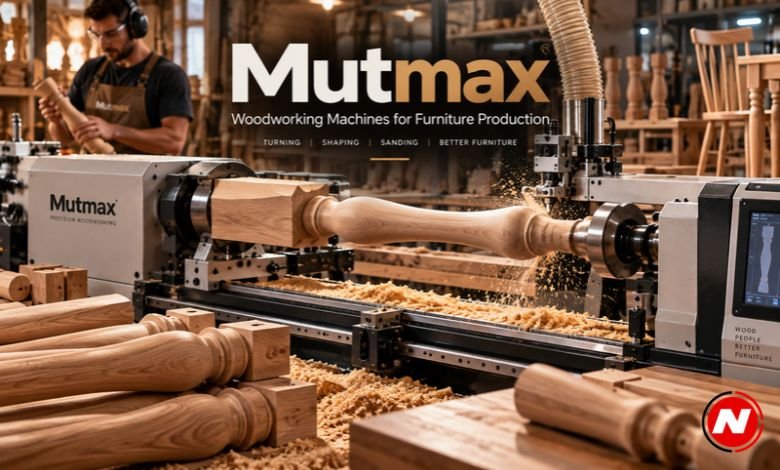
A dining table may look simple once it reaches a home. Yet each matching leg has passed through a series of careful steps. The wood must be shaped, measured and prepared so that every part fits the same design. Producing one good piece takes skill. Repeating it across a full order brings a different challenge.
Mutmax makes machinery used in this part of furniture production. Based in Turkey, the company lists equipment for copying wooden shapes, turning components and sanding surfaces. Its range includes both copy lathes and a two-axis CNC lathe.
Understanding these machines does not require an engineering background. Their purpose becomes clearer when you follow the journey from an unfinished piece of wood to a component ready for the next stage of furniture making.
What Is Mutmax?
The company’s published profile states that it was established in Bursa, Turkey, in 2009. It operates in the woodworking and furniture machinery sector, describing quality, efficiency and careful use of resources as its priorities. These statements explain the company’s aims; they are not independent test results.
Its work centres on equipment that helps manufacturers process wooden components. That is an important distinction because furniture production involves many separate jobs.
A wooden chair, for example, needs more than an attractive design. Its parts must have suitable dimensions, fit together properly and reach the required finish. Shaping a leg is one operation within that wider process.
This is where specialist woodworking machinery has a practical role. A machine designed for a particular task can help a workshop organise repeated work around a clear reference.
The right choice depends on the product being made. A business producing matching rounded legs will have different needs from a workshop mainly cutting flat boards. Understanding the job comes before choosing the equipment.
The Main Types of Machinery
The Mutmax website presents four main machine types. Each has a different role, so it helps to look at them separately.
Copy wood lathes
A copy lathe follows a model or profile to shape a wooden piece. The manufacturer describes this equipment as a lathe used to work wood according to a particular shape.
Picture an approved table leg with a rounded section and a narrow curve. The workshop needs the remaining legs to follow that same outline. A copy lathe provides a way to reproduce the profile.
The finished pieces still need checking. Following a reference does not remove the need to inspect dimensions or assess the quality of the work.
Copy lathes with sanding
The company also lists a copy lathe with sanding capability. Its description brings together the shaping and sanding of wooden pieces.
For a furniture maker, this raises a useful question: how much of the required work can the machine complete before the component moves elsewhere?
The answer should come from a demonstration using a suitable sample. Different shapes and finish requirements may call for further preparation.
Dual sanding machines
Another listed product is a sanding machine with two separate sanding heads. The stated purpose is to sand and level surfaces.
Wood sanding prepares the surface for later work. However, the presence of two heads does not, by itself, prove a particular production speed or finish standard.
Buyers need to see the result on components similar to those they make.
Two-axis CNC lathes
The range also includes a two-axis CNC lathe. CNC stands for computer numerical control, meaning programmed instructions guide machine movements.
The name gives a broad description of the machine. It does not explain every detail of its controls, software, capacity or accessories.
Those points should be confirmed through the specification sheet for the exact model being considered.
How These Machines Fit into Furniture Production
The easiest way to understand Mutmax equipment is to imagine a workshop making a batch of wooden table legs. This is a simple example of a production process, rather than a documented customer story.
The work begins with a design. Before cutting starts, the team needs agreed measurements and a clear idea of the finished shape.
An approved drawing or sample gives the operator a reference. It also gives the person checking the work something definite to compare against.
Next, the wooden blanks are prepared. These are the pieces that will be shaped into the finished components. Their material and dimensions must suit the intended job.
During wood turning, the wooden piece rotates while a cutting tool removes material. A copy lathe uses a reference shape to guide the reproduction of an outline, as described on the manufacturer’s product page.
The first finished piece deserves close attention. A workshop can check its shape, dimensions and suitability before continuing with the rest of the order.
This early check matters. A small problem discovered after one piece is easier to address than the same problem repeated throughout a batch.
Sanding and further surface preparation follow where needed. The component can then move towards finishing or assembly, depending on the workshop’s production plan.
Throughout this process, people remain responsible for judging the result. Machinery carries out operations, while operators and inspectors make sure the work meets the agreed requirements.
What Buyers Should Look for in 2026
For anyone researching Mutmax in 2026, a useful starting point is the component they need to produce. A clear description of the job makes discussions with a supplier more productive.
Start with the basics: the wood being used, the required shape, the dimensions and the expected order size. These details help establish whether a machine is suitable.
A demonstration should then show more than a short cutting sequence. Ask to see the complete cycle, including loading, adjustments, machining, unloading and inspection.
This gives a fuller picture of furniture production equipment in everyday use. A machine may perform one operation quickly while still requiring time for setup or handling.
It also helps to compare several finished pieces. One attractive sample shows what is possible. A batch gives more information about consistency.
For CNC woodworking equipment, the controls deserve attention too. Ask how programmes are created, what training is provided and where technical help comes from.
The workshop itself must also be ready. Confirm the machine’s size and its requirements for electrical power, extraction and any other services before making installation plans.
Finally, request a written quotation. It should explain the model, options and included services clearly.
Delivery, installation, tooling, training and spare parts can all affect the overall cost. Comparing these details gives buyers a stronger basis for a decision than comparing purchase prices alone.
Conclusion
Mutmax is a woodworking machinery manufacturer with a published range covering copy turning, sanding and CNC turning. Understanding those different functions helps explain where its equipment may fit into furniture production.
For a workshop, the decision comes down to a real task: producing the required component to an agreed standard. Clear specifications, a useful demonstration and careful inspection make that decision easier. A matching set of furniture parts begins with getting those details right.
(FAQs)
What is Mutmax used for?
The company supplies machinery for woodworking and furniture production. Its listed range includes equipment for copying shapes, turning wooden components and sanding surfaces.
Where is the company based?
Its published company profile identifies Bursa, Turkey, as its base and states that the business was established in 2009.
What does a copy lathe do?
It follows a model or profile to shape wood. This makes it useful for work that involves reproducing a particular outline across several pieces.
Is this equipment suitable for a small workshop?
Suitability depends on the exact machine, available space, production needs and operator skills. A workshop should assess those points and request a relevant demonstration.
How much does the machinery cost?
Buyers should request a current quotation for the model and options they need. The quotation should also clarify which delivery, installation and support services are included.